
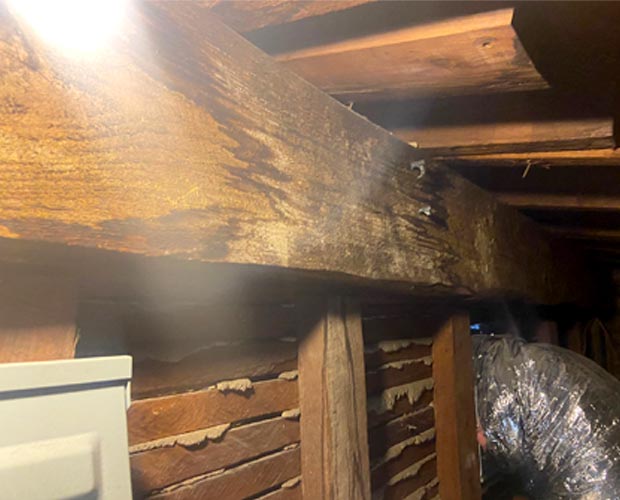
Crawl spaces are among the most neglected areas in residential construction and among the most common locations for extensive mold growth. Ground moisture vapour rises from unprotected soil, condenses on the cooler wood framing above, and creates the persistently humid environment that Cladosporium, Penicillium, Aspergillus, and Stachybotrys require to grow. In warm climates like Miami, humid outdoor air entering through vents creates the same problem.
Crawl space mold on floor joists and subfloor decking is particularly serious because it directly contacts the structural components that support the living areas above. Mold-colonised wood also experiences fungal decay (wood rot) over time, which can compromise structural integrity. Early remediation protects both air quality and structure.
Effective crawl space mold remediation is a two-part process: the IICRC S520 remediation of existing mold, and the moisture control measures that prevent return. In most cases, a ground vapour barrier (minimum 6-mil poly, ideally 20-mil reinforced for a durable encapsulation system) installed over the crawl-space floor after remediation is the most cost-effective long-term solution.
Signs you need crawl space mold
- Dark staining or fuzzy growth on floor joists or subfloor decking visible through the crawl-space access
- Musty odour rising from floor areas or floor registers
- Soft spots or springiness in floors above the crawl space
- Increased allergy or respiratory symptoms for ground-floor occupants
- Evidence of standing water, saturated soil, or moisture-damaged insulation in the crawl space
- Rust on metal fasteners, HVAC components, or pipes in the crawl space
Why Washington properties see this
Baltimore-area homes with crawl spaces (common in older suburbs and rural properties) frequently develop mold on floor joists due to the combination of clay soil that retains moisture and summer humidity above 70% in unvented crawl spaces.
Miami-Dade properties with raised slab-on-grade or crawl-space access have particularly severe mold dynamics because tropical outside air — 80–90% RH in summer — is continuously warmer than the conditioned space above, driving persistent condensation on structural framing.
New Jersey crawl spaces in coastal areas are subject to seasonal flooding and saltwater intrusion — Category 3 water exposure that accelerates wood decay and supports Stachybotrys growth even after visible water recedes.