
Crawl space mold in LeDroit Park: what to know
If you're in LeDroit Park, you're in one of DC's oldest planned historic districts — the distinctive Victorian rowhouses here date to the 1870s–1880s, with decorative wood cornices and porches that, over 140+ years, are usually the first point of water entry once the paint and flashing finally fail.
Because LeDroit Park is a protected historic district, if your remediation touches siding, cornices, or window frames rather than just interior drywall, that work goes through DC's Historic Preservation Review Board first — worth knowing before you plan a timeline around it.
If your home backs onto one of LeDroit Park's narrow original alleys, aging shared drainage there is a common, often-overlooked source of foundation moisture — grading and gutter runoff between properties on this specific block layout doesn't always go where you'd expect.
Mold conditions in LeDroit Park
Common mold types in this area: Chaetomium (140-year-old wood cornices and framing with chronic water entry); Stachybotrys chartarum (foundation moisture from alley drainage and grading issues); Cladosporium (exterior wood trim and porches); Penicillium/Aspergillus (interior wall cavities behind failed flashing).
We serve LeDroit Park Historic District, Howard University, McMillan Reservoir (nearby), Big Bear Cafe, Griffith Stadium site and the wider LeDroit Park area across ZIP codes 20001.
Signs you need crawl space mold
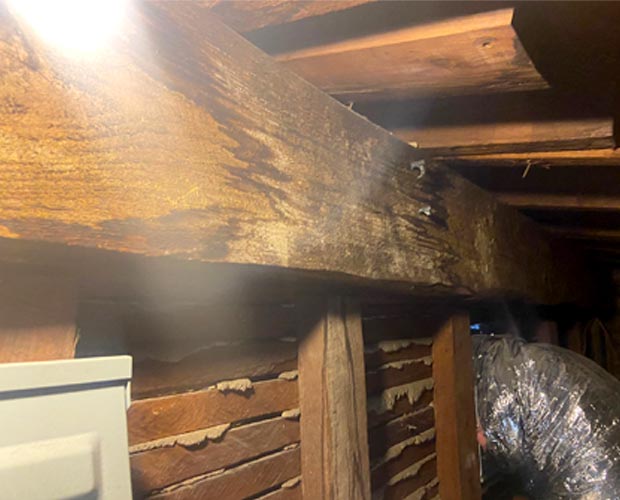
- Dark staining or fuzzy growth on floor joists or subfloor decking visible through the crawl-space access
- Musty odour rising from floor areas or floor registers
- Soft spots or springiness in floors above the crawl space
- Increased allergy or respiratory symptoms for ground-floor occupants
- Evidence of standing water, saturated soil, or moisture-damaged insulation in the crawl space
- Rust on metal fasteners, HVAC components, or pipes in the crawl space
How we handle crawl space mold in LeDroit Park
Crawl spaces are among the most neglected areas in residential construction and among the most common locations for extensive mold growth. Ground moisture vapour rises from unprotected soil, condenses on the cooler wood framing above, and creates the persistently humid environment that Cladosporium, Penicillium, Aspergillus, and Stachybotrys require to grow. In warm climates like Miami, humid outdoor air entering through vents creates the same problem.
Crawl space mold on floor joists and subfloor decking is particularly serious because it directly contacts the structural components that support the living areas above. Mold-colonised wood also experiences fungal decay (wood rot) over time, which can compromise structural integrity. Early remediation protects both air quality and structure.