
Crawl space mold in Anacostia: what to know
If you're in Historic Anacostia, your home may be one of DC's oldest surviving wood-frame houses, dating to the mid-1800s around Frederick Douglass's Cedar Hill estate, or it may be mid-20th-century public or multifamily housing blocks away — two very different eras with two very different moisture vulnerabilities, and it matters which one you're dealing with.
You're on a hillside above the Anacostia River here, and stormwater runoff from higher ground has a long-documented history of overwhelming ageing storm drains lower in the neighbourhood — a real contributor to basement and crawl-space moisture in older homes below the hill.
If you live in older public or subsidised multifamily housing in Anacostia, deferred building maintenance is a well-documented, government-acknowledged issue here — chronic leaks in these buildings often go unaddressed far longer than in privately managed properties. An independent mould assessment gives you something concrete to bring to your building's management, and that's exactly what it's for.
Mold conditions in Anacostia
Common mold types in this area: Chaetomium (chronic deferred-maintenance leaks in older multifamily housing); Stachybotrys chartarum (mid-1800s wood-frame houses with long-standing moisture); Cladosporium (hillside stormwater runoff affecting lower-elevation basements and crawl spaces); Penicillium/Aspergillus (aging multifamily plumbing systems).
We serve Frederick Douglass National Historic Site (Cedar Hill), Anacostia Park, Anacostia Community Museum, Big Chair (Historic Anacostia), Anacostia Riverwalk Trail and the wider Anacostia area across ZIP codes 20020, 20032.
Signs you need crawl space mold
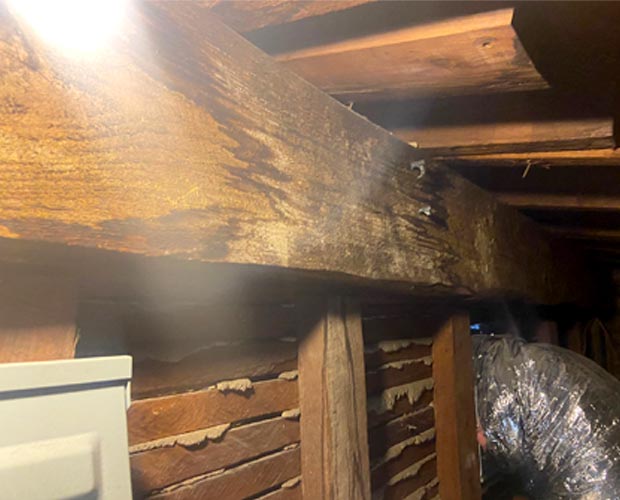
- Dark staining or fuzzy growth on floor joists or subfloor decking visible through the crawl-space access
- Musty odour rising from floor areas or floor registers
- Soft spots or springiness in floors above the crawl space
- Increased allergy or respiratory symptoms for ground-floor occupants
- Evidence of standing water, saturated soil, or moisture-damaged insulation in the crawl space
- Rust on metal fasteners, HVAC components, or pipes in the crawl space
How we handle crawl space mold in Anacostia
Crawl spaces are among the most neglected areas in residential construction and among the most common locations for extensive mold growth. Ground moisture vapour rises from unprotected soil, condenses on the cooler wood framing above, and creates the persistently humid environment that Cladosporium, Penicillium, Aspergillus, and Stachybotrys require to grow. In warm climates like Miami, humid outdoor air entering through vents creates the same problem.
Crawl space mold on floor joists and subfloor decking is particularly serious because it directly contacts the structural components that support the living areas above. Mold-colonised wood also experiences fungal decay (wood rot) over time, which can compromise structural integrity. Early remediation protects both air quality and structure.