Crawl space mold in Federal Hill: what to know
Federal Hill's historic brick rowhouses — many dating from the 1840s–1890s — have solid masonry walls that conduct moisture from the exterior to the interior during wet seasons, supporting mold on interior plaster and wood framing.
South-facing rowhouses in Federal Hill trap heat in summer, and the resulting temperature differentials between conditioned interior and unconditioned basement accelerate condensation-driven mold.
Mold conditions in Federal Hill
Common mold types in this area: Cladosporium (basement and lower floors); Penicillium (plaster walls); Stachybotrys (basement sill plates with chronic moisture).
We serve Federal Hill Park, American Visionary Art Museum, Cross Street Market, Maryland Science Center (nearby) and the wider Federal Hill area across ZIP codes 21230.
Signs you need crawl space mold
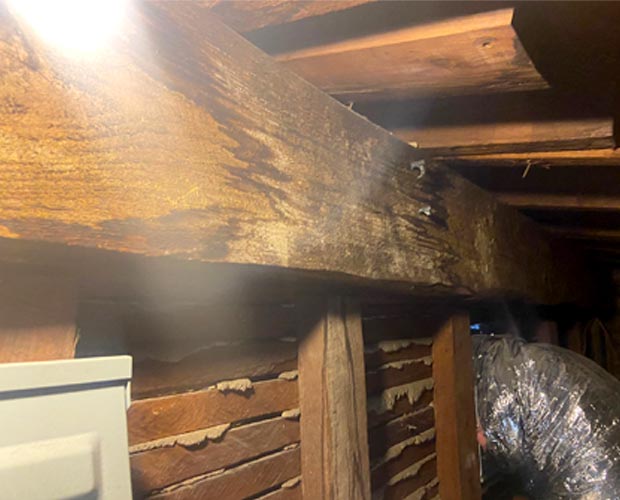
- Dark staining or fuzzy growth on floor joists or subfloor decking visible through the crawl-space access
- Musty odour rising from floor areas or floor registers
- Soft spots or springiness in floors above the crawl space
- Increased allergy or respiratory symptoms for ground-floor occupants
- Evidence of standing water, saturated soil, or moisture-damaged insulation in the crawl space
- Rust on metal fasteners, HVAC components, or pipes in the crawl space
How we handle crawl space mold in Federal Hill
Crawl spaces are among the most neglected areas in residential construction and among the most common locations for extensive mold growth. Ground moisture vapour rises from unprotected soil, condenses on the cooler wood framing above, and creates the persistently humid environment that Cladosporium, Penicillium, Aspergillus, and Stachybotrys require to grow. In warm climates like Miami, humid outdoor air entering through vents creates the same problem.
Crawl space mold on floor joists and subfloor decking is particularly serious because it directly contacts the structural components that support the living areas above. Mold-colonised wood also experiences fungal decay (wood rot) over time, which can compromise structural integrity. Early remediation protects both air quality and structure.