
Crawl space mold in Columbia Heights: what to know
Columbia Heights was rebuilt densely in the early 1900s with rowhouses and mid-rise apartment buildings packed close together — if your building's roof or gutters fail, that water can go straight into the party wall of the place next door, not just your own.
If your block saw new construction during the 2000s redevelopment wave, know that a new-construction basement dug into a row of century-old party walls can disrupt drainage patterns that had quietly kept older neighbouring foundations dry for decades — sometimes that's exactly why a long-dry basement suddenly isn't.
You're on DC's older combined sewer system here like much of the historic core, so a hard summer storm can push Category 3 water into your basement — a documented pattern in this neighbourhood, not a one-off.
Mold conditions in Columbia Heights
Common mold types in this area: Chaetomium (party-wall moisture transfer between densely packed rowhouses); Stachybotrys chartarum (drainage disruption from new-construction basement digs); Penicillium/Aspergillus (mid-rise apartment plumbing stacks); Cladosporium (general background growth, humid summer months).
We serve DC USA / 14th Street retail corridor, Tivoli Theatre, Meridian Hill Park, Columbia Heights Metro, Banneker Recreation Center and the wider Columbia Heights area across ZIP codes 20010, 20009.
Signs you need crawl space mold
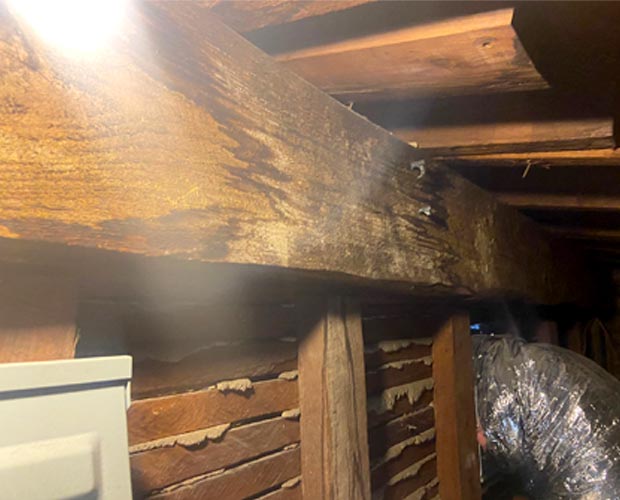
- Dark staining or fuzzy growth on floor joists or subfloor decking visible through the crawl-space access
- Musty odour rising from floor areas or floor registers
- Soft spots or springiness in floors above the crawl space
- Increased allergy or respiratory symptoms for ground-floor occupants
- Evidence of standing water, saturated soil, or moisture-damaged insulation in the crawl space
- Rust on metal fasteners, HVAC components, or pipes in the crawl space
How we handle crawl space mold in Columbia Heights
Crawl spaces are among the most neglected areas in residential construction and among the most common locations for extensive mold growth. Ground moisture vapour rises from unprotected soil, condenses on the cooler wood framing above, and creates the persistently humid environment that Cladosporium, Penicillium, Aspergillus, and Stachybotrys require to grow. In warm climates like Miami, humid outdoor air entering through vents creates the same problem.
Crawl space mold on floor joists and subfloor decking is particularly serious because it directly contacts the structural components that support the living areas above. Mold-colonised wood also experiences fungal decay (wood rot) over time, which can compromise structural integrity. Early remediation protects both air quality and structure.