
Clearance testing in Mount Pleasant: what to know
If you're along Mount Pleasant Street, you're likely in a late-1800s Victorian rowhouse; set back on a landscaped courtyard, you're probably in an early-1900s garden apartment building. Those garden-apartment below-grade laundry and mechanical rooms are a common, often-overlooked source of building-wide humidity that residents don't always connect to their own unit's smell.
You're close to Rock Creek Park's ravine terrain here, and if you're on one of the lower, creek-adjacent blocks, groundwater intrusion is a documented, more pronounced risk than on the flatter blocks toward Columbia Heights.
If your Victorian rowhouse has a deep, narrow lot with limited side-yard drainage — common in Mount Pleasant — grading that channels roof runoff back toward your foundation instead of away from it is a common, fixable contributor to basement moisture, and it's worth having checked even before you see a problem.
Mold conditions in Mount Pleasant
Common mold types in this area: Cladosporium (creek-adjacent groundwater intrusion on lower blocks); Penicillium/Aspergillus (garden-apartment below-grade laundry and mechanical rooms); Stachybotrys chartarum (poor-grading foundation moisture in narrow-lot Victorian rowhouses); Chaetomium (long-standing moisture in older wood-frame porches and trim).
We serve Mount Pleasant Street, Rock Creek Park, Sarah Ann Knott Memorial Fountain, Mount Pleasant Farmers Market, Carter Barron Amphitheatre (nearby) and the wider Mount Pleasant area across ZIP codes 20010.
Signs you need clearance testing
- Remediation has been completed and containment is still in place
- The written protocol specifies clearance testing as a completion requirement
- A real estate transaction requires documented proof of successful remediation
- An insurance claim requires certified clearance documentation
- The remediator has offered to perform their own clearance (this should be declined)
- A previous clearance test failed and re-clearance is required after additional work
How we handle clearance testing in Mount Pleasant
Clearance testing is the final step of any IICRC S520-compliant mold remediation and the critical quality control measure that confirms the work was done correctly. The clearance test must be performed by an independent licensed mold assessor — the company or individual that performed the remediation cannot perform their own clearance test. This independence is mandated by the NYS 2015 Mold Law and is best practice in all markets.
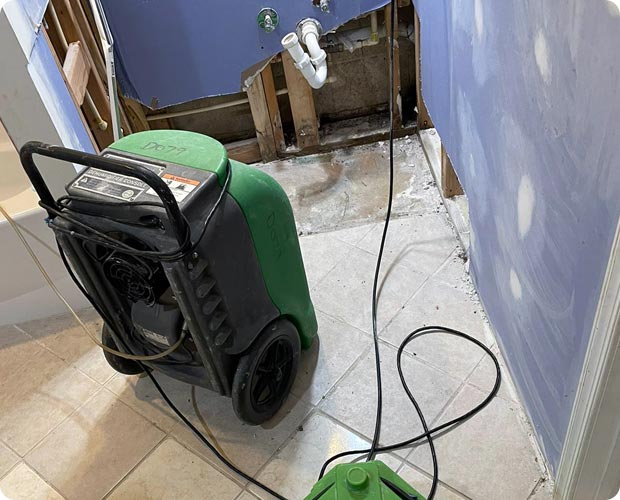
The timing and conditions of clearance testing are specified in the written remediation protocol. Standard protocol requires that containment remains fully in place when samples are collected, that the HEPA-filtered negative air machine has been running for at least 4 hours before sampling, and that an outdoor control sample is collected simultaneously with indoor samples.