
Clearance testing in Adams Morgan: what to know
If you're in an Adams Morgan apartment or rowhouse, you're probably in a building from the early 1900s that's been carved up and converted multiple times over the past century — each conversion adds new plumbing runs through old wall cavities, and not every one was sealed and vented correctly the first time.
You're on some of DC's steeper terrain here, sloping toward Rock Creek Park, so grading and stormwater runoff toward lower-lying buildings is a real factor in basement moisture — distinct from the flatter blocks elsewhere in the city's core.
If you're a renter in one of Adams Morgan's older apartment buildings, high turnover means shared-wall and shared-stack leaks often get reported late — by the time you notice a smell, the leak may have been active for months before you moved in.
Mold conditions in Adams Morgan
Common mold types in this area: Penicillium/Aspergillus (multi-conversion apartment buildings with retrofitted plumbing); Cladosporium (general background growth, elevated by hillside runoff moisture); Stachybotrys chartarum (undetected shared-stack leaks in older apartment buildings); Chaetomium (long-standing moisture in early-1900s wood framing).
We serve 18th Street NW corridor, Meridian Hill / Malcolm X Park, Line Hotel, Adams Morgan Farmers Market, Rock Creek Park and the wider Adams Morgan area across ZIP codes 20009.
Signs you need clearance testing
- Remediation has been completed and containment is still in place
- The written protocol specifies clearance testing as a completion requirement
- A real estate transaction requires documented proof of successful remediation
- An insurance claim requires certified clearance documentation
- The remediator has offered to perform their own clearance (this should be declined)
- A previous clearance test failed and re-clearance is required after additional work
How we handle clearance testing in Adams Morgan
Clearance testing is the final step of any IICRC S520-compliant mold remediation and the critical quality control measure that confirms the work was done correctly. The clearance test must be performed by an independent licensed mold assessor — the company or individual that performed the remediation cannot perform their own clearance test. This independence is mandated by the NYS 2015 Mold Law and is best practice in all markets.
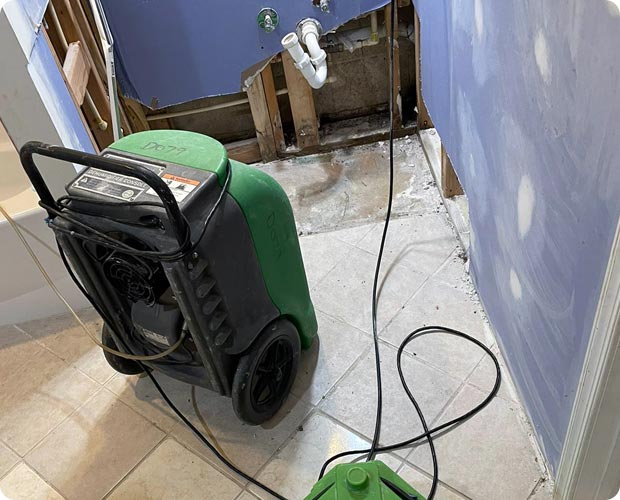
The timing and conditions of clearance testing are specified in the written remediation protocol. Standard protocol requires that containment remains fully in place when samples are collected, that the HEPA-filtered negative air machine has been running for at least 4 hours before sampling, and that an outdoor control sample is collected simultaneously with indoor samples.