
Clearance testing in Cleveland Park: what to know
If you're in Cleveland Park, you're in one of DC's leafier, more suburban-feeling pockets of the city — a large detached Colonial Revival or Victorian house built from the 1890s through the 1930s, likely with a full basement and mature tree canopy that keeps your foundation shaded and slower to dry after rain than a sunnier block would be.
That mature tree canopy you love is a double-edged asset: heavy root systems from century-old trees are a well-documented cause of cracked and shifted foundation walls in this neighbourhood, and a cracked foundation wall is a direct path for groundwater into your basement.
If your home is original to the early 1900s, you may still have the original clay or cast-iron sewer lateral — root intrusion into those aging lines is a recurring source of slow leaks beneath and around foundations here, often long before anyone notices a symptom indoors.
Mold conditions in Cleveland Park
Common mold types in this area: Chaetomium (long-standing moisture from tree-root foundation cracks); Stachybotrys chartarum (chronic basement dampness under mature tree canopy); Cladosporium (shaded, slow-to-dry foundation walls and crawl spaces); Penicillium/Aspergillus (aging clay/cast-iron sewer lateral root intrusion).
We serve Cleveland Park Metro, Uptown Theater, Rock Creek Park, National Cathedral (nearby), Wardman Tower and the wider Cleveland Park area across ZIP codes 20008.
Signs you need clearance testing
- Remediation has been completed and containment is still in place
- The written protocol specifies clearance testing as a completion requirement
- A real estate transaction requires documented proof of successful remediation
- An insurance claim requires certified clearance documentation
- The remediator has offered to perform their own clearance (this should be declined)
- A previous clearance test failed and re-clearance is required after additional work
How we handle clearance testing in Cleveland Park
Clearance testing is the final step of any IICRC S520-compliant mold remediation and the critical quality control measure that confirms the work was done correctly. The clearance test must be performed by an independent licensed mold assessor — the company or individual that performed the remediation cannot perform their own clearance test. This independence is mandated by the NYS 2015 Mold Law and is best practice in all markets.
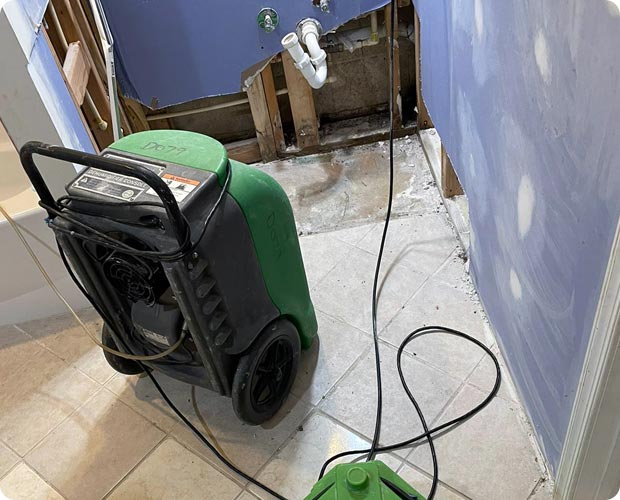
The timing and conditions of clearance testing are specified in the written remediation protocol. Standard protocol requires that containment remains fully in place when samples are collected, that the HEPA-filtered negative air machine has been running for at least 4 hours before sampling, and that an outdoor control sample is collected simultaneously with indoor samples.