
Clearance testing in Petworth: what to know
If you're in Petworth, you're likely in a rowhouse or detached bungalow from the 1900s through the 1920s — with more yard space and original wood porches than the denser blocks closer to downtown. Those original porches and their roof flashing are a common entry point for moisture once they've aged.
If your basement is unfinished or only partly finished, it's probably still running on original 1900s-era drainage that was never designed for the stormwater a fully built-out modern block now sheds — undersized or clogged storm drains are a recurring cause of seepage here.
If you bought a recently renovated or flipped home in Petworth, it's worth knowing that a rushed basement finish over a still-damp foundation is one of the most common ways mold gets sealed inside new drywall before a buyer ever sees it — an independent inspection is the way to check what's behind the new paint.
Mold conditions in Petworth
Common mold types in this area: Stachybotrys chartarum (basement moisture sealed behind rushed renovation drywall); Cladosporium (original wood porches and trim with failed flashing); Penicillium/Aspergillus (unfinished basements with undersized-drain seepage); Chaetomium (older wood framing with chronic low-level moisture).
We serve Petworth Metro, Grant Circle, Rock Creek Church Cemetery, Georgia Avenue corridor, Petworth Recreation Center and the wider Petworth area across ZIP codes 20011.
Signs you need clearance testing
- Remediation has been completed and containment is still in place
- The written protocol specifies clearance testing as a completion requirement
- A real estate transaction requires documented proof of successful remediation
- An insurance claim requires certified clearance documentation
- The remediator has offered to perform their own clearance (this should be declined)
- A previous clearance test failed and re-clearance is required after additional work
How we handle clearance testing in Petworth
Clearance testing is the final step of any IICRC S520-compliant mold remediation and the critical quality control measure that confirms the work was done correctly. The clearance test must be performed by an independent licensed mold assessor — the company or individual that performed the remediation cannot perform their own clearance test. This independence is mandated by the NYS 2015 Mold Law and is best practice in all markets.
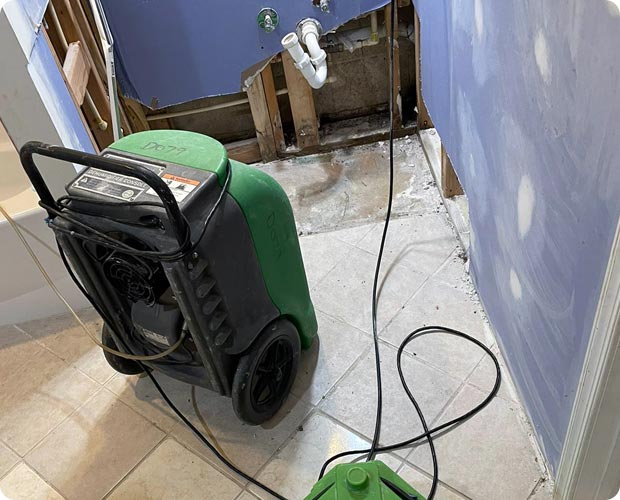
The timing and conditions of clearance testing are specified in the written remediation protocol. Standard protocol requires that containment remains fully in place when samples are collected, that the HEPA-filtered negative air machine has been running for at least 4 hours before sampling, and that an outdoor control sample is collected simultaneously with indoor samples.