
HVAC mold cleaning in Shaw: what to know
If you're in a Shaw rowhouse, you're in one of DC's most historically significant Black neighbourhoods, with homes mostly built from the 1880s through the 1900s on the same party-wall, no-waterproofing-membrane construction seen across the city's older core. In parts of Shaw, decades of deferred maintenance mean some foundations are only now getting their first real look — so a moisture problem surfacing now isn't a sign you've done anything wrong.
Shaw has seen heavy new construction and renovation over the past 15 years, and a lot of it involves digging out basements to add square footage. If your neighbour is doing that kind of excavation next to a 130-year-old shared foundation wall, it can open new water paths into your side, even though the work isn't happening on your property at all.
Like Logan Circle and Shaw's other combined-sewer-era neighbours, a hard summer storm can push contaminated (Category 3) water into your basement, not just rain — it's a real and recurring pattern here, not a rare event.
Mold conditions in Shaw
Common mold types in this area: Stachybotrys chartarum (deferred-maintenance foundations with chronic seepage); Chaetomium (older masonry and framing with long-standing moisture); Penicillium/Aspergillus (basement excavation/renovation-disturbed party walls); Cladosporium (general background growth in humid summer conditions).
We serve Shaw/Howard University Metro, Blagden Alley, Howard Theatre, Convention Center, 9:30 Club (nearby) and the wider Shaw area across ZIP codes 20001.
Signs you need HVAC mold cleaning
- A musty or 'wet dog' smell when the HVAC system kicks on
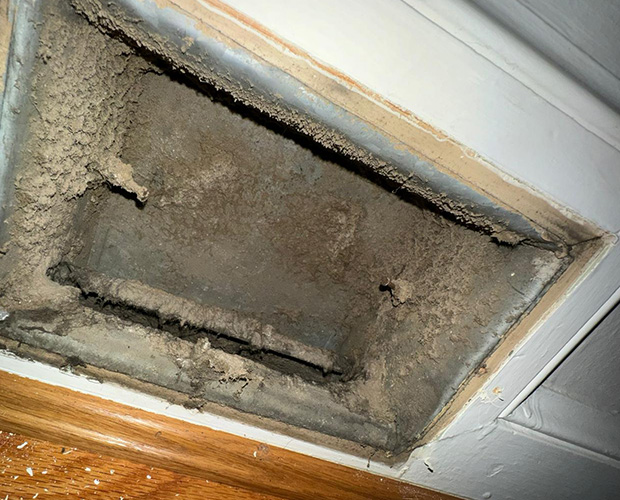
- Visible mold or discolouration around a vent, air handler closet, or condensate line
- Water staining or dampness in a master-bath air handler closet
- Allergy-type symptoms that worsen specifically when the AC is running
- Recurring condensate line clogs or overflow
How we handle HVAC mold cleaning in Shaw
Standard duct cleaning and HVAC mold remediation are not the same service, and the distinction matters. If mold is confirmed inside ductwork or on an air handler coil, that's a mold remediation scope under S520 — assessment, containment appropriate to the space, and treatment of the affected components — not a routine duct-cleaning appointment.
This service shows up with very different footprints across MoldAct's three markets. In Little Havana and Doral's residential sections, HVAC condensate overflow near the master-bath air handler closet is one of the single most common mold sources in Miami's climate — the closet configuration traps condensate that overflows onto drywall and subfloor before anyone notices. In Brickell's high-rise towers, the exposure is structural: centralised HVAC systems serving entire buildings mean a single coil or drain-pan failure can distribute spores to dozens of units through shared air handling, which is a very different scale and liability picture than a single-family condensate closet.