
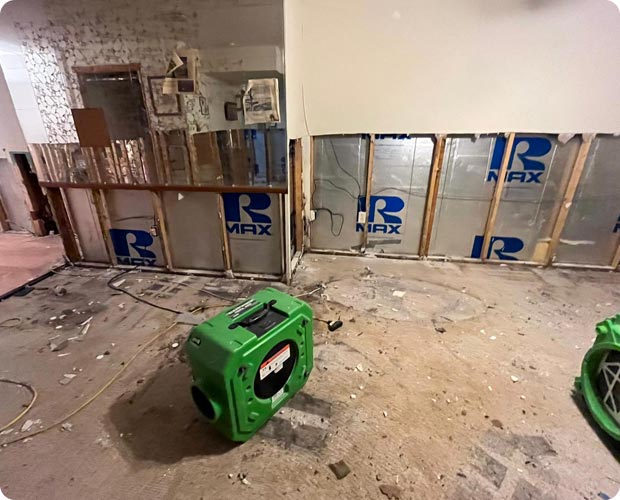
Basement mold removal in Shaw: what to know
If you're in a Shaw rowhouse, you're in one of DC's most historically significant Black neighbourhoods, with homes mostly built from the 1880s through the 1900s on the same party-wall, no-waterproofing-membrane construction seen across the city's older core. In parts of Shaw, decades of deferred maintenance mean some foundations are only now getting their first real look — so a moisture problem surfacing now isn't a sign you've done anything wrong.
Shaw has seen heavy new construction and renovation over the past 15 years, and a lot of it involves digging out basements to add square footage. If your neighbour is doing that kind of excavation next to a 130-year-old shared foundation wall, it can open new water paths into your side, even though the work isn't happening on your property at all.
Like Logan Circle and Shaw's other combined-sewer-era neighbours, a hard summer storm can push contaminated (Category 3) water into your basement, not just rain — it's a real and recurring pattern here, not a rare event.
Mold conditions in Shaw
Common mold types in this area: Stachybotrys chartarum (deferred-maintenance foundations with chronic seepage); Chaetomium (older masonry and framing with long-standing moisture); Penicillium/Aspergillus (basement excavation/renovation-disturbed party walls); Cladosporium (general background growth in humid summer conditions).
We serve Shaw/Howard University Metro, Blagden Alley, Howard Theatre, Convention Center, 9:30 Club (nearby) and the wider Shaw area across ZIP codes 20001.
Signs you need basement mold removal
- Musty odor concentrated in the basement, even without visible growth
- Visible growth on drywall, carpet, or the underside of a dropped ceiling
- Efflorescence (white mineral deposits) or peeling paint on foundation walls — a sign of chronic moisture migration through masonry
- A sump pump nearing end of service life, or a known history of sump pump failure
- Standing water or dampness after heavy rain, even if it drains within a day
How we handle basement mold removal in Shaw
Basements fail for different structural reasons across MoldAct's service area, but the underlying physics is the same: a below-grade space with no vapor barrier, sitting against soil that's wet more often than it's dry. In Baltimore, that's rowhouses built between 1870 and 1940 on unreinforced brick foundations with no waterproofing membrane — basement seepage is close to universal in that stock. In Columbia and other Montgomery County suburbs, it's finished basements — with drywall, carpet, and dropped ceilings hiding a mold problem — where an ageing sump pump or failed exterior waterproofing (both approaching end of service life on 1970s-1990s construction) turns a wet basement into a hidden mold cavity fast.
Hampden's hillside homes add another variant: half-basements and English basements sitting below the natural grade of the hill are a landing point for groundwater working downhill during heavy rain, independent of any single storm event — a chronic condition rather than a one-off leak.