
Water damage restoration in Leonia: what to know
Leonia is a small Bergen County borough on the western slope of the Palisades, bordering Englewood, Fort Lee, Palisades Park, Ridgefield Park and Teaneck. A land development begun in 1899 drew many academics and artists, earning it the nickname the Athens of New Jersey, so a good share of its homes are early-twentieth-century houses.
Homes of that age commonly have older foundations, original roofing and plumbing, and basements without modern waterproofing, so basement seepage, deferred roof maintenance and slow leaks are typical sources of hidden moisture.
Overpeck Creek, a tributary of the Hackensack River, flows past Leonia and the borough shares Overpeck County Park with neighbouring towns. Lower-lying properties near the creek corridor can be exposed to groundwater and runoff after heavy rain, and humid New Jersey summers add routine condensation risk.
Mold conditions in Leonia
Common mold types in this area: Cladosporium (basement walls and window frames in older houses); Penicillium (plaster and drywall below ageing roofs and plumbing); Chaetomium (framing and plaster after long-term leaks); Stachybotrys (basements after chronic seepage or flooding).
We serve Overpeck County Park, Leonia Public Library, Cole-Allaire House and the wider Leonia area across ZIP codes 07605.
Signs you need water damage restoration
- Standing water or saturation from a burst pipe, appliance leak, or roof failure
- Swollen, buckled, or warped flooring after water exposure
- Wet insulation in walls or ceiling visible after a leak
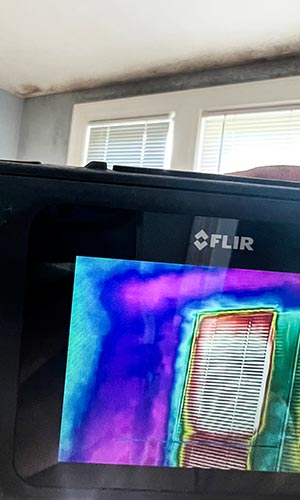
- Water staining on ceilings or walls from a slow or intermittent leak
- Flooding from storm water or sewer backup
- Musty smell developing within days of a water event
How we handle water damage restoration in Leonia
Water damage restoration is time-critical. The IICRC S500 Standard for Professional Water Damage Restoration classifies water by contamination level: Category 1 (clean water from supply lines), Category 2 (grey water from appliances or overflow), and Category 3 (black water from sewage or external flooding). Category classification determines the required level of PPE, drying protocol, and whether affected materials can be dried in place or must be removed.
The 72-hour window is critical: mold can begin growing on wet building materials within 48–72 hours in conditions of elevated temperature and humidity. Immediate water extraction and structural drying within this window prevents a water damage claim from becoming a mold remediation project. This is why MoldAct offers emergency response — delay compounds cost and health risk.