
Clearance testing in Ashburn: what to know
If you're in Ashburn, you're almost certainly in newer construction — most of the area was farmland until the 1990s and 2000s, when it became one of the fastest-growing suburbs in the country, now globally known as the heart of 'Data Center Alley.' Newer construction generally means better foundation waterproofing than older Northern Virginia towns, but it isn't immune to the same HVAC and grading issues every mid-Atlantic suburb deals with.
Ashburn's rapid, dense development over a relatively short window means stormwater management ponds and engineered drainage are common features of newer subdivisions here — when they're properly maintained, basement moisture is genuinely less common than in older towns; when a pond or swale is neglected, it can concentrate runoff toward specific properties instead of dispersing it as designed.
The sheer density of new construction and ongoing development in Ashburn means a new-construction dig near an established property can occasionally disrupt drainage patterns that had kept a neighbouring foundation dry — worth asking about if a moisture problem shows up shortly after nearby construction starts.
Mold conditions in Ashburn
Common mold types in this area: Cladosporium (general background growth in newer suburban construction); Penicillium/Aspergillus (HVAC condensate issues common to newer mid-Atlantic suburbs); Stachybotrys chartarum (concentrated runoff from neglected stormwater management features); Chaetomium (drainage disruption from adjacent new-construction activity).
We serve Data Center Alley, One Loudoun, Ashburn Village, W&OD Trail, Brambleton (nearby) and the wider Ashburn area across ZIP codes 20147, 20148.
Signs you need clearance testing
- Remediation has been completed and containment is still in place
- The written protocol specifies clearance testing as a completion requirement
- A real estate transaction requires documented proof of successful remediation
- An insurance claim requires certified clearance documentation
- The remediator has offered to perform their own clearance (this should be declined)
- A previous clearance test failed and re-clearance is required after additional work
How we handle clearance testing in Ashburn
Clearance testing is the final step of any IICRC S520-compliant mold remediation and the critical quality control measure that confirms the work was done correctly. The clearance test must be performed by an independent licensed mold assessor — the company or individual that performed the remediation cannot perform their own clearance test. This independence is mandated by the NYS 2015 Mold Law and is best practice in all markets.
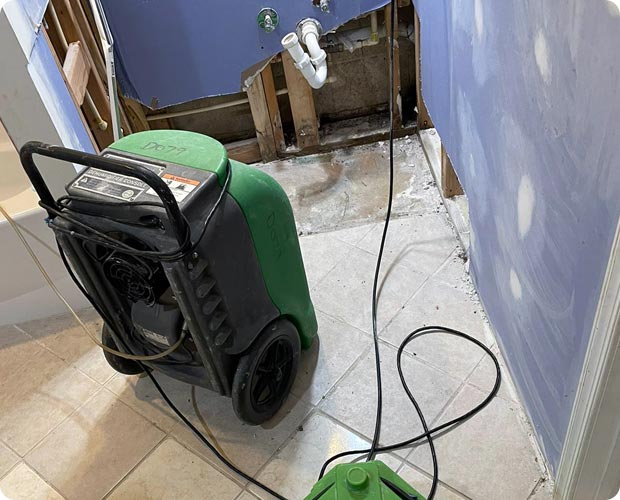
The timing and conditions of clearance testing are specified in the written remediation protocol. Standard protocol requires that containment remains fully in place when samples are collected, that the HEPA-filtered negative air machine has been running for at least 4 hours before sampling, and that an outdoor control sample is collected simultaneously with indoor samples.