
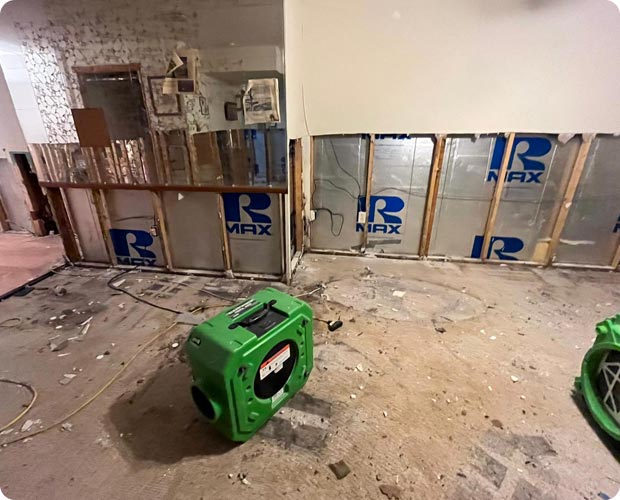
Basement mold removal in Ashburn: what to know
If you're in Ashburn, you're almost certainly in newer construction — most of the area was farmland until the 1990s and 2000s, when it became one of the fastest-growing suburbs in the country, now globally known as the heart of 'Data Center Alley.' Newer construction generally means better foundation waterproofing than older Northern Virginia towns, but it isn't immune to the same HVAC and grading issues every mid-Atlantic suburb deals with.
Ashburn's rapid, dense development over a relatively short window means stormwater management ponds and engineered drainage are common features of newer subdivisions here — when they're properly maintained, basement moisture is genuinely less common than in older towns; when a pond or swale is neglected, it can concentrate runoff toward specific properties instead of dispersing it as designed.
The sheer density of new construction and ongoing development in Ashburn means a new-construction dig near an established property can occasionally disrupt drainage patterns that had kept a neighbouring foundation dry — worth asking about if a moisture problem shows up shortly after nearby construction starts.
Mold conditions in Ashburn
Common mold types in this area: Cladosporium (general background growth in newer suburban construction); Penicillium/Aspergillus (HVAC condensate issues common to newer mid-Atlantic suburbs); Stachybotrys chartarum (concentrated runoff from neglected stormwater management features); Chaetomium (drainage disruption from adjacent new-construction activity).
We serve Data Center Alley, One Loudoun, Ashburn Village, W&OD Trail, Brambleton (nearby) and the wider Ashburn area across ZIP codes 20147, 20148.
Signs you need basement mold removal
- Musty odor concentrated in the basement, even without visible growth
- Visible growth on drywall, carpet, or the underside of a dropped ceiling
- Efflorescence (white mineral deposits) or peeling paint on foundation walls — a sign of chronic moisture migration through masonry
- A sump pump nearing end of service life, or a known history of sump pump failure
- Standing water or dampness after heavy rain, even if it drains within a day
How we handle basement mold removal in Ashburn
Basements fail for different structural reasons across MoldAct's service area, but the underlying physics is the same: a below-grade space with no vapor barrier, sitting against soil that's wet more often than it's dry. In Baltimore, that's rowhouses built between 1870 and 1940 on unreinforced brick foundations with no waterproofing membrane — basement seepage is close to universal in that stock. In Columbia and other Montgomery County suburbs, it's finished basements — with drywall, carpet, and dropped ceilings hiding a mold problem — where an ageing sump pump or failed exterior waterproofing (both approaching end of service life on 1970s-1990s construction) turns a wet basement into a hidden mold cavity fast.
Hampden's hillside homes add another variant: half-basements and English basements sitting below the natural grade of the hill are a landing point for groundwater working downhill during heavy rain, independent of any single storm event — a chronic condition rather than a one-off leak.