
Mold remediation in Yonkers: what to know
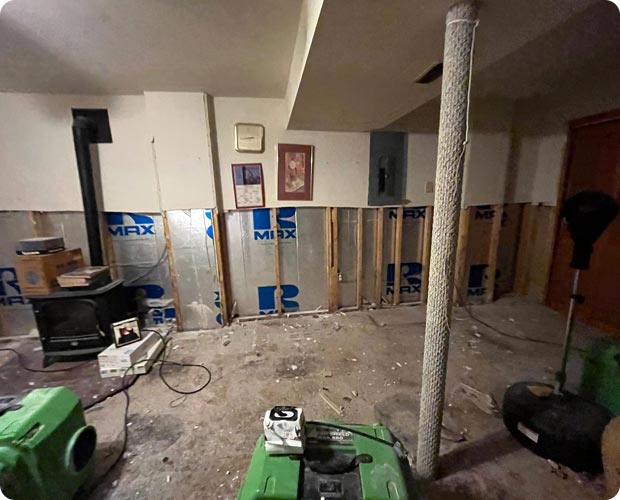
A lot of Yonkers was built into the hillside above the Hudson — pre-war apartment buildings and single-family homes from the 1900s through the 1950s, many of them brick and masonry from an era before modern waterproofing was even a standard practice. That's part of what gives Yonkers its character, but it also means basement and top-floor mold shows up more often here than in newer towns nearby — not because anyone's neglected the building, just because of when and how it was built.
Yonkers gets real winters — cold, snowy, with the kind of freeze-thaw cycles that build ice dams on older roofs. Ice dams push meltwater back up under shingles instead of off the roof, and that water finds its way into attic spaces and wall cavities where it sits, unseen, until it's mold. If you've noticed a stain on a top-floor ceiling after a thaw, that's usually where it started.
The city's water mains are ageing too, a lot of them dating to the early-to-mid 20th century, so main breaks and slow service-line leaks happen more often here than in a newer municipality — and in a multi-family building, that kind of leak can saturate basement framing quietly for a while before anyone reports it. If your building has had a water main issue nearby, it's worth having your basement checked even if nothing looks obviously wrong yet.
Mold conditions in Yonkers
Common mold types in this area: Cladosporium (the common background species, elevated indoors once there's basement moisture); Penicillium/Aspergillus (frequent in older apartment basements and original plaster walls); Stachybotrys chartarum ('black mold' — points to chronic seepage or a main-break event, not a fresh leak); Chaetomium (a sign of a long-standing moisture problem, often from a roof or ice-dam leak that's been going on a while).
We serve Hudson River Museum, Philipse Manor Hall State Historic Site, Untermyer Park and Gardens, Empire City Casino at Yonkers Raceway, Yonkers waterfront on the Hudson River and the wider Yonkers area across ZIP codes 10710, 10701, 10703, 10704, 10705.
Signs you need mold remediation
- Visible mold covering more than about 10 square feet — beyond a DIY-scale cleanup
- Musty odor or visible growth returning after a bleach or store-bought spray treatment
- Mold on porous material — drywall, insulation, carpet — that can't simply be wiped clean
- A documented moisture event (flood, chronic leak) with mold discovered afterward
- A written inspection protocol in hand and ready to act on
How we handle mold remediation in Yonkers
Across MoldAct's markets the remediation process is the same standard — S520 — but the moisture source it's chasing differs by geography. In Baltimore and the older NJ housing stock, the source is usually chronic: ageing plumbing, foundations with failed or absent waterproofing, decades of intermittent seepage. In Miami, source correction more often means a single acute event — an HVAC condensate line, a balcony seal, a hurricane-season roof or window failure — but the fast climate means the window to act before Stachybotrys establishes (roughly 8-12 days of sustained wetting) is shorter.
Source correction always comes first: remediating mold without fixing what's making it wet is remediation that will need to be repeated. From there, containment scales to the affected area — poly sheeting over a small localised area, or a full floor-to-ceiling barrier with negative air pressure (HEPA scrubbers) for larger or Condition 3 jobs.