Mold remediation built for Laurel
If you're in Laurel's historic mill-town core along the Patuxent River, you're likely in a home dating back over a century to the town's original textile-mill economy — older wood-frame and masonry construction with the same lack of modern waterproofing seen in older housing stock throughout the region.
Sitting almost exactly halfway between DC and Baltimore, Laurel gets the same humid mid-Atlantic summers as both cities, and its proximity to the Patuxent River means low-lying, river-adjacent properties have a real, documented flood risk after heavy regional storms.
Much of Laurel's newer housing, built from the 1960s through the 1990s as a bedroom community for both DC and Baltimore commuters, sits on standard slab and basement construction where HVAC and grading issues are more common drivers than historic masonry.
Common mold types in Laurel
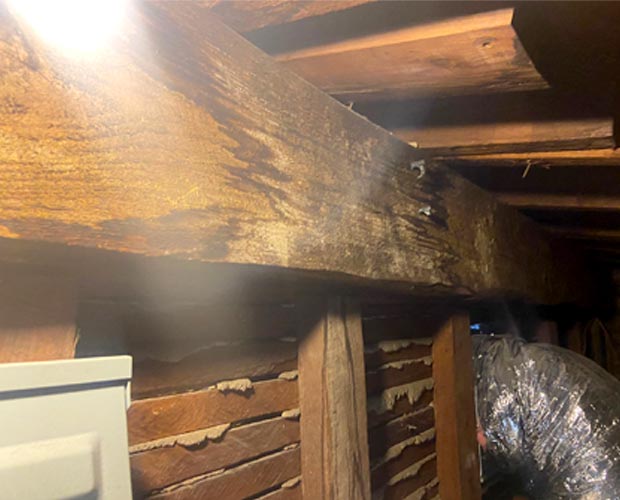
- Chaetomium (century-old mill-town wood-frame and masonry buildings)
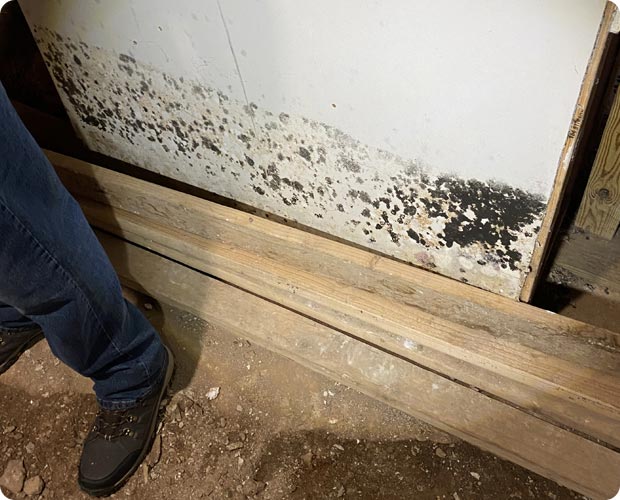
- Stachybotrys chartarum (Patuxent River-adjacent flooding on low-lying properties)
- Cladosporium (slab and basement construction in 1960s–1990s subdivisions)
- Penicillium/Aspergillus (HVAC condensate issues in mid-century bedroom-community housing)
We serve Main Street Laurel Historic District, Patuxent River, Laurel Lakes, Riverfront Park, Montpelier Mansion (nearby) and the wider Laurel area across ZIP codes 20707, 20708, 20723.
Mold testing and air quality testing in Laurel
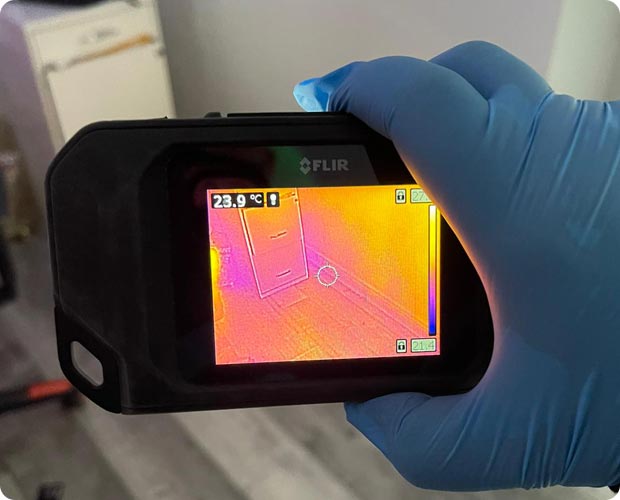
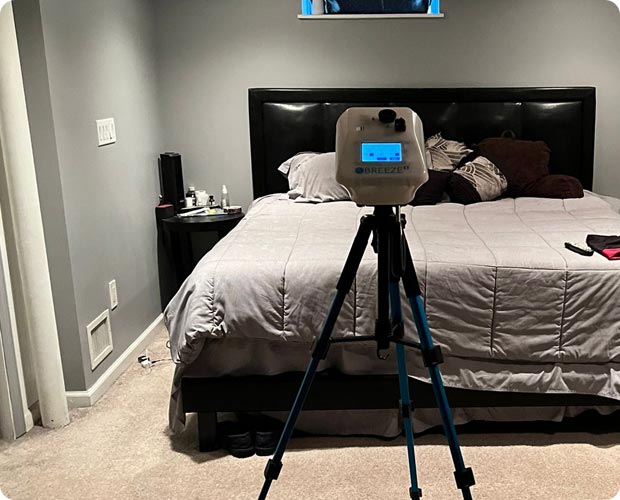
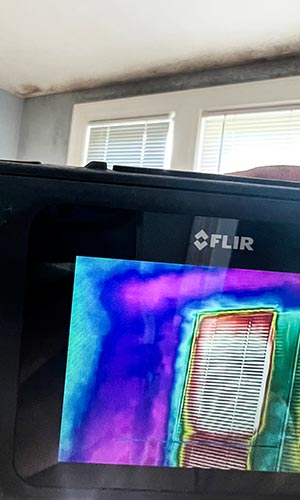
Not sure whether you have mold, or how far it has spread? A mold test in Laurel, MD answers that with lab evidence instead of guesswork. Indoor air samples are compared with an outdoor control sample, surface samples are taken where growth is visible, and everything is analysed by an AIHA-accredited laboratory for species and spore counts.
It's worth booking a mold test in Laurel when you have:
- Unexplained musty odour with no visible mold
- Health symptoms that improve when occupants leave the building
- Post-remediation verification that work was completed successfully
- Pre-purchase due diligence on a home or commercial property
- Landlord-tenant dispute requiring independent third-party documentation
- Insurance claim requiring laboratory evidence of mold type and extent
The written report tells you whether you need remediation, gives you documentation for an insurance claim or a landlord, or confirms a past cleanup worked (clearance testing). How our mold testing works →