Mold remediation built for Fort Worth
Fort Worth sits on the region's characteristic expansive clay soils — locally known as 'black gumbo' — which swell and shrink dramatically with rainfall and drought cycles, cracking slab foundations and pier-and-beam substructures and creating a persistent entry point for groundwater and mold.
The area's humid subtropical climate brings hot, humid summers followed by intense spring storm systems; homes built on slab-on-grade foundations (the dominant construction method across North Texas from the 1950s onward) are especially vulnerable to moisture wicking up through foundation cracks.
Older near-downtown and east-side neighbourhoods have aging cast-iron and clay sewer laterals that are prone to root intrusion and slow leaks, often saturating subfloor and slab-adjacent framing long before a leak is discovered.
Common mold types in Fort Worth
- Aspergillus/Penicillium (HVAC systems and slab-foundation moisture)
- Cladosporium (exterior wood trim and ambient outdoor background)
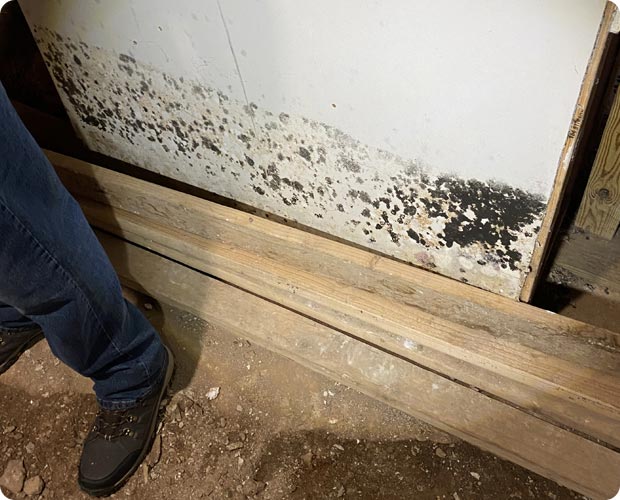
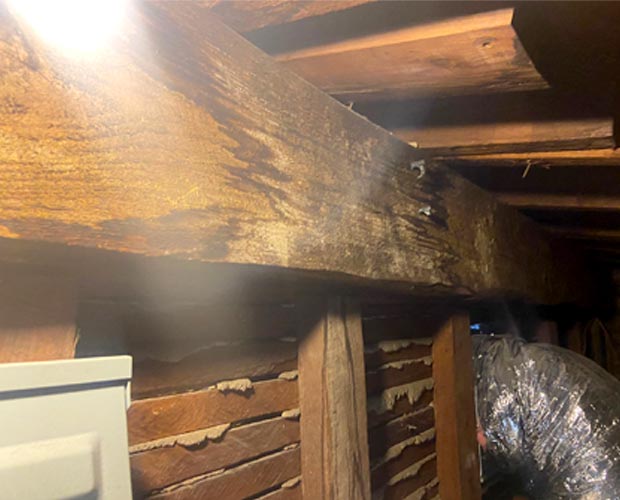
- Stachybotrys chartarum (chronic slab-crack or plumbing-leak moisture)
- Chaetomium (water-damaged drywall and subflooring)
We serve Fort Worth Stockyards, Sundance Square, Kimbell Art Museum, Fort Worth Botanic Garden, Texas Christian University and the wider Fort Worth area across ZIP codes 76112, 76102, 76107, 76109, 76244.
Mold testing and air quality testing in Fort Worth
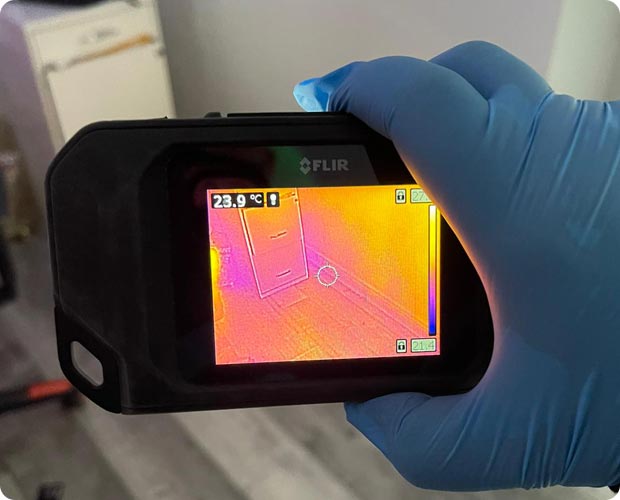
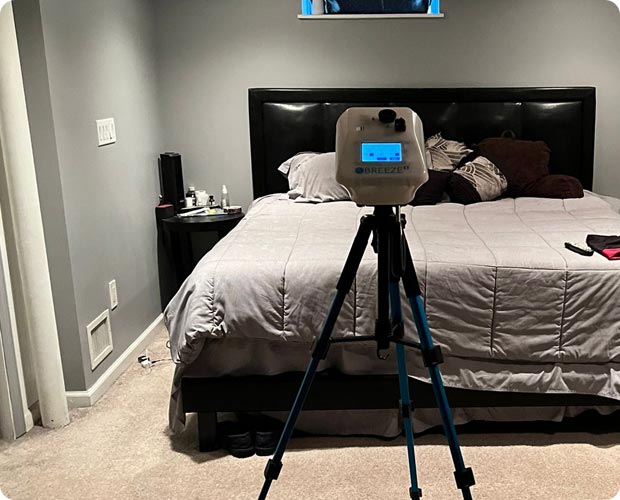
Not sure whether you have mold, or how far it has spread? A mold test in Fort Worth, TX answers that with lab evidence instead of guesswork. Indoor air samples are compared with an outdoor control sample, surface samples are taken where growth is visible, and everything is analysed by an AIHA-accredited laboratory for species and spore counts.
It's worth booking a mold test in Fort Worth when you have:
- Unexplained musty odour with no visible mold
- Health symptoms that improve when occupants leave the building
- Post-remediation verification that work was completed successfully
- Pre-purchase due diligence on a home or commercial property
- Landlord-tenant dispute requiring independent third-party documentation
- Insurance claim requiring laboratory evidence of mold type and extent
The written report tells you whether you need remediation, gives you documentation for an insurance claim or a landlord, or confirms a past cleanup worked (clearance testing). How our mold testing works →