
Clearance testing in Roland Park: what to know
Roland Park is one of Baltimore's earliest planned suburbs, with large detached homes from the 1890s–1920s on heavily wooded lots — organic leaf litter accumulates against foundations, increasing moisture infiltration and mold risk.
Many Roland Park homes have original slate roofs and aging copper gutters — gutter failures and roof penetration leaks are common moisture sources for attic and wall mold.
Mold conditions in Roland Park
Common mold types in this area: Cladosporium (attic and exterior wood); Aspergillus (basement and crawl spaces); Stachybotrys (attic from ice dam or gutter failure).
We serve Roland Park Country School, Stony Run Trail, Roland Park Shopping Center, Gilman School (nearby) and the wider Roland Park area across ZIP codes 21210.
Signs you need clearance testing
- Remediation has been completed and containment is still in place
- The written protocol specifies clearance testing as a completion requirement
- A real estate transaction requires documented proof of successful remediation
- An insurance claim requires certified clearance documentation
- The remediator has offered to perform their own clearance (this should be declined)
- A previous clearance test failed and re-clearance is required after additional work
How we handle clearance testing in Roland Park
Clearance testing is the final step of any IICRC S520-compliant mold remediation and the critical quality control measure that confirms the work was done correctly. The clearance test must be performed by an independent licensed mold assessor — the company or individual that performed the remediation cannot perform their own clearance test. This independence is mandated by the NYS 2015 Mold Law and is best practice in all markets.
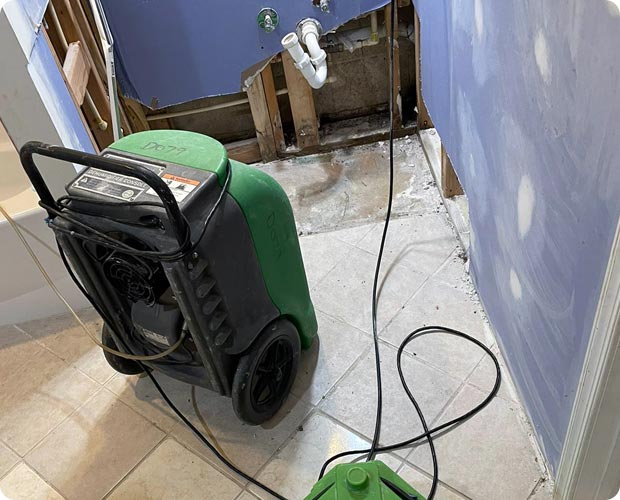
The timing and conditions of clearance testing are specified in the written remediation protocol. Standard protocol requires that containment remains fully in place when samples are collected, that the HEPA-filtered negative air machine has been running for at least 4 hours before sampling, and that an outdoor control sample is collected simultaneously with indoor samples.