
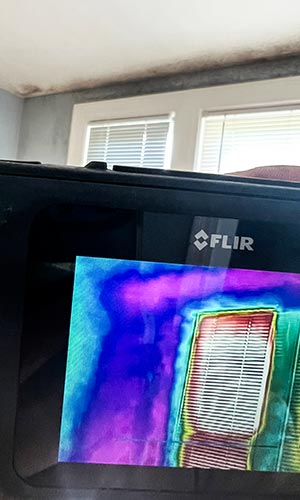
Water damage restoration in Adams Morgan: what to know
If you're in an Adams Morgan apartment or rowhouse, you're probably in a building from the early 1900s that's been carved up and converted multiple times over the past century — each conversion adds new plumbing runs through old wall cavities, and not every one was sealed and vented correctly the first time.
You're on some of DC's steeper terrain here, sloping toward Rock Creek Park, so grading and stormwater runoff toward lower-lying buildings is a real factor in basement moisture — distinct from the flatter blocks elsewhere in the city's core.
If you're a renter in one of Adams Morgan's older apartment buildings, high turnover means shared-wall and shared-stack leaks often get reported late — by the time you notice a smell, the leak may have been active for months before you moved in.
Mold conditions in Adams Morgan
Common mold types in this area: Penicillium/Aspergillus (multi-conversion apartment buildings with retrofitted plumbing); Cladosporium (general background growth, elevated by hillside runoff moisture); Stachybotrys chartarum (undetected shared-stack leaks in older apartment buildings); Chaetomium (long-standing moisture in early-1900s wood framing).
We serve 18th Street NW corridor, Meridian Hill / Malcolm X Park, Line Hotel, Adams Morgan Farmers Market, Rock Creek Park and the wider Adams Morgan area across ZIP codes 20009.
Signs you need water damage restoration
- Standing water or saturation from a burst pipe, appliance leak, or roof failure
- Swollen, buckled, or warped flooring after water exposure
- Wet insulation in walls or ceiling visible after a leak
- Water staining on ceilings or walls from a slow or intermittent leak
- Flooding from storm water or sewer backup
- Musty smell developing within days of a water event
How we handle water damage restoration in Adams Morgan
Water damage restoration is time-critical. The IICRC S500 Standard for Professional Water Damage Restoration classifies water by contamination level: Category 1 (clean water from supply lines), Category 2 (grey water from appliances or overflow), and Category 3 (black water from sewage or external flooding). Category classification determines the required level of PPE, drying protocol, and whether affected materials can be dried in place or must be removed.
The 72-hour window is critical: mold can begin growing on wet building materials within 48–72 hours in conditions of elevated temperature and humidity. Immediate water extraction and structural drying within this window prevents a water damage claim from becoming a mold remediation project. This is why MoldAct offers emergency response — delay compounds cost and health risk.