
HVAC mold cleaning in Potomac: what to know
Potomac's high-value single-family homes — many on heavily wooded 1–5 acre lots — face constant organic debris accumulation on roofs and in gutters. Leaf and branch debris traps moisture on roofing substrates, accelerating shingle degradation and creating attic mold entry points that go undetected for years.
Large Potomac properties frequently have pool houses, guest suites over garages, and finished basement home offices — each a separate potential mold location requiring independent inspection. Deferred maintenance on accessory structures is a common mold source.
The combination of clay soil (poor drainage), heavy tree canopy (high ambient humidity under the canopy), and older home construction (1970s–1990s) creates a high-mold-risk environment where inspection at time of purchase and after any water event is essential.
Mold conditions in Potomac
Common mold types in this area: Cladosporium (attic — dominant in roof-deck and rafter mold from gutter overflow); Stachybotrys (attic framing from chronic slow roof leaks in older Potomac estates); Aspergillus/Penicillium (pool house and accessory building humidity); Chaetomium (water-damaged drywall in basements and lower-level home offices).
We serve Potomac Village, C&O Canal National Historical Park, Cabin John Regional Park, The Potomac School (nearby), Avenel Golf Course and the wider Potomac area across ZIP codes 20854.
Signs you need HVAC mold cleaning
- A musty or 'wet dog' smell when the HVAC system kicks on
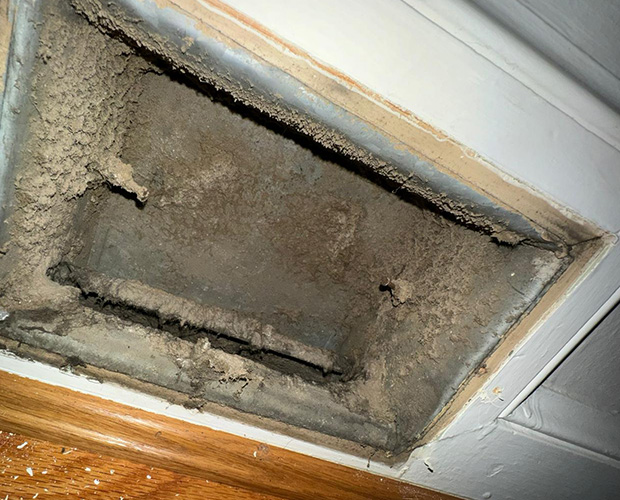
- Visible mold or discolouration around a vent, air handler closet, or condensate line
- Water staining or dampness in a master-bath air handler closet
- Allergy-type symptoms that worsen specifically when the AC is running
- Recurring condensate line clogs or overflow
How we handle HVAC mold cleaning in Potomac
Standard duct cleaning and HVAC mold remediation are not the same service, and the distinction matters. If mold is confirmed inside ductwork or on an air handler coil, that's a mold remediation scope under S520 — assessment, containment appropriate to the space, and treatment of the affected components — not a routine duct-cleaning appointment.
This service shows up with very different footprints across MoldAct's three markets. In Little Havana and Doral's residential sections, HVAC condensate overflow near the master-bath air handler closet is one of the single most common mold sources in Miami's climate — the closet configuration traps condensate that overflows onto drywall and subfloor before anyone notices. In Brickell's high-rise towers, the exposure is structural: centralised HVAC systems serving entire buildings mean a single coil or drain-pan failure can distribute spores to dozens of units through shared air handling, which is a very different scale and liability picture than a single-family condensate closet.