
HVAC mold cleaning in Chevy Chase: what to know
Chevy Chase's pre-war detached homes — primarily 1920s–1940s colonial and Tudor revival construction — have full basements with original block or brick foundation walls that exhibit moisture infiltration through mortar joints and wall cracks during wet seasons.
The neighbourhood's older plaster-on-wood-lath wall construction retains moisture more aggressively than modern drywall, and plaster that has been penetrated by a slow plumbing leak can support hidden mold for years before symptoms appear.
Chevy Chase has a strong historic preservation community — mold remediation in this neighbourhood requires assessors familiar with historic construction materials to avoid damaging irreplaceable plaster, tile, and wood finishes.
Mold conditions in Chevy Chase
Common mold types in this area: Penicillium (historic plaster walls and ceilings with moisture infiltration); Cladosporium (basement block walls and wood trim); Stachybotrys (basement sill plates with chronic foundation moisture); Chaetomium (water-damaged plaster in older homes with deferred roof maintenance).
We serve Chevy Chase Club, Chevy Chase Lake, Friendship Heights (nearby), Brookside Gardens, Meadowbrook Local Park and the wider Chevy Chase area across ZIP codes 20815.
Signs you need HVAC mold cleaning
- A musty or 'wet dog' smell when the HVAC system kicks on
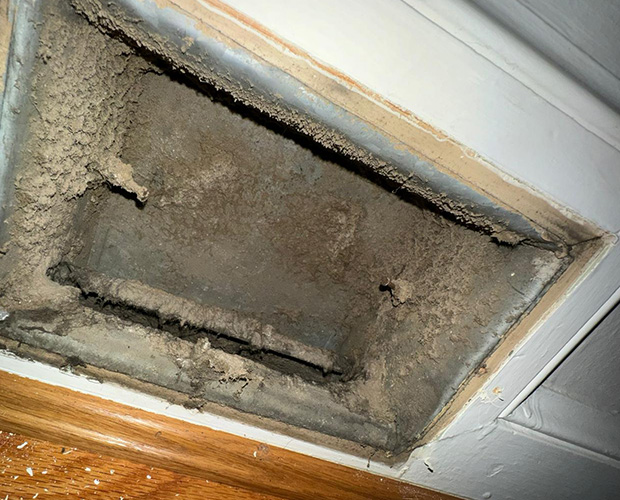
- Visible mold or discolouration around a vent, air handler closet, or condensate line
- Water staining or dampness in a master-bath air handler closet
- Allergy-type symptoms that worsen specifically when the AC is running
- Recurring condensate line clogs or overflow
How we handle HVAC mold cleaning in Chevy Chase
Standard duct cleaning and HVAC mold remediation are not the same service, and the distinction matters. If mold is confirmed inside ductwork or on an air handler coil, that's a mold remediation scope under S520 — assessment, containment appropriate to the space, and treatment of the affected components — not a routine duct-cleaning appointment.
This service shows up with very different footprints across MoldAct's three markets. In Little Havana and Doral's residential sections, HVAC condensate overflow near the master-bath air handler closet is one of the single most common mold sources in Miami's climate — the closet configuration traps condensate that overflows onto drywall and subfloor before anyone notices. In Brickell's high-rise towers, the exposure is structural: centralised HVAC systems serving entire buildings mean a single coil or drain-pan failure can distribute spores to dozens of units through shared air handling, which is a very different scale and liability picture than a single-family condensate closet.