
HVAC mold cleaning in Bethesda: what to know
Bethesda's affluent housing stock includes many high-value properties with finished basements and below-grade home offices — water intrusion in these spaces causes costly mold damage in finished materials that requires full remediation and reconstruction.
Bethesda's older split-level and colonial-style homes (1960s–1980s) have block foundations with aging damp-proofing that deteriorates and admits groundwater after heavy rain.
Mold conditions in Bethesda
Common mold types in this area: Cladosporium (basement and lower levels); Penicillium/Aspergillus (finished basement drywall and carpet); Stachybotrys (persistent foundation moisture in older homes).
We serve NIH Campus, Walter Reed National Military Medical Center, Bethesda Row, Barnes & Noble Bethesda and the wider Bethesda area across ZIP codes 20814, 20816, 20817.
Signs you need HVAC mold cleaning
- A musty or 'wet dog' smell when the HVAC system kicks on
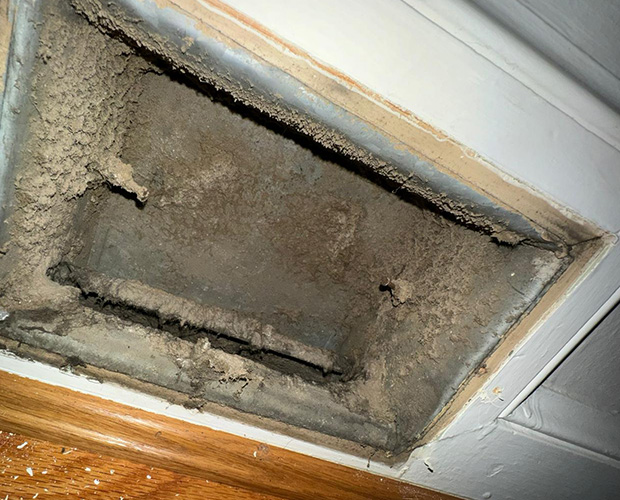
- Visible mold or discolouration around a vent, air handler closet, or condensate line
- Water staining or dampness in a master-bath air handler closet
- Allergy-type symptoms that worsen specifically when the AC is running
- Recurring condensate line clogs or overflow
How we handle HVAC mold cleaning in Bethesda
Standard duct cleaning and HVAC mold remediation are not the same service, and the distinction matters. If mold is confirmed inside ductwork or on an air handler coil, that's a mold remediation scope under S520 — assessment, containment appropriate to the space, and treatment of the affected components — not a routine duct-cleaning appointment.
This service shows up with very different footprints across MoldAct's three markets. In Little Havana and Doral's residential sections, HVAC condensate overflow near the master-bath air handler closet is one of the single most common mold sources in Miami's climate — the closet configuration traps condensate that overflows onto drywall and subfloor before anyone notices. In Brickell's high-rise towers, the exposure is structural: centralised HVAC systems serving entire buildings mean a single coil or drain-pan failure can distribute spores to dozens of units through shared air handling, which is a very different scale and liability picture than a single-family condensate closet.