HVAC mold cleaning in Ellicott City: what to know
Ellicott City experienced catastrophic flash floods in May 2016 and July 2018, both resulting in extreme storm water damage to properties in the historic main street corridor and surrounding areas. Properties not professionally dried and remediated after these events have elevated mold risk.
The town's location at the confluence of the Patapsco River and Tiber Creek places lower-elevation properties at ongoing flood risk from intense rainfall events that are becoming more frequent with changing weather patterns.
Historic Ellicott City has stone and brick structures dating from the late 1700s that have no modern waterproofing — moisture infiltration is a chronic condition, not an event.
Mold conditions in Ellicott City
Common mold types in this area: Stachybotrys (framing in flood-affected properties); Chaetomium (water-damaged drywall post-flood); Cladosporium (exterior masonry and wood trim); Aspergillus (stored materials in flooded basements).
We serve Historic Ellicott City Main Street, Patapsco Valley State Park, B&O Railroad Station Museum, Tiber-Hudson Confluence and the wider Ellicott City area across ZIP codes 21042, 21043.
Signs you need HVAC mold cleaning
- A musty or 'wet dog' smell when the HVAC system kicks on
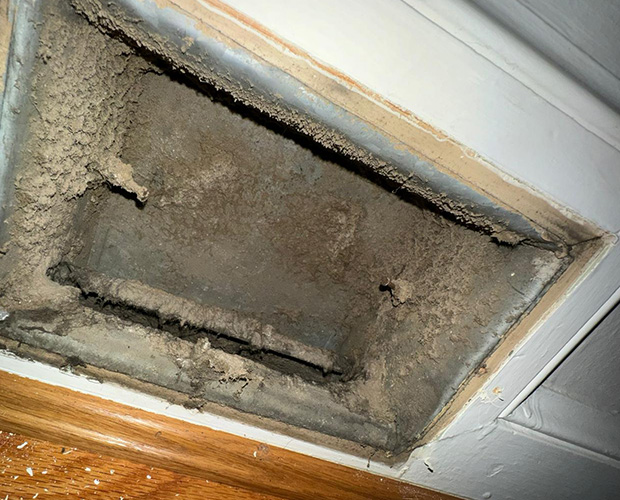
- Visible mold or discolouration around a vent, air handler closet, or condensate line
- Water staining or dampness in a master-bath air handler closet
- Allergy-type symptoms that worsen specifically when the AC is running
- Recurring condensate line clogs or overflow
How we handle HVAC mold cleaning in Ellicott City
Standard duct cleaning and HVAC mold remediation are not the same service, and the distinction matters. If mold is confirmed inside ductwork or on an air handler coil, that's a mold remediation scope under S520 — assessment, containment appropriate to the space, and treatment of the affected components — not a routine duct-cleaning appointment.
This service shows up with very different footprints across MoldAct's three markets. In Little Havana and Doral's residential sections, HVAC condensate overflow near the master-bath air handler closet is one of the single most common mold sources in Miami's climate — the closet configuration traps condensate that overflows onto drywall and subfloor before anyone notices. In Brickell's high-rise towers, the exposure is structural: centralised HVAC systems serving entire buildings mean a single coil or drain-pan failure can distribute spores to dozens of units through shared air handling, which is a very different scale and liability picture than a single-family condensate closet.