
Black mold removal in Chevy Chase: what to know
Chevy Chase's pre-war detached homes — primarily 1920s–1940s colonial and Tudor revival construction — have full basements with original block or brick foundation walls that exhibit moisture infiltration through mortar joints and wall cracks during wet seasons.
The neighbourhood's older plaster-on-wood-lath wall construction retains moisture more aggressively than modern drywall, and plaster that has been penetrated by a slow plumbing leak can support hidden mold for years before symptoms appear.
Chevy Chase has a strong historic preservation community — mold remediation in this neighbourhood requires assessors familiar with historic construction materials to avoid damaging irreplaceable plaster, tile, and wood finishes.
Mold conditions in Chevy Chase
Common mold types in this area: Penicillium (historic plaster walls and ceilings with moisture infiltration); Cladosporium (basement block walls and wood trim); Stachybotrys (basement sill plates with chronic foundation moisture); Chaetomium (water-damaged plaster in older homes with deferred roof maintenance).
We serve Chevy Chase Club, Chevy Chase Lake, Friendship Heights (nearby), Brookside Gardens, Meadowbrook Local Park and the wider Chevy Chase area across ZIP codes 20815.
Signs you need black mold removal
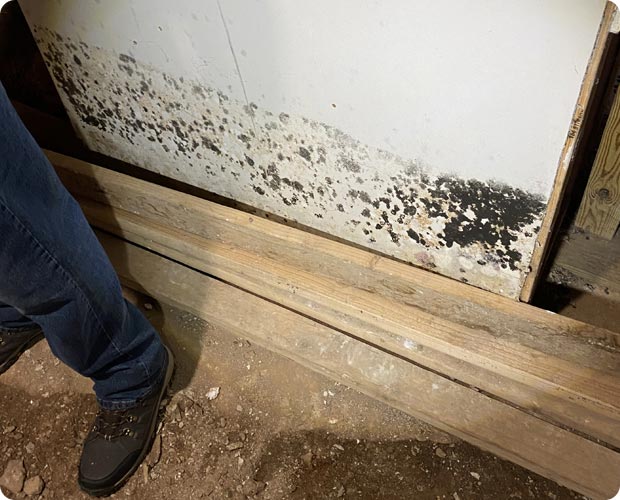
- Slimy black or dark greenish-black growth, typically on wet drywall, wood framing, or paper-faced materials
- A history of chronic wetness — a slow leak behind a wall, or a flood/flood-adjacent event that wasn't fully dried within days
- A musty odor without obvious visible growth (surface sampling may be needed to confirm)
- Chaetomium co-occurring — a brown-to-olive-black species that frequently appears alongside Stachybotrys after prolonged wetting, and is itself a strong indicator of a long-standing moisture problem
How we handle black mold removal in Chevy Chase
'Black mold' is a term used loosely for anything dark and alarming, but in remediation it specifically means Stachybotrys chartarum — slimy, black to dark greenish-black, and slow to establish: it typically takes 8-12 days of sustained wet conditions on cellulose material (drywall paper is ideal) to take hold. That slow timeline is actually useful context: Stachybotrys usually signals a chronic, undetected leak or a flood that wasn't dried out fast enough, not a one-day event.
The 'toxic mold' framing overstates some things and understates others. Stachybotrys does produce trichothecene mycotoxins, and it does warrant professional remediation — that concern is legitimate. But whether it causes illness in a given household depends on mycotoxin concentration, exposure duration, and individual sensitivity, which are questions for a physician or certified industrial hygienist, not a remediation contractor.