
Bathroom mold removal in Boca Raton: what to know
Most homes in Boca Raton are built the South Florida way — concrete block and stucco (CBS), a lot of it going up in the 1960s through 1990s along the canals and the Intracoastal. It's a solid way to build for hurricanes, but stucco cracks over time, and cracked stucco plus a failed pool-deck or window flashing is one of the most common ways moisture gets into an otherwise sound wall — quietly, behind the paint, long before you'd ever see it from the outside.
This is a genuinely humid place to live — near-daily afternoon thunderstorms from May through October and humidity sitting above 70% for most of the year. In that kind of climate, an HVAC condensate line or drain pan that fails doesn't give you weeks to notice it — mold can show up in days. If your AC has started smelling a bit off, that's worth listening to.
Boca Raton has been through real storms — Irma in 2017 and others since. If your property took on water back then and wasn't fully dried out and checked afterward, it's genuinely common for mold to still be sitting in a wall cavity or attic space years later, waiting to be found. That's not a scare story — it's just how South Florida construction and South Florida weather interact, and it's exactly the kind of thing an honest inspection is built to find.
Mold conditions in Boca Raton
Common mold types in this area: Aspergillus/Penicillium (the most common finds here — HVAC condensate failures and everyday interior humidity); Cladosporium (exterior stucco and the general outdoor background, elevated indoors once there's moisture); Stachybotrys chartarum ('black mold' — usually points to a post-storm or chronic HVAC-leak wall cavity, not a fresh, one-day event); Curvularia (a tropical species common to South Florida's climate).
We serve Mizner Park, Boca Raton Museum of Art, Florida Atlantic University, Red Reef Park, Royal Palm Place and the wider Boca Raton area across ZIP codes 33431, 33432, 33433, 33434, 33486.
Signs you need bathroom mold removal
- Black or greenish mould visible on grout lines, caulk, or tile surfaces
- Soft or spongy drywall at the base of the shower or bath surround
- Bubbling, cracked, or loose tiles — often indicating moisture migration behind
- Persistent musty odour in the bathroom after surface cleaning
- Staining on the ceiling below a bathroom (mold in subfloor or hidden leak)
- Visible mold at the base of toilet, vanity, or around plumbing penetrations
How we handle bathroom mold removal in Boca Raton
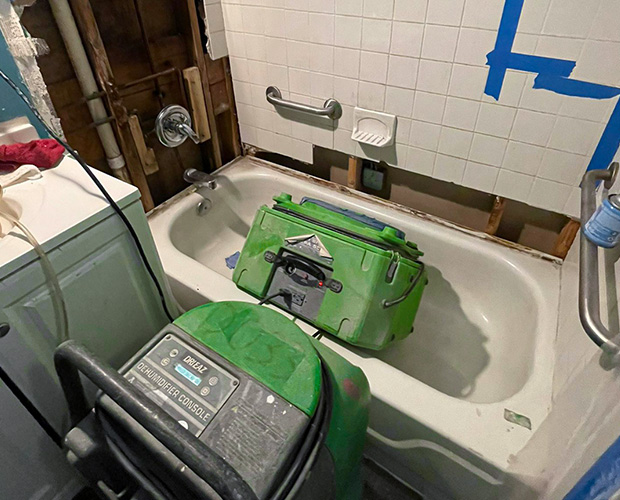
Bathroom mold is extremely common and ranges from minor surface growth on grout and caulk to serious structural mold growth behind tile, in wall cavities, and under subfloor decking. The difference matters enormously: surface mold on a non-porous substrate (glazed tile, sealed grout) can often be professionally cleaned without demolition; mold inside the wall cavity requires opening the wall, removing affected drywall and insulation, and following IICRC S520 protocol.
The most common bathroom moisture sources are: inadequate or non-functioning exhaust ventilation, grout and caulk failures that allow water into wall cavities, overflow from showers or tubs, and chronic toilet base leaks. In all cases, the moisture source must be corrected before any mold treatment — retiling over wet, contaminated drywall simply delays the problem.