Mold remediation built for Plano
Plano's housing stock is dominated by 1970s–2000s master-planned suburban construction on slab-on-grade foundations — the same Blackland Prairie clay soils that affect the broader Dallas-Fort Worth metro cause foundation movement that cracks slabs and lets moisture migrate into subfloor and wall-base assemblies.
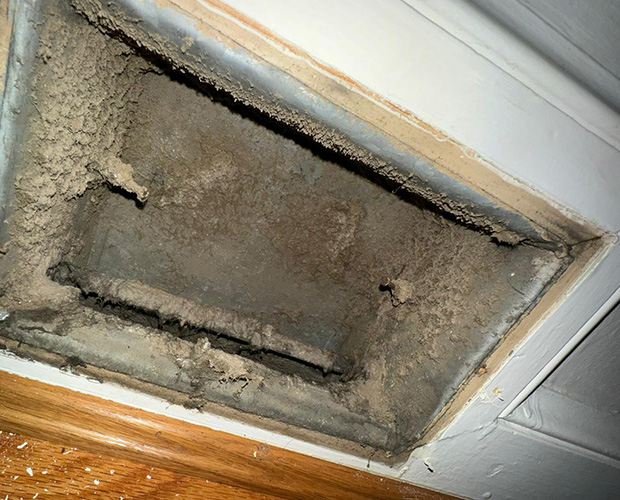
North Texas's hot, humid summers combined with intense spring rain events put steady pressure on roofing and HVAC systems in Plano's aging first-generation subdivisions, where original ductwork and drain pans are increasingly prone to condensate failures.
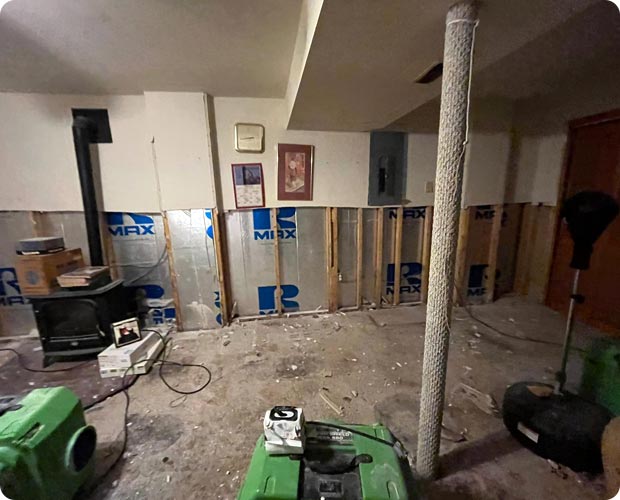
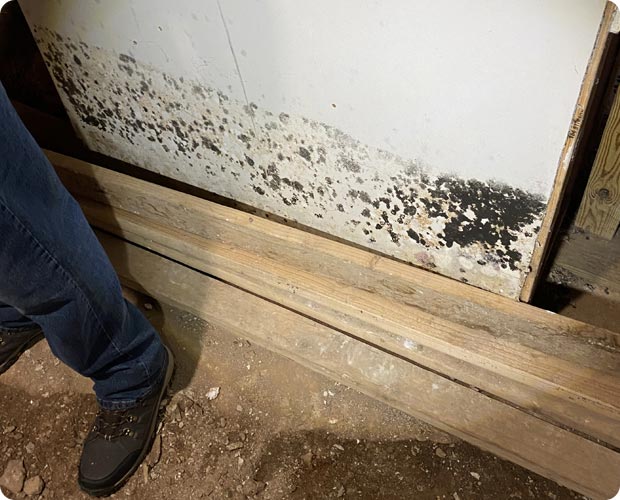
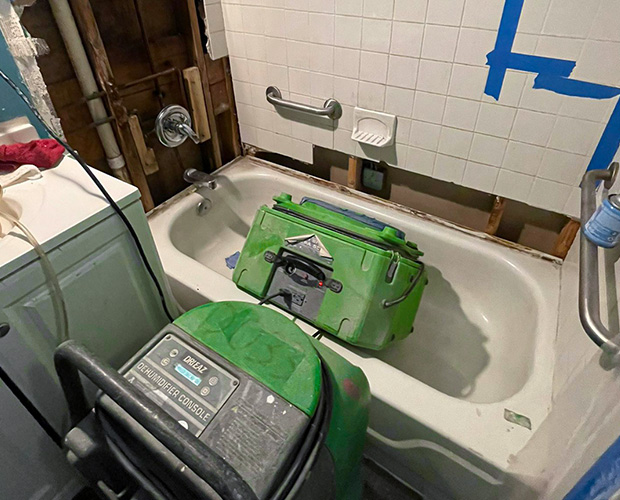
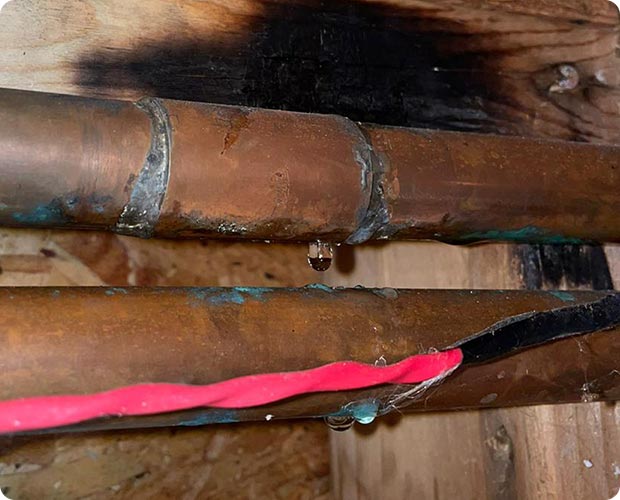
Many Plano homes have finished basements or below-grade utility rooms far less often than the mid-Atlantic and Northeast markets, but slab-plumbing leaks under the foundation are a distinctly Texas mold driver — water travels laterally under the slab and can surface mold at baseboards well away from the original leak.
Common mold types in Plano
- Aspergillus/Penicillium (HVAC systems and slab-leak moisture migration)
- Cladosporium (exterior surfaces and ambient outdoor background)
- Stachybotrys chartarum (chronic under-slab or foundation-crack moisture)
- Chaetomium (water-damaged drywall from slab leaks)
We serve Legacy West, The Shops at Willow Bend, Arbor Hills Nature Preserve, Haggard Park, Historic Downtown Plano and the wider Plano area across ZIP codes 75093, 75023, 75024, 75025, 75074.
Mold testing and air quality testing in Plano
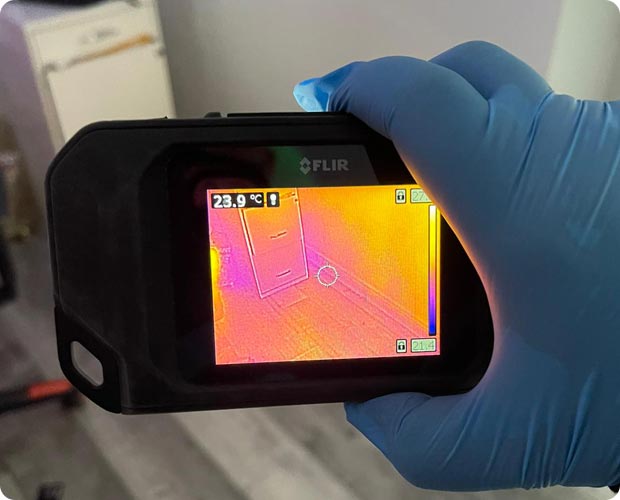
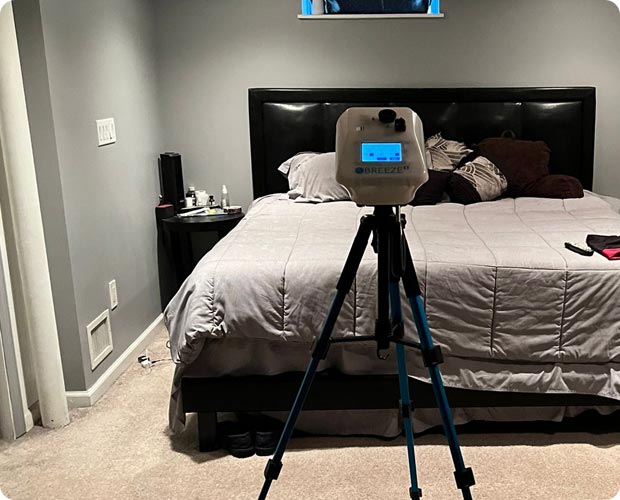
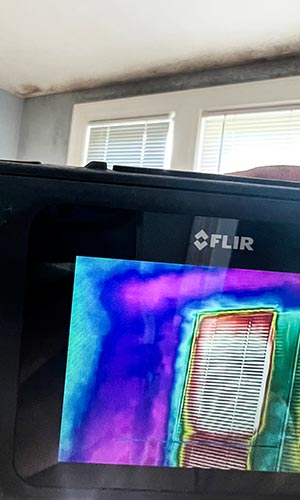
Not sure whether you have mold, or how far it has spread? A mold test in Plano, TX answers that with lab evidence instead of guesswork. Indoor air samples are compared with an outdoor control sample, surface samples are taken where growth is visible, and everything is analysed by an AIHA-accredited laboratory for species and spore counts.
It's worth booking a mold test in Plano when you have:
- Unexplained musty odour with no visible mold
- Health symptoms that improve when occupants leave the building
- Post-remediation verification that work was completed successfully
- Pre-purchase due diligence on a home or commercial property
- Landlord-tenant dispute requiring independent third-party documentation
- Insurance claim requiring laboratory evidence of mold type and extent
The written report tells you whether you need remediation, gives you documentation for an insurance claim or a landlord, or confirms a past cleanup worked (clearance testing). How our mold testing works →