
Clearance testing in Union: what to know
Union is a township in northern Union County, bordering Hillside, Elizabeth, Roselle Park, Kenilworth and Springfield. Its housing stock spans many decades and building styles, including some unusual experimental poured-concrete houses.
The Rahway River forms the western edge of the Battle Hill area and the west branch of the Elizabeth River forms its eastern edge, so some low-lying properties near these waterways can be exposed to groundwater and runoff after heavy storms, a common trigger for basement mold.
Much of the township is dense suburban housing with basements and older mechanical systems. Slow plumbing and roof leaks, basement seepage and ageing HVAC equipment are typical sources, and the humid New Jersey summers add routine condensation risk.
Mold conditions in Union
Common mold types in this area: Cladosporium (basement walls and window frames); Penicillium/Aspergillus (HVAC condensate and ductwork); Chaetomium (drywall and framing after slow plumbing or roof leaks); Stachybotrys (basements after prolonged water intrusion).
We serve Kean University, Connecticut Farms Presbyterian Church, Union Center and the wider Union area across ZIP codes 07083, 07088.
Signs you need clearance testing
- Remediation has been completed and containment is still in place
- The written protocol specifies clearance testing as a completion requirement
- A real estate transaction requires documented proof of successful remediation
- An insurance claim requires certified clearance documentation
- The remediator has offered to perform their own clearance (this should be declined)
- A previous clearance test failed and re-clearance is required after additional work
How we handle clearance testing in Union
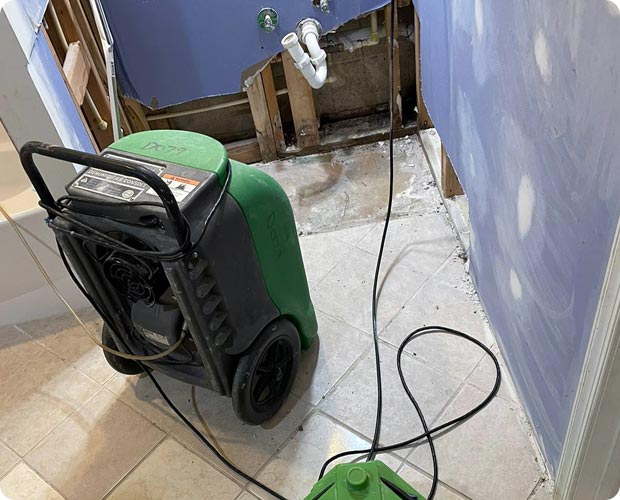
Clearance testing is the final step of any IICRC S520-compliant mold remediation and the critical quality control measure that confirms the work was done correctly. The clearance test must be performed by an independent licensed mold assessor — the company or individual that performed the remediation cannot perform their own clearance test. This independence is mandated by the NYS 2015 Mold Law and is best practice in all markets.
The timing and conditions of clearance testing are specified in the written remediation protocol. Standard protocol requires that containment remains fully in place when samples are collected, that the HEPA-filtered negative air machine has been running for at least 4 hours before sampling, and that an outdoor control sample is collected simultaneously with indoor samples.