
Skip to content
Licensed mold remediation — call to schedule
ES
MoldAct logo MoldAct IICRC S520 Certified Mold Remediation
Technician in full protective suit and respirator removing mold-damaged material during a remediation job

Mold Remediation in Petworth, DC

Mold remediation is the physical removal of contaminated material under a written protocol — not a spray-and-seal shortcut. IICRC S520 requires source moisture control first, then containment, HEPA vacuuming, removal of affected porous materials, antifungal treatment of structural surfaces, and independent clearance testing performed by someone other than the remediation crew.

Get Your Free Mold Inspection

Or call now: (877) 660-0430

Mold remediation in Petworth: what to know

If you're in Petworth, you're likely in a rowhouse or detached bungalow from the 1900s through the 1920s — with more yard space and original wood porches than the denser blocks closer to downtown. Those original porches and their roof flashing are a common entry point for moisture once they've aged.

If your basement is unfinished or only partly finished, it's probably still running on original 1900s-era drainage that was never designed for the stormwater a fully built-out modern block now sheds — undersized or clogged storm drains are a recurring cause of seepage here.

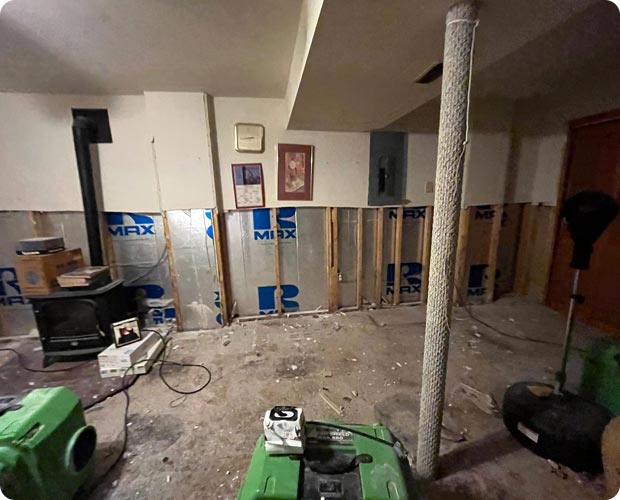
If you bought a recently renovated or flipped home in Petworth, it's worth knowing that a rushed basement finish over a still-damp foundation is one of the most common ways mold gets sealed inside new drywall before a buyer ever sees it — an independent inspection is the way to check what's behind the new paint.

Mold conditions in Petworth

Common mold types in this area: Stachybotrys chartarum (basement moisture sealed behind rushed renovation drywall); Cladosporium (original wood porches and trim with failed flashing); Penicillium/Aspergillus (unfinished basements with undersized-drain seepage); Chaetomium (older wood framing with chronic low-level moisture).

We serve Petworth Metro, Grant Circle, Rock Creek Church Cemetery, Georgia Avenue corridor, Petworth Recreation Center and the wider Petworth area across ZIP codes 20011.

Signs you need mold remediation

  • Visible mold covering more than about 10 square feet — beyond a DIY-scale cleanup
  • Musty odor or visible growth returning after a bleach or store-bought spray treatment
  • Mold on porous material — drywall, insulation, carpet — that can't simply be wiped clean
  • A documented moisture event (flood, chronic leak) with mold discovered afterward
  • A written inspection protocol in hand and ready to act on

How we handle mold remediation in Petworth

Across MoldAct's markets the remediation process is the same standard — S520 — but the moisture source it's chasing differs by geography. In Baltimore and the older NJ housing stock, the source is usually chronic: ageing plumbing, foundations with failed or absent waterproofing, decades of intermittent seepage. In Miami, source correction more often means a single acute event — an HVAC condensate line, a balcony seal, a hurricane-season roof or window failure — but the fast climate means the window to act before Stachybotrys establishes (roughly 8-12 days of sustained wetting) is shorter.

Source correction always comes first: remediating mold without fixing what's making it wet is remediation that will need to be repeated. From there, containment scales to the affected area — poly sheeting over a small localised area, or a full floor-to-ceiling barrier with negative air pressure (HEPA scrubbers) for larger or Condition 3 jobs.

Simple, transparent process

Our Petworth Mold Remediation Process

  1. 1

    Source correction

    The moisture source is repaired — or confirmed repaired by a plumber or roofer — before remediation starts. Skipping this step is the single most common reason mold returns.

  2. 2

    Containment

    Poly sheeting isolates the work area, scaled to the affected size — mini-containment for a small Condition 3 area, full floor-to-ceiling barriers with a HEPA air scrubber running negative pressure for larger jobs.

  3. 3

    HEPA vacuuming

    All surfaces in containment are HEPA-vacuumed before any demolition — standard shop vacuums lack the filtration and disperse spores instead of capturing them.

  4. 4

    Physical removal

    Porous materials are removed and double-bagged; semi-porous materials like wood framing are mechanically cleaned, treated, and dried; non-porous surfaces are wiped and re-vacuumed. Mold is never killed in place and left — dead spores are still allergenic.

  5. 5

    Encapsulation and drying

    Treated wood and concrete are dried to standard moisture content and encapsulated as a finishing step — sealing residual staining, not replacing removal.

  6. 6

    Independent clearance testing

    A separate assessor verifies indoor spore counts against the outdoor control at least 24 hours after work is complete, and issues a clearance report for your records.

Mold Remediation in Petworth — FAQs

Do you provide mold remediation in Petworth?

Yes — MoldAct provides mold remediation throughout Petworth, DC (ZIP codes: 20011) and surrounding Washington DC areas. Call us to book the earliest available appointment.

Can you just spray something to kill the mold instead of removing materials?

No — mold cannot be killed in place and left. Dead spores are still allergenic, and a spray-only approach leaves the underlying contamination in the material. Porous materials like drywall have to be physically removed under S520.

How do you make sure the mold doesn't come back?

Source correction first — the moisture problem is fixed or confirmed fixed before remediation starts. Skipping that step is the top reason remediation fails and mold returns.

Who checks that the remediation actually worked?

An independent assessor, not MoldAct's remediation crew — that's the point of separating assessment and clearance testing from the remediation itself. Clearance compares indoor spore counts to an outdoor control sample.

Does my homeowner's insurance cover mold remediation?

Often only partially, and coverage usually depends on whether the mold followed a sudden, accidental event (like a burst pipe) versus a gradual, unaddressed leak — insurers frequently treat the latter as a maintenance issue. Document the timing of any water intrusion carefully.

Mold Remediation in Petworth — book today

Licensed, insured mold remediation contractors. Call to schedule.

Call Now Free Quote