
Clearance testing in Aberdeen: what to know
If you're in Aberdeen, your town's identity is closely tied to Aberdeen Proving Ground, the U.S. Army installation next door, and a lot of the surrounding housing was built to serve that base and the rail and industrial activity that grew up around it — older rowhomes and modest single-family housing from the early-to-mid 20th century predominate closer to the historic core.
Aberdeen sits near the head of the Chesapeake Bay, and low-lying areas near the water and the rail corridor have a documented history of drainage challenges that older, working-class-era housing wasn't originally built to handle.
A lot of Aberdeen's older housing stock has aging plumbing and foundation drainage that's never been substantially upgraded, which makes routine inspection — not just complaint-driven response — genuinely worthwhile here even without an obvious trigger event.
Mold conditions in Aberdeen
Common mold types in this area: Chaetomium (early-to-mid-20th-century rowhomes with original, unimproved drainage); Stachybotrys chartarum (low-lying, Chesapeake-adjacent drainage challenges); Cladosporium (general background growth in older working-class housing stock); Penicillium/Aspergillus (aging plumbing systems never substantially upgraded).
We serve Aberdeen Proving Ground, Ripken Stadium, Aberdeen Ironbirds, Swan Creek, Historic Downtown Aberdeen and the wider Aberdeen area across ZIP codes 21001.
Signs you need clearance testing
- Remediation has been completed and containment is still in place
- The written protocol specifies clearance testing as a completion requirement
- A real estate transaction requires documented proof of successful remediation
- An insurance claim requires certified clearance documentation
- The remediator has offered to perform their own clearance (this should be declined)
- A previous clearance test failed and re-clearance is required after additional work
How we handle clearance testing in Aberdeen
Clearance testing is the final step of any IICRC S520-compliant mold remediation and the critical quality control measure that confirms the work was done correctly. The clearance test must be performed by an independent licensed mold assessor — the company or individual that performed the remediation cannot perform their own clearance test. This independence is mandated by the NYS 2015 Mold Law and is best practice in all markets.
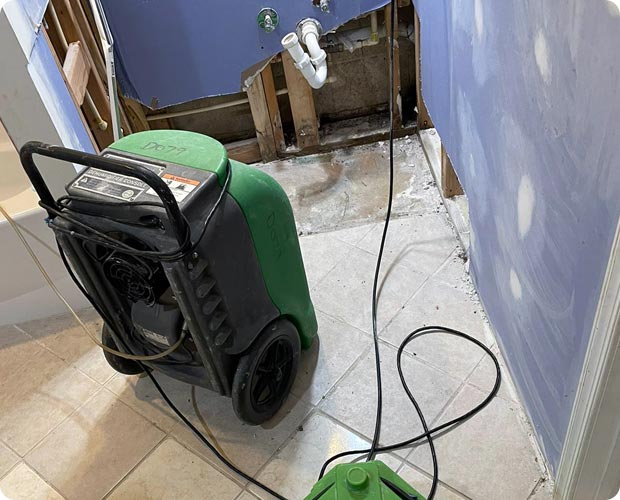
The timing and conditions of clearance testing are specified in the written remediation protocol. Standard protocol requires that containment remains fully in place when samples are collected, that the HEPA-filtered negative air machine has been running for at least 4 hours before sampling, and that an outdoor control sample is collected simultaneously with indoor samples.