
Mold remediation in Logan Circle: what to know
If your Logan Circle rowhouse is one of the grand Victorians built between 1875 and 1900 around the circle's park, it likely went through decades as a divided rooming house before the neighbourhood's more recent renovation wave. A lot of those older renovations sealed up original chimneys and vents without replacing the airflow they used to provide — which can trap moisture inside wall cavities that used to breathe, quietly, for years.
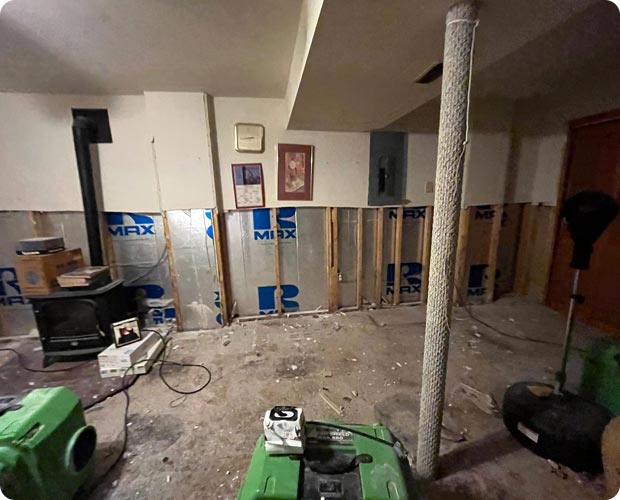
You're on DC's older combined sewer system here, same as much of the historic core — stormwater and sewage share the same pipes, so a hard summer storm can push contaminated (Category 3) water back into your basement instead of just rainwater. That's a different, more serious problem than a simple leak, and it needs to be treated that way.
If your building was converted into condos — a lot of Logan Circle's rowhouses were — a single moisture event like a roof leak or a shared stack failure can affect multiple owners before anyone traces it back to the source. If you're chasing a smell with no obvious cause in your own unit, it's worth checking whether it's really a building-wide issue.
Mold conditions in Logan Circle
Common mold types in this area: Stachybotrys chartarum ('black mold' — sealed chimneys/vents trapping moisture in older Victorian wall cavities); Chaetomium (long-standing leaks in condo-converted rowhouses); Cladosporium (everyday background growth on window sills and trim); Penicillium/Aspergillus (basement units and shared-stack plumbing failures).
We serve Logan Circle Park, 14th Street corridor, Studio Theatre, Whole Foods P Street, Vermont Avenue rowhouse row and the wider Logan Circle area across ZIP codes 20005, 20009.
Signs you need mold remediation
- Visible mold covering more than about 10 square feet — beyond a DIY-scale cleanup
- Musty odor or visible growth returning after a bleach or store-bought spray treatment
- Mold on porous material — drywall, insulation, carpet — that can't simply be wiped clean
- A documented moisture event (flood, chronic leak) with mold discovered afterward
- A written inspection protocol in hand and ready to act on
How we handle mold remediation in Logan Circle
Across MoldAct's markets the remediation process is the same standard — S520 — but the moisture source it's chasing differs by geography. In Baltimore and the older NJ housing stock, the source is usually chronic: ageing plumbing, foundations with failed or absent waterproofing, decades of intermittent seepage. In Miami, source correction more often means a single acute event — an HVAC condensate line, a balcony seal, a hurricane-season roof or window failure — but the fast climate means the window to act before Stachybotrys establishes (roughly 8-12 days of sustained wetting) is shorter.
Source correction always comes first: remediating mold without fixing what's making it wet is remediation that will need to be repeated. From there, containment scales to the affected area — poly sheeting over a small localised area, or a full floor-to-ceiling barrier with negative air pressure (HEPA scrubbers) for larger or Condition 3 jobs.