
Mold remediation in Hialeah: what to know
Hialeah is the largest predominantly Spanish-speaking city in the US — MoldAct's bilingual service capability is essential for this market where language barriers have historically delayed mold detection and remediation.
The city has a mix of 1950s–1980s CBS construction and 1990s–2000s residential subdivisions — the older stock has higher rates of HVAC condensate overflow mold, while newer properties show mold from inadequate attic ventilation in the tropical heat.
Proximity to Miami Canal and the western Everglades gives Hialeah very high ambient humidity and a relatively high water table in the western sections.
Mold conditions in Hialeah
Common mold types in this area: Aspergillus/Penicillium (dominant in tropical humidity); Cladosporium (outdoor air is among the highest spore counts in the US); Stachybotrys (HVAC-saturated wall cavities).
We serve Hialeah Park Racing and Casino, Miami Lakes (nearby), Amelia Earhart Park, Palm Springs Mile shopping district and the wider Hialeah area across ZIP codes 33010, 33012, 33013, 33014, 33016.
Signs you need mold remediation
- Visible mold covering more than about 10 square feet — beyond a DIY-scale cleanup
- Musty odor or visible growth returning after a bleach or store-bought spray treatment
- Mold on porous material — drywall, insulation, carpet — that can't simply be wiped clean
- A documented moisture event (flood, chronic leak) with mold discovered afterward
- A written inspection protocol in hand and ready to act on
How we handle mold remediation in Hialeah
Across MoldAct's markets the remediation process is the same standard — S520 — but the moisture source it's chasing differs by geography. In Baltimore and the older NJ housing stock, the source is usually chronic: ageing plumbing, foundations with failed or absent waterproofing, decades of intermittent seepage. In Miami, source correction more often means a single acute event — an HVAC condensate line, a balcony seal, a hurricane-season roof or window failure — but the fast climate means the window to act before Stachybotrys establishes (roughly 8-12 days of sustained wetting) is shorter.
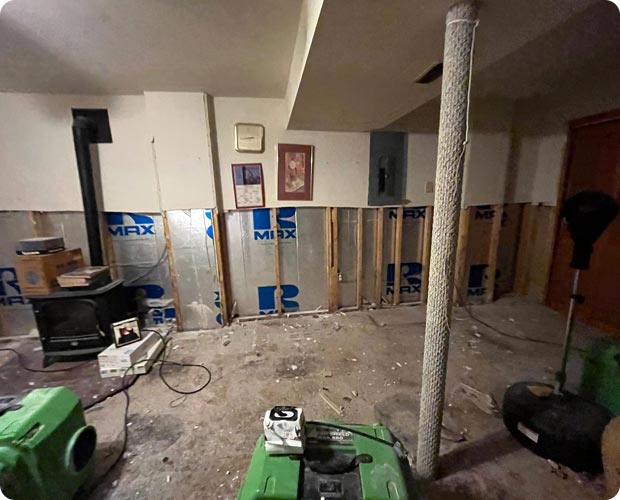
Source correction always comes first: remediating mold without fixing what's making it wet is remediation that will need to be repeated. From there, containment scales to the affected area — poly sheeting over a small localised area, or a full floor-to-ceiling barrier with negative air pressure (HEPA scrubbers) for larger or Condition 3 jobs.