
Skip to content
Licensed mold remediation — call to schedule
ES
MoldAct logo MoldAct IICRC S520 Certified Mold Remediation
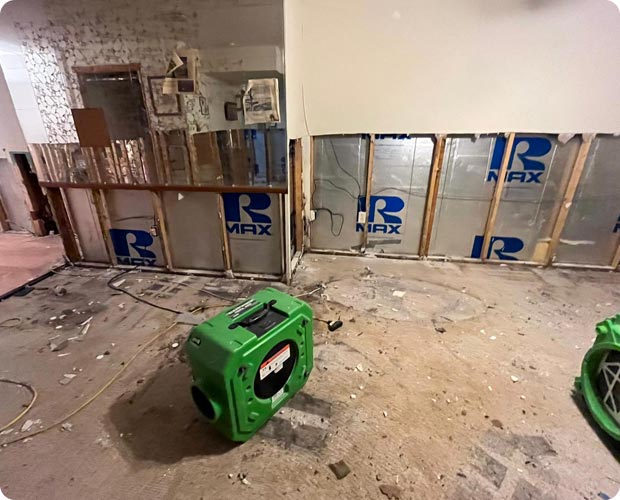
Technician performing mold remediation work in a residential basement

Basement Mold Removal in Hialeah, FL

Basement mold removal requires identifying and permanently correcting the moisture source — foundation seepage, sump failure, or condensation — before remediation of affected framing and drywall, followed by encapsulation of the crawl-space or basement slab if chronically damp.

Get Your Free Mold Inspection

Or call now: (877) 660-0430

Basement mold removal in Hialeah: what to know

Hialeah is the largest predominantly Spanish-speaking city in the US — MoldAct's bilingual service capability is essential for this market where language barriers have historically delayed mold detection and remediation.

The city has a mix of 1950s–1980s CBS construction and 1990s–2000s residential subdivisions — the older stock has higher rates of HVAC condensate overflow mold, while newer properties show mold from inadequate attic ventilation in the tropical heat.

Proximity to Miami Canal and the western Everglades gives Hialeah very high ambient humidity and a relatively high water table in the western sections.

Mold conditions in Hialeah

Common mold types in this area: Aspergillus/Penicillium (dominant in tropical humidity); Cladosporium (outdoor air is among the highest spore counts in the US); Stachybotrys (HVAC-saturated wall cavities).

We serve Hialeah Park Racing and Casino, Miami Lakes (nearby), Amelia Earhart Park, Palm Springs Mile shopping district and the wider Hialeah area across ZIP codes 33010, 33012, 33013, 33014, 33016.

Signs you need basement mold removal

  • Visible mold on concrete block walls, wood framing, or stored cardboard
  • Musty odour in the basement that worsens in summer
  • Efflorescence (white mineral deposits) on concrete walls indicating moisture movement
  • Rusting of metal fasteners, pipes, or stored items
  • Condensation on cold surfaces during humid weather
  • Staining or dark discolouration on wood floor joists above the basement
  • Buckling or swelling of basement floor tiles or concrete paint

How we handle basement mold removal in Hialeah

Basements are the most common location for mold growth in residential properties across Baltimore, New Jersey, and coastal markets. The combination of below-grade construction, proximity to groundwater, temperature differentials that produce condensation, and limited ventilation creates ideal conditions for mold on wood framing, drywall, insulation, and stored items.

Unlike above-grade mold, basement mold almost always has a chronic moisture source — foundation wall seepage, floor slab moisture, sump pump failure, condensation on cold surfaces, or inadequate waterproofing. Remediating the mold without permanently correcting the moisture source guarantees recurrence, often within one season. The remediation scope must include a moisture correction plan.

Simple, transparent process

Our Hialeah Basement Mold Removal Process

  1. 1

    Moisture source identification

    A detailed inspection identifies the primary moisture source: active foundation seepage (seams, cracks, hydrostatic pressure), slab moisture vapour, HVAC condensation, window well flooding, or outdoor grading. The moisture source must be permanently corrected before remediation begins.

  2. 2

    Mold assessment and protocol

    A licensed mold assessor documents the extent of mold growth, collects laboratory samples, and writes a remediation protocol specifying scope, containment level, and clearance criteria.

  3. 3

    Containment and material removal

    The basement is contained from upper floors. Affected drywall, insulation, and stored materials are removed. Wood framing is assessed — surface mold on dry structural wood may be treatable; deeply colonised or structurally compromised wood may require sister-framing or replacement.

  4. 4

    Structural wood treatment

    Exposed wood framing is HEPA-vacuumed, wire-brushed as needed, and treated with an EPA-registered antifungal. After drying and clearance, a barrier coating is applied to treated wood surfaces per the protocol.

  5. 5

    Moisture barrier installation

    After clearance, a vapour retarder is installed on the basement floor and lower walls where appropriate. For chronically damp basements, full crawl-space encapsulation (20-mil reinforced poly) is recommended to prevent moisture reintroduction.

Basement Mold Removal in Hialeah — FAQs

Do you provide basement mold removal in Hialeah?

Yes — MoldAct provides basement mold removal throughout Hialeah, FL (ZIP codes: 33010, 33012, 33013, 33014, 33016) and surrounding Miami areas. Call us to book the earliest available appointment.

Can I just paint over basement mold with waterproof paint?

No — paint does not kill mold or resolve the moisture source. Encapsulant paints applied over active mold simply bury the colony, which continues to grow underneath. Surface treatment and paint is not a remediation.

How do I stop mold from coming back in my basement?

The only permanent solution is to eliminate the moisture source. This typically means one or more of: exterior waterproofing, interior drain tile, sump pump upgrade with battery backup, improved HVAC management to control humidity below 60%, and vapour barrier installation. MoldAct can help identify the right combination for your property.

Do I need to move everything out of my basement before remediation?

Yes — stored items should be removed before the assessment and remediation. Items in contact with affected areas must be evaluated for mold contamination. Porous items (cardboard, fabric, books) that are visibly contaminated typically cannot be remediated and must be discarded.

Basement Mold Removal in Hialeah — book today

Licensed, insured mold remediation contractors. Call to schedule.

Call Now Free Quote