
Skip to content
Licensed mold remediation — call to schedule
ES
MoldAct logo MoldAct IICRC S520 Certified Mold Remediation
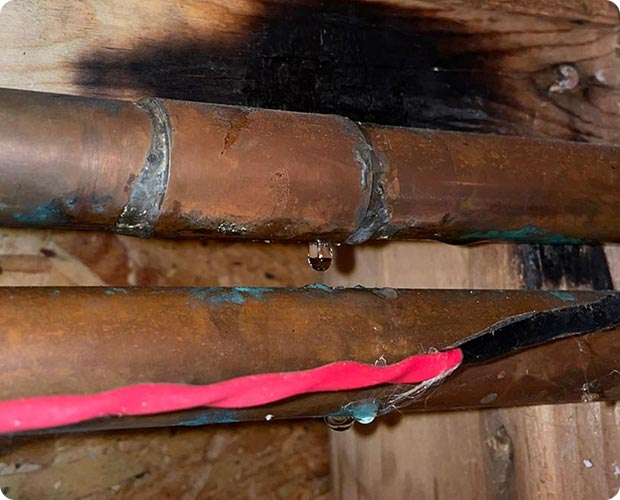
Common moisture and mold conditions found in an unencapsulated crawl space

Crawl Space Encapsulation in Petworth, DC

Crawl space encapsulation installs a reinforced 20-mil polyethylene vapour barrier over the floor and lower walls, sealed at all seams and foundation penetrations, to permanently control ground moisture and prevent future mold growth — the definitive solution for chronically damp crawl spaces.

Get Your Free Mold Inspection

Or call now: (877) 660-0430

Crawl space encapsulation in Petworth: what to know

If you're in Petworth, you're likely in a rowhouse or detached bungalow from the 1900s through the 1920s — with more yard space and original wood porches than the denser blocks closer to downtown. Those original porches and their roof flashing are a common entry point for moisture once they've aged.

If your basement is unfinished or only partly finished, it's probably still running on original 1900s-era drainage that was never designed for the stormwater a fully built-out modern block now sheds — undersized or clogged storm drains are a recurring cause of seepage here.

If you bought a recently renovated or flipped home in Petworth, it's worth knowing that a rushed basement finish over a still-damp foundation is one of the most common ways mold gets sealed inside new drywall before a buyer ever sees it — an independent inspection is the way to check what's behind the new paint.

Mold conditions in Petworth

Common mold types in this area: Stachybotrys chartarum (basement moisture sealed behind rushed renovation drywall); Cladosporium (original wood porches and trim with failed flashing); Penicillium/Aspergillus (unfinished basements with undersized-drain seepage); Chaetomium (older wood framing with chronic low-level moisture).

We serve Petworth Metro, Grant Circle, Rock Creek Church Cemetery, Georgia Avenue corridor, Petworth Recreation Center and the wider Petworth area across ZIP codes 20011.

Signs you need crawl space encapsulation

  • Mold has been remediated in the crawl space and a permanent moisture solution is needed
  • Humidity in the crawl space consistently above 60% RH
  • Standing water or saturated soil after rain events
  • Visible condensation on crawl-space framing in summer
  • Musty odour rising from the floor above the crawl space
  • Previous crawl-space mold that has recurred after treatment

How we handle crawl space encapsulation in Petworth

Crawl space encapsulation converts an open, vented crawl space into a controlled, sealed environment. A heavy-duty reinforced polyethylene vapour barrier (typically 20-mil with woven reinforcement) is installed over the entire crawl-space floor and extends up the foundation walls, creating a continuous vapour barrier that prevents ground moisture from entering the space above.

Encapsulation is typically recommended after crawl-space mold remediation as the permanent moisture control measure, and sometimes as a standalone upgrade for crawl spaces with elevated humidity but no current mold. When combined with a dehumidifier or HVAC supply, the encapsulated crawl space maintains low relative humidity year-round, eliminating the conditions that support mold growth on structural framing.

Simple, transparent process

Our Petworth Crawl Space Encapsulation Process

  1. 1

    Pre-encapsulation assessment

    The crawl space is assessed for standing water, drainage issues, existing mold, and structural concerns. Any mold remediation must be completed and cleared before encapsulation. Active water infiltration must be addressed with drainage or waterproofing before the barrier is installed.

  2. 2

    Surface preparation

    Existing debris, old vapour barriers, and damaged insulation are removed. The soil surface is graded to promote drainage toward the sump crock if present. Foundation walls are cleaned and checked for cracks.

  3. 3

    Vapour barrier installation

    A 20-mil reinforced polyethylene barrier is cut to fit the crawl-space floor and overlapped at all seams by at least 12 inches, with seams sealed with butyl tape. The barrier is extended 6–12 inches up the foundation walls and secured with mechanical fasteners and sealant.

  4. 4

    Foundation wall coverage

    The vapour barrier is attached to the foundation wall to the rim joist level and sealed at all penetrations (pipes, wiring, columns). This prevents warm exterior air and ground moisture from entering at the perimeter.

  5. 5

    Dehumidifier installation

    A commercial-grade dehumidifier with automatic drainage is installed in the encapsulated crawl space to maintain RH below 55%. The dehumidifier is sized for the volume of the crawl space and the local climate moisture load.

Crawl Space Encapsulation in Petworth — FAQs

Do you provide crawl space encapsulation in Petworth?

Yes — MoldAct provides crawl space encapsulation throughout Petworth, DC (ZIP codes: 20011) and surrounding Washington DC areas. Call us to book the earliest available appointment.

How long does crawl space encapsulation last?

A properly installed 20-mil reinforced vapour barrier lasts 20–25 years with minimal maintenance. Dehumidifiers typically require filter cleaning every 1–3 months and compressor service every 5–7 years.

Does encapsulation replace my sump pump?

No — if the crawl space has groundwater intrusion, a sump system is required to manage active water before encapsulation. Encapsulation controls vapour moisture; it does not manage liquid water infiltration.

What is the difference between a vapour barrier and encapsulation?

A vapour barrier is a thin poly sheet (typically 6-mil) placed on the crawl-space floor. Encapsulation is a full system: heavier barrier (20-mil), wall coverage to rim joist, sealed seams, and mechanical dehumidification — a sealed, conditioned environment rather than a barrier alone.

Crawl Space Encapsulation in Petworth — book today

Licensed, insured mold remediation contractors. Call to schedule.

Call Now Free Quote