Mold remediation built for Cockeysville
If you're in Cockeysville, you're in an area historically known for limestone and marble quarrying — the same Cockeysville Marble used in the Washington Monument and U.S. Capitol — and that underlying limestone geology creates karst-like conditions in places, where groundwater can move through natural channels in the bedrock in ways that don't always follow the surface drainage you'd expect.
Housing here mixes older farmhouses and mid-century homes from the area's quarrying and agricultural past with newer suburban subdivisions built as Baltimore County's growth pushed north along the I-83 corridor — the older properties in particular may have foundation drainage that predates any awareness of the local karst geology.
If your basement takes on water in a pattern that doesn't match the obvious grading or gutter issues, it's worth asking whether the local limestone geology is routing groundwater differently than a standard soil-drainage assessment would predict.
Common mold types in Cockeysville
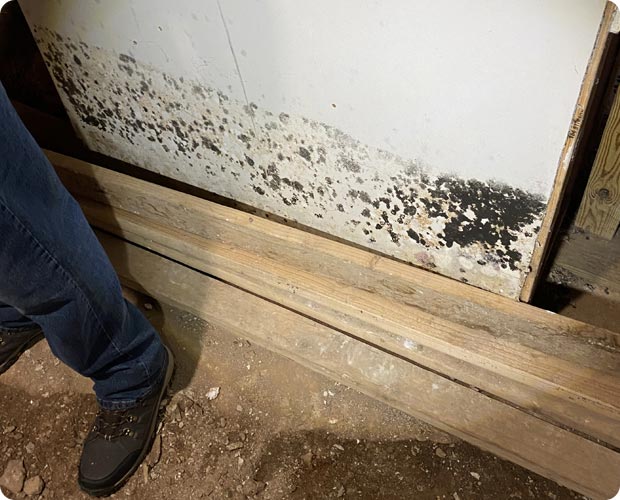
- Stachybotrys chartarum (irregular groundwater movement through limestone/karst geology)
- Cladosporium (older farmhouse and mid-century foundation drainage)
- Penicillium/Aspergillus (newer suburban HVAC and interior humidity)
- Chaetomium (long-standing moisture in older agricultural-era buildings)
We serve Oregon Ridge Park, Hunt Valley (nearby), I-83 corridor, Ashland Nature area, Beaver Dam Swimming Club (nearby) and the wider Cockeysville area across ZIP codes 21030.
Mold testing and air quality testing in Cockeysville
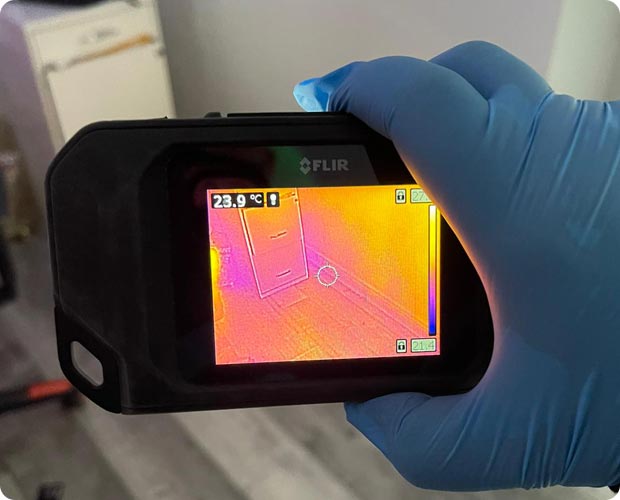
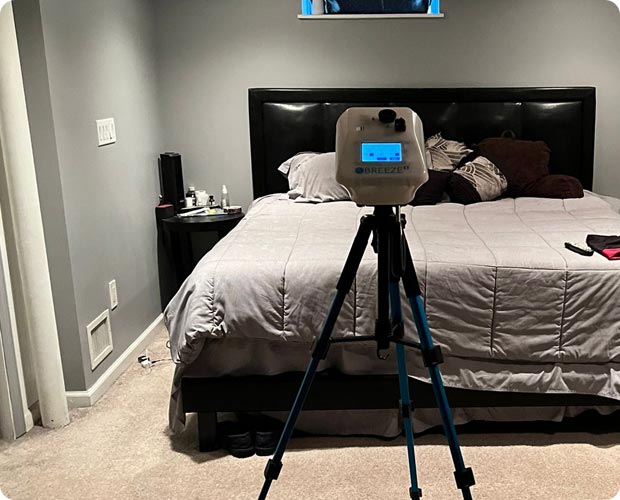
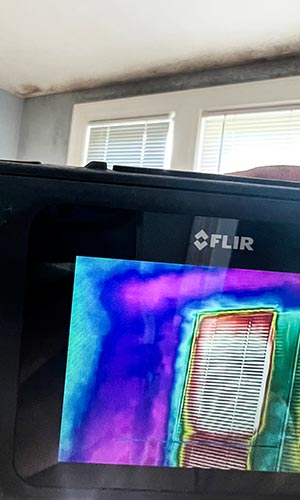
Not sure whether you have mold, or how far it has spread? A mold test in Cockeysville, MD answers that with lab evidence instead of guesswork. Indoor air samples are compared with an outdoor control sample, surface samples are taken where growth is visible, and everything is analysed by an AIHA-accredited laboratory for species and spore counts.
It's worth booking a mold test in Cockeysville when you have:
- Unexplained musty odour with no visible mold
- Health symptoms that improve when occupants leave the building
- Post-remediation verification that work was completed successfully
- Pre-purchase due diligence on a home or commercial property
- Landlord-tenant dispute requiring independent third-party documentation
- Insurance claim requiring laboratory evidence of mold type and extent
The written report tells you whether you need remediation, gives you documentation for an insurance claim or a landlord, or confirms a past cleanup worked (clearance testing). How our mold testing works →