
Clearance testing in Glen Burnie: what to know
If you're in Glen Burnie, you're likely in a home from the 1950s–1970s post-war suburban boom that grew the area around BWI Airport and the industrial corridor along Route 2 — older ranch-style and split-level homes with basements and foundation drainage from an era before modern waterproofing standards.
Glen Burnie's location between Baltimore and Annapolis, on relatively flat, historically marshy land near the Patapsco and Chesapeake watersheds, means groundwater sits closer to the surface here than in the hillier parts of Anne Arundel County — a real factor in basement moisture regardless of how well a specific house was built.
The area's aging mid-century water and stormwater infrastructure, installed during the original post-war boom, is more prone to slow leaks and drainage undersizing than infrastructure in Anne Arundel County's newer developments.
Mold conditions in Glen Burnie
Common mold types in this area: Cladosporium (basement moisture in 1950s–1970s ranch and split-level homes); Stachybotrys chartarum (high water-table conditions on historically marshy ground); Penicillium/Aspergillus (aging mid-century plumbing and stormwater infrastructure); Chaetomium (long-standing moisture in original post-war foundation drainage).
We serve BWI Thurgood Marshall Airport (nearby), Marley Station Mall, Cromwell Valley (nearby), Anne Arundel County seat area, Route 2 corridor and the wider Glen Burnie area across ZIP codes 21060, 21061.
Signs you need clearance testing
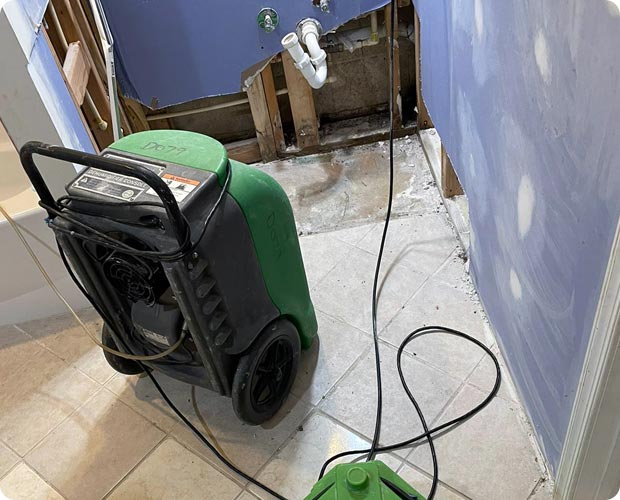
- Remediation has been completed and containment is still in place
- The written protocol specifies clearance testing as a completion requirement
- A real estate transaction requires documented proof of successful remediation
- An insurance claim requires certified clearance documentation
- The remediator has offered to perform their own clearance (this should be declined)
- A previous clearance test failed and re-clearance is required after additional work
How we handle clearance testing in Glen Burnie
Clearance testing is the final step of any IICRC S520-compliant mold remediation and the critical quality control measure that confirms the work was done correctly. The clearance test must be performed by an independent licensed mold assessor — the company or individual that performed the remediation cannot perform their own clearance test. This independence is mandated by the NYS 2015 Mold Law and is best practice in all markets.
The timing and conditions of clearance testing are specified in the written remediation protocol. Standard protocol requires that containment remains fully in place when samples are collected, that the HEPA-filtered negative air machine has been running for at least 4 hours before sampling, and that an outdoor control sample is collected simultaneously with indoor samples.