Clearance testing in College Park: what to know
College Park is in Prince George's County, home to the University of Maryland flagship campus. Its mix of early-twentieth-century frame houses near the university, mid-century suburban homes, and large numbers of student rentals and apartment buildings gives it a varied mold profile.
In older frame houses and rental conversions, deferred maintenance, ageing plumbing and unventilated basements are common drivers. In apartment buildings, shared HVAC and roof or window leaks can affect several units before the source is traced.
The city sits in the Anacostia watershed along the Paint Branch, and low-lying properties near stream corridors can be exposed to groundwater and runoff during heavy storms. Hot, humid mid-Atlantic summers add routine condensation risk.
Mold conditions in College Park
Common mold types in this area: Cladosporium (basement walls and window frames in older houses); Penicillium/Aspergillus (HVAC condensate and ageing systems in multi-unit buildings); Chaetomium (framing and drywall after slow plumbing leaks); Stachybotrys (basements after prolonged water intrusion).
We serve University of Maryland, College Park, College Park Aviation Museum, Paint Branch and the wider College Park area across ZIP codes 20740.
Signs you need clearance testing
- Remediation has been completed and containment is still in place
- The written protocol specifies clearance testing as a completion requirement
- A real estate transaction requires documented proof of successful remediation
- An insurance claim requires certified clearance documentation
- The remediator has offered to perform their own clearance (this should be declined)
- A previous clearance test failed and re-clearance is required after additional work
How we handle clearance testing in College Park
Clearance testing is the final step of any IICRC S520-compliant mold remediation and the critical quality control measure that confirms the work was done correctly. The clearance test must be performed by an independent licensed mold assessor — the company or individual that performed the remediation cannot perform their own clearance test. This independence is mandated by the NYS 2015 Mold Law and is best practice in all markets.
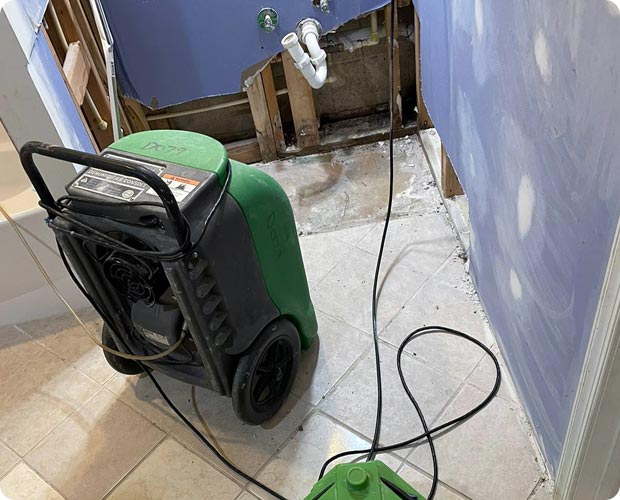
The timing and conditions of clearance testing are specified in the written remediation protocol. Standard protocol requires that containment remains fully in place when samples are collected, that the HEPA-filtered negative air machine has been running for at least 4 hours before sampling, and that an outdoor control sample is collected simultaneously with indoor samples.