
Clearance testing in Catonsville: what to know
Catonsville is a Baltimore County community west of the city, with a historic Frederick Road main street and neighbourhoods of older frame houses, early-to-mid-twentieth-century homes and later suburban development.
The older housing stock commonly has stone or block foundations, ageing plumbing and original roofing, so basement seepage, slow leaks and poorly ventilated crawl spaces are typical mold sources.
Catonsville is next to Patapsco Valley State Park and the Patapsco River valley. Hilly lots and streams mean drainage and runoff after heavy rain are common concerns for lower levels.
Mold conditions in Catonsville
Common mold types in this area: Cladosporium (basement walls and window frames); Penicillium (plaster and drywall under ageing roofs and plumbing); Chaetomium (framing and plaster after long-term leaks); Stachybotrys (basements after chronic seepage or flooding).
We serve Frederick Road (downtown Catonsville), Patapsco Valley State Park (Hilton Area), UMBC (nearby) and the wider Catonsville area across ZIP codes 21228.
Signs you need clearance testing
- Remediation has been completed and containment is still in place
- The written protocol specifies clearance testing as a completion requirement
- A real estate transaction requires documented proof of successful remediation
- An insurance claim requires certified clearance documentation
- The remediator has offered to perform their own clearance (this should be declined)
- A previous clearance test failed and re-clearance is required after additional work
How we handle clearance testing in Catonsville
Clearance testing is the final step of any IICRC S520-compliant mold remediation and the critical quality control measure that confirms the work was done correctly. The clearance test must be performed by an independent licensed mold assessor — the company or individual that performed the remediation cannot perform their own clearance test. This independence is mandated by the NYS 2015 Mold Law and is best practice in all markets.
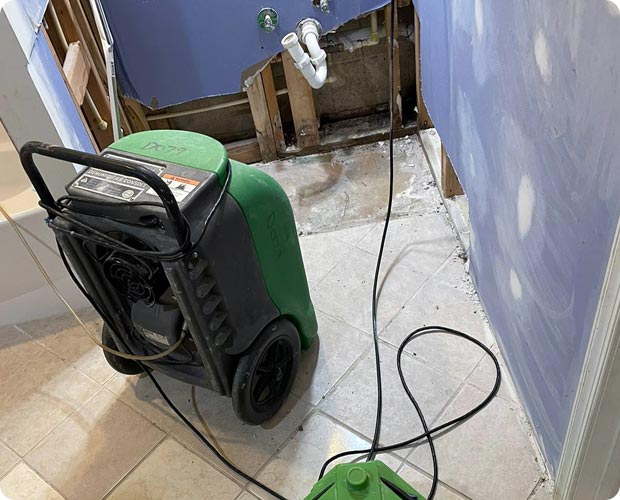
The timing and conditions of clearance testing are specified in the written remediation protocol. Standard protocol requires that containment remains fully in place when samples are collected, that the HEPA-filtered negative air machine has been running for at least 4 hours before sampling, and that an outdoor control sample is collected simultaneously with indoor samples.