
Clearance testing in Alexandria: what to know
If you're in Alexandria, you're in a Virginia city, legally distinct from DC. If you're in Old Town specifically, your building stock may date back to the 1750s–1800s — colonial and Federal-era brick rowhouses along the Potomac waterfront, built long before any modern foundation waterproofing existed.
Old Town sits directly on the Potomac, and if you're on one of the lowest waterfront blocks, tidal and storm-surge flooding is a well-documented risk — a below-grade room near King Street or the waterfront is dealing with both historic construction and today's climate-driven flood frequency at once.
If you're further from Old Town, in one of Alexandria's newer neighbourhoods built mostly from the 1950s onward, you're in more typical mid-Atlantic suburban construction — crawl spaces and slab foundations where HVAC condensate and grading issues, not historic masonry, are your more likely mold drivers.
Mold conditions in Alexandria
Common mold types in this area: Stachybotrys chartarum (18th-century Old Town brick foundations with chronic waterfront moisture); Chaetomium (long-standing moisture in colonial and Federal-era wood framing); Cladosporium (crawl spaces in mid-20th-century suburban construction); Penicillium/Aspergillus (HVAC condensate and grading issues in newer Alexandria neighbourhoods).
We serve Old Town Alexandria waterfront, King Street, George Washington Masonic National Memorial, Torpedo Factory Art Center, Mount Vernon (nearby) and the wider Alexandria area across ZIP codes 22301, 22302, 22304, 22314.
Signs you need clearance testing
- Remediation has been completed and containment is still in place
- The written protocol specifies clearance testing as a completion requirement
- A real estate transaction requires documented proof of successful remediation
- An insurance claim requires certified clearance documentation
- The remediator has offered to perform their own clearance (this should be declined)
- A previous clearance test failed and re-clearance is required after additional work
How we handle clearance testing in Alexandria
Clearance testing is the final step of any IICRC S520-compliant mold remediation and the critical quality control measure that confirms the work was done correctly. The clearance test must be performed by an independent licensed mold assessor — the company or individual that performed the remediation cannot perform their own clearance test. This independence is mandated by the NYS 2015 Mold Law and is best practice in all markets.
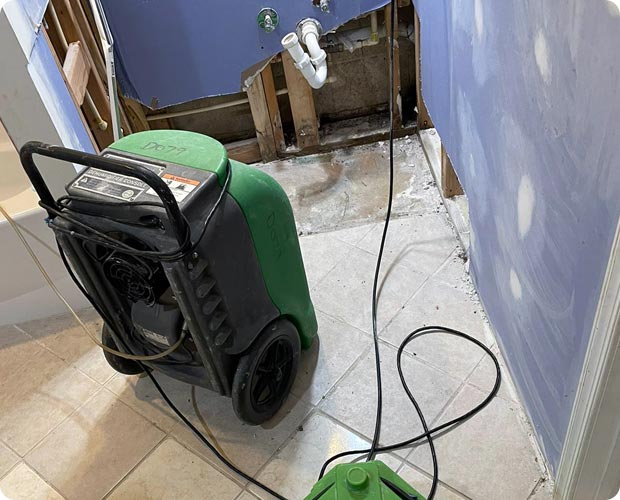
The timing and conditions of clearance testing are specified in the written remediation protocol. Standard protocol requires that containment remains fully in place when samples are collected, that the HEPA-filtered negative air machine has been running for at least 4 hours before sampling, and that an outdoor control sample is collected simultaneously with indoor samples.