
Mold remediation in Miami Beach: what to know
Miami Beach's subtropical climate produces year-round humidity of 70–90%, with summer months consistently above 80% RH — any building envelope failure, HVAC malfunction, or flooding event produces mold within 48–72 hours in this environment.
Many Miami Beach buildings were constructed in the 1930s–1950s Art Deco era using materials (hollow-core concrete block, plaster over metal lath) that are particularly vulnerable to salt moisture infiltration and mold growth behind interior finishes.
Hurricane Irma (2017) caused significant roofing and window damage across Miami Beach — properties where temporary repairs were not followed by thorough drying and inspection developed structural mold in wall cavities.
Mold conditions in Miami Beach
Common mold types in this area: Cladosporium (exterior surfaces and outdoor air, dominant background species); Penicillium/Aspergillus (interior humidity-driven growth); Stachybotrys (post-hurricane or chronic HVAC leak); Curvularia and Helminthosporium (tropical species unique to South Florida).
We serve Ocean Drive Art Deco Historic District, Lincoln Road Mall, Pérez Art Museum Miami (nearby mainland), Lummus Park, Bass Museum of Art and the wider Miami Beach area across ZIP codes 33139, 33140, 33141.
Signs you need mold remediation
- Visible mold covering more than about 10 square feet — beyond a DIY-scale cleanup
- Musty odor or visible growth returning after a bleach or store-bought spray treatment
- Mold on porous material — drywall, insulation, carpet — that can't simply be wiped clean
- A documented moisture event (flood, chronic leak) with mold discovered afterward
- A written inspection protocol in hand and ready to act on
How we handle mold remediation in Miami Beach
Across MoldAct's markets the remediation process is the same standard — S520 — but the moisture source it's chasing differs by geography. In Baltimore and the older NJ housing stock, the source is usually chronic: ageing plumbing, foundations with failed or absent waterproofing, decades of intermittent seepage. In Miami, source correction more often means a single acute event — an HVAC condensate line, a balcony seal, a hurricane-season roof or window failure — but the fast climate means the window to act before Stachybotrys establishes (roughly 8-12 days of sustained wetting) is shorter.
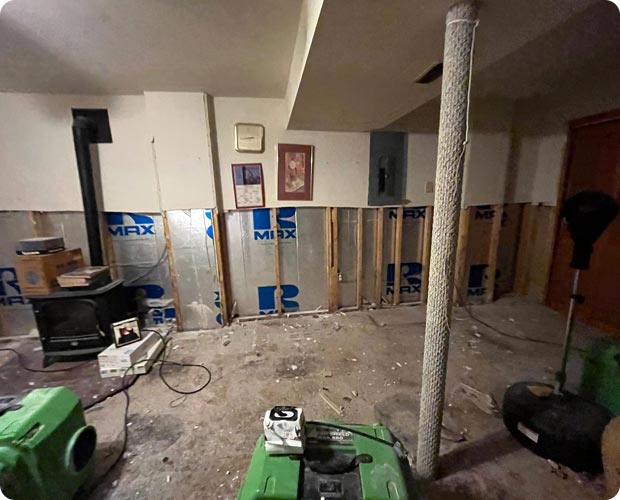
Source correction always comes first: remediating mold without fixing what's making it wet is remediation that will need to be repeated. From there, containment scales to the affected area — poly sheeting over a small localised area, or a full floor-to-ceiling barrier with negative air pressure (HEPA scrubbers) for larger or Condition 3 jobs.