
Mold remediation in Kensington: what to know
Kensington's Victorian bungalows and Craftsman homes from the 1900s–1930s are among the oldest residential stock in Montgomery County — original wood-lath plaster, cedar shingle roofs, and minimal attic insulation create a high-mold-risk profile in wet or humid conditions.
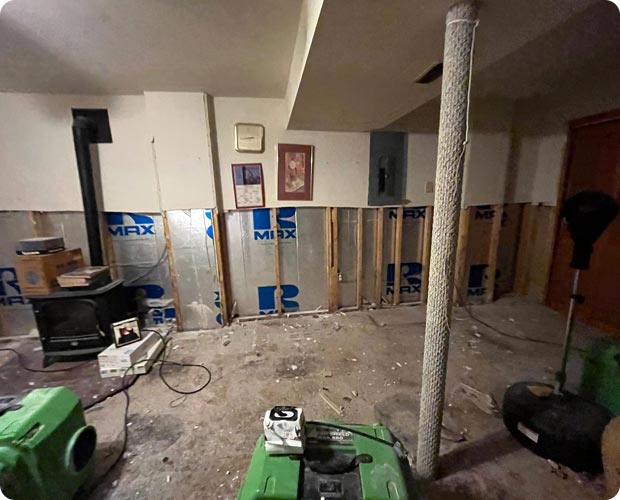
Many Kensington properties have root-damaged drain lines and aging cast-iron plumbing — slow underground leaks can saturate basement framing over months before discovery, producing extensive Stachybotrys growth behind finished surfaces.
Mold conditions in Kensington
Common mold types in this area: Penicillium (plaster walls with historic moisture infiltration); Cladosporium (wood exterior trim and cedar shingle substrate); Stachybotrys (basement framing from root-damaged drain lines); Chaetomium (water-damaged wood lath plaster).
We serve Kensington Town Hall, Noyes Library for Young Children, Kensington Antique Row (Howard Avenue), Rock Creek Trail (nearby) and the wider Kensington area across ZIP codes 20895.
Signs you need mold remediation
- Visible mold covering more than about 10 square feet — beyond a DIY-scale cleanup
- Musty odor or visible growth returning after a bleach or store-bought spray treatment
- Mold on porous material — drywall, insulation, carpet — that can't simply be wiped clean
- A documented moisture event (flood, chronic leak) with mold discovered afterward
- A written inspection protocol in hand and ready to act on
How we handle mold remediation in Kensington
Across MoldAct's markets the remediation process is the same standard — S520 — but the moisture source it's chasing differs by geography. In Baltimore and the older NJ housing stock, the source is usually chronic: ageing plumbing, foundations with failed or absent waterproofing, decades of intermittent seepage. In Miami, source correction more often means a single acute event — an HVAC condensate line, a balcony seal, a hurricane-season roof or window failure — but the fast climate means the window to act before Stachybotrys establishes (roughly 8-12 days of sustained wetting) is shorter.
Source correction always comes first: remediating mold without fixing what's making it wet is remediation that will need to be repeated. From there, containment scales to the affected area — poly sheeting over a small localised area, or a full floor-to-ceiling barrier with negative air pressure (HEPA scrubbers) for larger or Condition 3 jobs.