
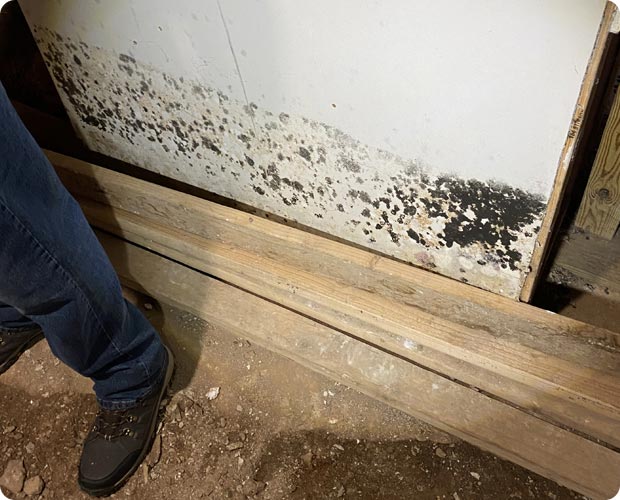
Black mold removal in Teaneck: what to know
Teaneck's predominantly single-family housing stock from the 1920s–1960s includes many homes with block foundations and original basement damp-proofing that degrades, admitting moisture during wet seasons.
The Overpeck Creek and nearby wetlands create elevated groundwater tables in portions of Teaneck — basement flooding from high water tables is more common here than in upland NJ communities.
Mold conditions in Teaneck
Common mold types in this area: Cladosporium (block basement walls); Stachybotrys (basement framing with high water table moisture); Penicillium (interior wood and stored materials).
We serve Overpeck County Park, Teaneck Creek Conservancy, Fairleigh Dickinson University (nearby), Route 4 commercial corridor and the wider Teaneck area across ZIP codes 07666.
Signs you need black mold removal
- Slimy black or dark greenish-black growth, typically on wet drywall, wood framing, or paper-faced materials
- A history of chronic wetness — a slow leak behind a wall, or a flood/flood-adjacent event that wasn't fully dried within days
- A musty odor without obvious visible growth (surface sampling may be needed to confirm)
- Chaetomium co-occurring — a brown-to-olive-black species that frequently appears alongside Stachybotrys after prolonged wetting, and is itself a strong indicator of a long-standing moisture problem
How we handle black mold removal in Teaneck
'Black mold' is a term used loosely for anything dark and alarming, but in remediation it specifically means Stachybotrys chartarum — slimy, black to dark greenish-black, and slow to establish: it typically takes 8-12 days of sustained wet conditions on cellulose material (drywall paper is ideal) to take hold. That slow timeline is actually useful context: Stachybotrys usually signals a chronic, undetected leak or a flood that wasn't dried out fast enough, not a one-day event.
The 'toxic mold' framing overstates some things and understates others. Stachybotrys does produce trichothecene mycotoxins, and it does warrant professional remediation — that concern is legitimate. But whether it causes illness in a given household depends on mycotoxin concentration, exposure duration, and individual sensitivity, which are questions for a physician or certified industrial hygienist, not a remediation contractor.