
Black mold removal in Little Havana: what to know
Little Havana's residential stock is dominated by 1950s–1970s CBS (concrete block and stucco) construction where HVAC condensate overflow is the primary source of mold behind walls adjacent to the air handler closet — an extremely common failure mode in Miami's tropical climate.
Many Little Havana properties house multi-generational families — delayed reporting of mold symptoms and language barriers in obtaining bilingual remediation services are real barriers to timely assessment.
MoldAct's bilingual Spanish/English capability was designed specifically for this market — all assessments, protocols, and follow-up communications are available in Spanish.
Mold conditions in Little Havana
Common mold types in this area: Aspergillus/Penicillium (HVAC condensate-driven); Cladosporium (ambient outdoor background — very high in Miami); Stachybotrys (HVAC overflow chronically wet cavities).
We serve Calle Ocho (SW 8th Street), Domino Park (Maximo Gomez Park), Tower Theater, El Credito Cigar Factory and the wider Little Havana area across ZIP codes 33125, 33135.
Signs you need black mold removal
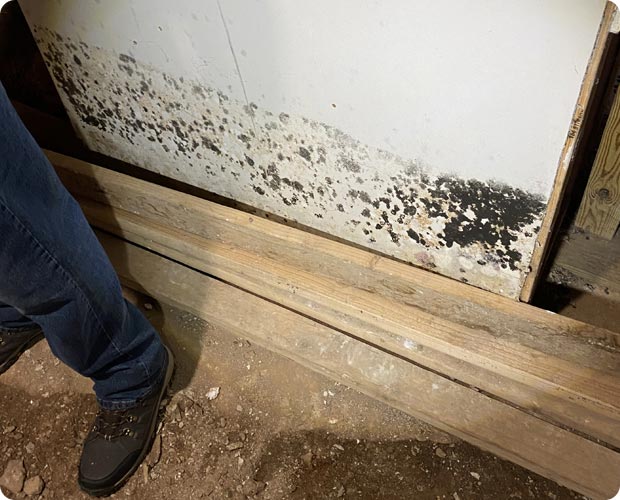
- Slimy black or dark greenish-black growth, typically on wet drywall, wood framing, or paper-faced materials
- A history of chronic wetness — a slow leak behind a wall, or a flood/flood-adjacent event that wasn't fully dried within days
- A musty odor without obvious visible growth (surface sampling may be needed to confirm)
- Chaetomium co-occurring — a brown-to-olive-black species that frequently appears alongside Stachybotrys after prolonged wetting, and is itself a strong indicator of a long-standing moisture problem
How we handle black mold removal in Little Havana
'Black mold' is a term used loosely for anything dark and alarming, but in remediation it specifically means Stachybotrys chartarum — slimy, black to dark greenish-black, and slow to establish: it typically takes 8-12 days of sustained wet conditions on cellulose material (drywall paper is ideal) to take hold. That slow timeline is actually useful context: Stachybotrys usually signals a chronic, undetected leak or a flood that wasn't dried out fast enough, not a one-day event.
The 'toxic mold' framing overstates some things and understates others. Stachybotrys does produce trichothecene mycotoxins, and it does warrant professional remediation — that concern is legitimate. But whether it causes illness in a given household depends on mycotoxin concentration, exposure duration, and individual sensitivity, which are questions for a physician or certified industrial hygienist, not a remediation contractor.