
Bathroom mold removal in Bayonne: what to know
Bayonne's peninsula location between New York Bay and Newark Bay means consistently high coastal humidity and salt air exposure — exterior wood and masonry degrade faster than in inland communities, and interior mold is common in buildings with any building envelope failures.
Hurricane Sandy caused significant storm surge damage to Bayonne's waterfront properties — lower-elevation streets in the 8th Street and 1st Street corridor were deeply flooded.
Mold conditions in Bayonne
Common mold types in this area: Cladosporium (coastal humidity, exterior and interior wood); Stachybotrys (post-Sandy waterfront properties); Aspergillus (basement and garden-level apartments).
We serve Bayonne Golf Club, Cape Liberty Cruise Port, Kill Van Kull waterway, Bayonne Bridge and the wider Bayonne area across ZIP codes 07002.
Signs you need bathroom mold removal
- Black or greenish mould visible on grout lines, caulk, or tile surfaces
- Soft or spongy drywall at the base of the shower or bath surround
- Bubbling, cracked, or loose tiles — often indicating moisture migration behind
- Persistent musty odour in the bathroom after surface cleaning
- Staining on the ceiling below a bathroom (mold in subfloor or hidden leak)
- Visible mold at the base of toilet, vanity, or around plumbing penetrations
How we handle bathroom mold removal in Bayonne
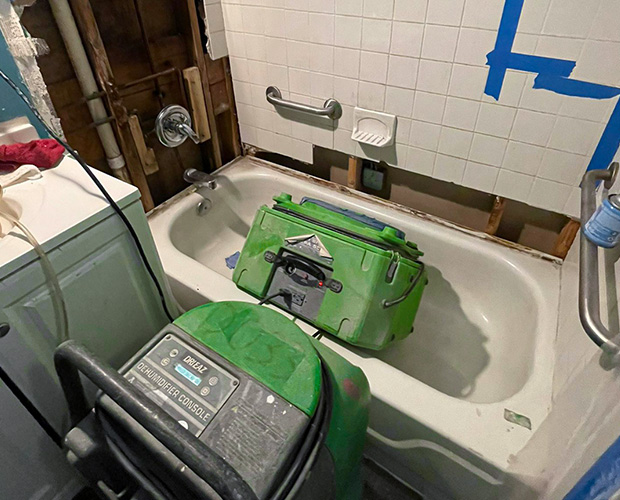
Bathroom mold is extremely common and ranges from minor surface growth on grout and caulk to serious structural mold growth behind tile, in wall cavities, and under subfloor decking. The difference matters enormously: surface mold on a non-porous substrate (glazed tile, sealed grout) can often be professionally cleaned without demolition; mold inside the wall cavity requires opening the wall, removing affected drywall and insulation, and following IICRC S520 protocol.
The most common bathroom moisture sources are: inadequate or non-functioning exhaust ventilation, grout and caulk failures that allow water into wall cavities, overflow from showers or tubs, and chronic toilet base leaks. In all cases, the moisture source must be corrected before any mold treatment — retiling over wet, contaminated drywall simply delays the problem.