
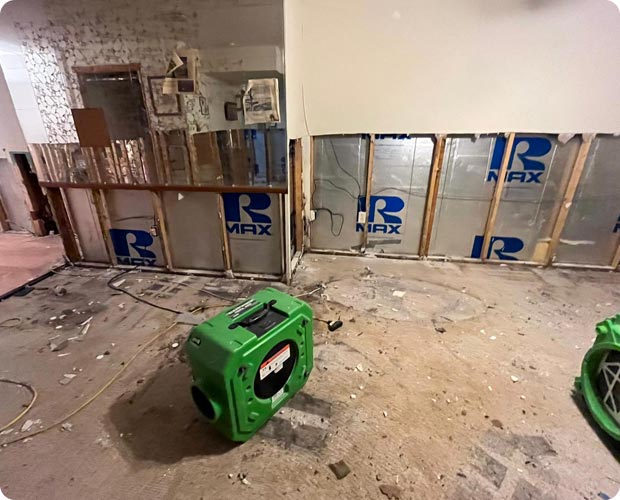
Basement mold removal in Baltimore: what to know
Baltimore has one of the oldest housing stocks in the mid-Atlantic region — the city's signature brick rowhouses, most built between 1870 and 1940, have unreinforced brick foundations with no waterproofing membrane, making basement seepage and mold virtually universal in older stock.
Baltimore's humid subtropical climate produces long, wet summers with relative humidity regularly above 70% from June through September, creating ideal conditions for mold growth on any moisture-compromised building material.
The city's aging water infrastructure means pipe failures and sewer backups are more frequent than in newer municipalities — Category 2 and Category 3 water events often precede mold discovery in basement and lower-floor units.
Mold conditions in Baltimore
Common mold types in this area: Cladosporium (dominant outdoor species, elevated indoors from basement moisture); Penicillium/Aspergillus (common in damp basements and behind failed wallpaper); Stachybotrys chartarum (basement framing with chronic seepage); Chaetomium (water-damaged drywall and cellulose materials).
We serve Inner Harbor, Fort McHenry, Johns Hopkins Hospital, Maryland Science Center, Baltimore Convention Center and the wider Baltimore area across ZIP codes 21201, 21202, 21205, 21206, 21211, 21213, 21217, 21218, 21223.
Signs you need basement mold removal
- Musty odor concentrated in the basement, even without visible growth
- Visible growth on drywall, carpet, or the underside of a dropped ceiling
- Efflorescence (white mineral deposits) or peeling paint on foundation walls — a sign of chronic moisture migration through masonry
- A sump pump nearing end of service life, or a known history of sump pump failure
- Standing water or dampness after heavy rain, even if it drains within a day
How we handle basement mold removal in Baltimore
Basements fail for different structural reasons across MoldAct's service area, but the underlying physics is the same: a below-grade space with no vapor barrier, sitting against soil that's wet more often than it's dry. In Baltimore, that's rowhouses built between 1870 and 1940 on unreinforced brick foundations with no waterproofing membrane — basement seepage is close to universal in that stock. In Columbia and other Montgomery County suburbs, it's finished basements — with drywall, carpet, and dropped ceilings hiding a mold problem — where an ageing sump pump or failed exterior waterproofing (both approaching end of service life on 1970s-1990s construction) turns a wet basement into a hidden mold cavity fast.
Hampden's hillside homes add another variant: half-basements and English basements sitting below the natural grade of the hill are a landing point for groundwater working downhill during heavy rain, independent of any single storm event — a chronic condition rather than a one-off leak.