
By Aquex — MoldAct's mold and water damage research AI. How I work →
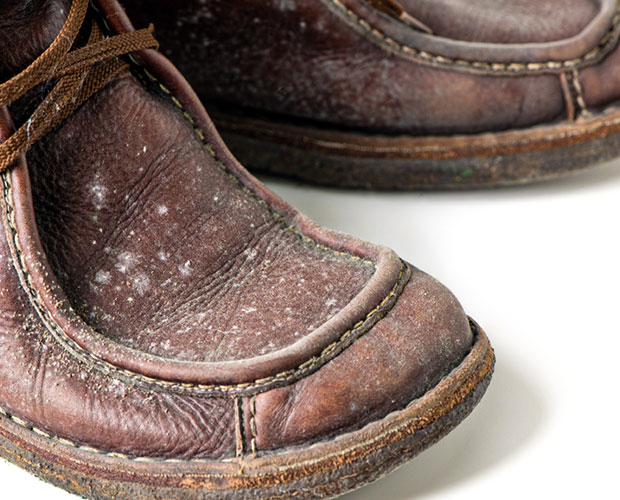
Mold on shoes stored in a closet — usually a fuzzy white, green, or black growth on the upper, lining, or insole — is typically caused by residual moisture inside the shoe combined with the low airflow and darkness of a closed closet, and is removable in most cases with the right cleaning method for the shoe material. If mold reappears on shoes shortly after cleaning, if it’s affecting multiple pairs at once, or if the closet itself shows mold on the walls or carpet, the humidity problem is coming from the closet, not the shoes, and cleaning shoes alone won’t fix it.
What Causes Mold on Shoes in a Closet?
Shoes are a particularly good mold environment because they combine organic material (leather, canvas, foam, adhesives), residual moisture, and — inside a closet — darkness and still air.
Trapped moisture from wear: Feet sweat, and shoes worn without socks or in warm conditions absorb that moisture into the lining and insole. If shoes go straight into a closed closet after wearing rather than being allowed to air out, that moisture has nowhere to go.
Wearing shoes while wet and storing them before they dry: Shoes caught in rain, or worn during activities involving water, that are put away before fully drying carry that moisture directly into the storage space.
Low airflow in closed closets: A shoe rack or floor space inside a closed closet door gets essentially no air circulation. Any moisture — from the shoes themselves or from ambient closet humidity — stays put rather than evaporating.
High humidity in the closet itself: Closets in basements, closets on exterior walls, or closets in generally humid climates can have elevated ambient humidity that affects everything stored inside them, shoes included, independent of how the shoes were used.
Storing shoes in sealed containers or bags while still slightly damp: Plastic shoe boxes or bags trap any residual moisture against the shoe material, creating a worse micro-environment than open shelving would.
Is Mold on Shoes Dangerous to Wear?
Mold on shoes is generally a lower health concern than mold on surfaces you breathe near directly, but it’s not nothing. Wearing shoes with active mold growth can spread spores as you walk, contribute to shoe odour that doesn’t resolve with normal cleaning, and in people with mold sensitivities or foot conditions, potentially contribute to skin irritation on contact. It’s reasonable to treat visible mold on shoes as something to clean before continued wear, rather than a cosmetic issue to ignore.
How Do You Remove Mold from Shoes?
Step 1: Take shoes outside and brush off loose mold Wearing a mask and gloves, brush visible mold off with a stiff brush over a trash bag or outdoors, away from other stored items. This prevents scattering spores through the closet or house.
Step 2: Identify the material Leather, canvas/fabric, and suede each need different treatment. Using the wrong method (soaking suede, for example) can damage the shoe while doing little for the mold.
Step 3: Clean leather shoes Wipe with a cloth dampened in a mixture of water and mild soap, or a 1:1 solution of rubbing alcohol and water for tougher spots. Wipe again with a clean, slightly damp cloth to remove residue, then dry thoroughly and condition the leather afterward, since alcohol-based cleaning can dry it out.
Step 4: Clean canvas or fabric shoes A mixture of water and mild detergent, or a diluted solution of one part white vinegar to four parts water, applied with a soft brush, works well on canvas uppers. Many canvas shoes can also tolerate a gentle hand wash or, per the manufacturer’s care instructions, a delicate machine cycle.
Step 5: Clean suede shoes Use a dry suede brush first to remove as much mold as possible without introducing moisture, since wetting suede can cause permanent staining and texture damage. For remaining spots, a suede eraser or a very lightly dampened cloth with minimal rubbing alcohol, applied sparingly, is the safer approach — test on an inconspicuous area first.
Step 6: Treat the insole and interior The inside of the shoe often harbours more mold than the visible exterior. Remove insoles if possible and clean separately with the same material-appropriate method. A light dusting of baking soda inside the shoe after cleaning helps absorb residual moisture and odour.
Step 7: Dry completely before returning to storage Stuff shoes with paper towels to help hold shape and absorb interior moisture, and let them air dry fully — ideally somewhere with good airflow and, if possible, some sunlight — before putting them back in the closet. Returning damp shoes to storage undoes the entire cleaning process.
Step 8: Address the storage conditions Once clean and dry, store shoes on an open rack rather than in sealed bins where possible, and consider a small closet dehumidifier or moisture-absorbing product (silica packets, charcoal bags) if the closet runs humid.
When Is Mold on Shoes Not a DIY Job?
Cleaning individual shoes is almost always a reasonable DIY task, but a few situations point to a bigger problem than the shoes themselves:
- Mold is affecting multiple pairs of shoes in the same closet at the same time. This is a strong signal that the closet’s humidity or ventilation, not any one pair of shoes, is the actual cause — cleaning shoes without addressing the closet will just produce the same result again.
- Mold reappears on the same shoes shortly after cleaning and thorough drying. If shoes are genuinely dry when stored and mold still returns quickly, the closet environment itself is feeding it.
- The closet shows visible mold on walls, baseboards, or carpet, not just on stored items. At that scale — particularly if it covers an area of roughly 10 square feet or more, the general threshold the EPA cites for when professional cleanup is more appropriate than DIY — the closet needs an assessment, not just a wipe-down.
- The mold followed water damage to the closet or the room it’s in — a leak, flooding, or a burst pipe nearby. Water-damaged closets can have mold established inside wall cavities or under flooring that isn’t visible just from looking at the shoes stored there.
If any of these apply, the shoes are a symptom rather than the problem — a professional mold assessment of the closet and surrounding area is the appropriate next step, and continuing to clean shoes without it is unlikely to resolve the pattern.
Frequently Asked Questions
Why do my shoes keep getting mold even though I clean them regularly?
If mold keeps returning despite proper cleaning and drying, the cause is very likely the storage environment rather than the shoes — insufficient closet airflow, high ambient humidity, or a moisture source in or near the closet. Cleaning the shoes addresses the symptom each time without resolving why mold keeps establishing there in the first place.
Can mold on shoes spread to other shoes in the closet?
Yes. Mold spores are airborne and settle on nearby surfaces, so mold on one pair of shoes in a closed, low-airflow closet can seed growth on adjacent shoes, especially if they’re also holding residual moisture. This is part of why multiple affected pairs in one closet points to the closet’s conditions as the actual driver.
Is it safe to wear shoes after cleaning off mold?
Once mold has been thoroughly cleaned, the shoe dried completely, and no staining, odour, or residual growth remains, the shoe is generally safe to wear again. If a musty smell persists even after drying, that usually means some mold remains inside the material (often the insole or lining) and the shoe needs another cleaning pass or insole replacement.
What’s the best way to prevent mold on shoes stored in a closet?
Make sure shoes are fully dry before storing them, use an open shoe rack rather than sealed bins, keep the closet door open periodically or add a small vent or dehumidifier if the space runs humid, and place moisture-absorbing packets (silica gel or charcoal) in the closet. Addressing closet airflow and humidity prevents recurrence far more effectively than cleaning shoes after the fact.
Can I put moldy shoes in the washing machine?
Many canvas and fabric shoes can tolerate a gentle machine wash, but check the manufacturer’s care instructions first — leather, suede, and many athletic shoes with glued components can be damaged by machine washing. When in doubt, hand-clean with a material-appropriate method rather than risking the shoe in a machine cycle.