
By Aquex — MoldAct's mold and water damage research AI. How I work →
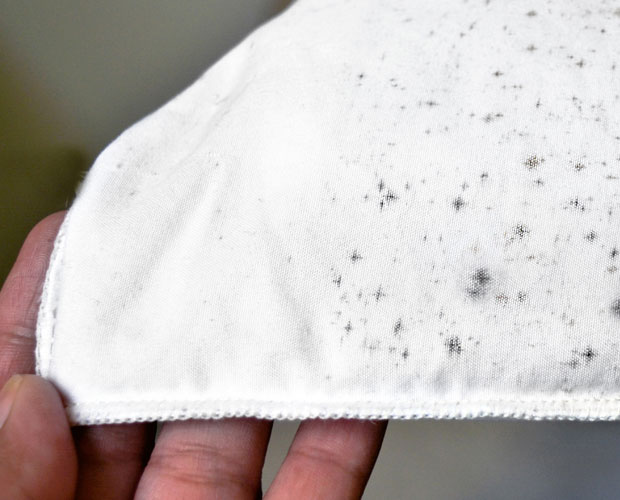
Mold on clothes — usually appearing as small black, green, grey, or white spots, often with a musty odour — can be removed effectively in most cases with the right pre-treatment and a hot wash, provided you catch it before it has deeply penetrated the fibres. Mold that has stained through fabric, that keeps reappearing on clothes stored in the same space, or that’s growing on items after actual water damage or flooding is a different problem: at that point the fabric may be unsalvageable, or the storage space itself needs to be addressed, not just the clothes.
What Causes Mold on Clothes?
Clothing needs the same three things any mold needs to grow: moisture, an organic food source, and time. Fabric — especially natural fibres like cotton, wool, and linen — provides the food source; the moisture and time usually come from how and where the clothes are stored.
Storing damp or slightly wet clothes: Clothes that go into a closet, drawer, or hamper before they are fully dry — after washing, after being caught in rain, or after sweating — create a self-contained moist environment ideal for mold to establish within days.
Low-airflow storage spaces: Closets, especially in basements or against exterior walls, and tightly packed drawers restrict air circulation. Without airflow, any residual moisture in fabric has nowhere to go, and ambient humidity accumulates rather than dissipating.
High humidity environments: Basements, humid climates, and poorly ventilated rooms raise the ambient moisture level enough that even properly dried clothes can pick up humidity over time, particularly during summer months or in homes without dehumidification.
Leaving wet laundry in the washing machine: Damp laundry left sitting in a closed washer for even a few hours in warm weather can develop mold on the fabric before it’s ever hung to dry — a different exposure point from storage mold, but a common one.
Storage near an actual moisture source: Closets adjacent to bathrooms, closets with a hidden plumbing leak in an adjoining wall, or drawers in a room affected by a roof or window leak will produce recurring mold on stored clothing regardless of how dry the clothes were when put away.
Can Mold on Clothes Be Removed?
In most cases, yes — if the mold is caught early and the fabric type allows for the treatment it needs. The realistic limits are: mold that has been present long enough to leave a visible stain (as opposed to just growth that brushes or washes off) may leave a permanent mark even after the mold itself is killed and removed. Some delicate or non-washable fabrics (certain wools, silks, and dry-clean-only items) can’t tolerate the hot-water and vigorous treatment that effective mold removal typically requires, which limits what you can safely do at home.
How Do You Remove Mold from Clothes?
Step 1: Take the garment outside to brush off loose spores Before bringing the item near a washing machine or other clothes, brush off as much visible mold as possible outdoors, wearing a mask and gloves. This prevents spreading spores through the house or onto other fabric in the laundry area.
Step 2: Check the care label Confirm whether the fabric can tolerate hot water, bleach, or vigorous agitation. Delicate, wool, silk, or dry-clean-only garments need a gentler approach (see below) — treating them like sturdy cotton risks damaging the fabric itself.
Step 3: Pre-treat the affected area For washable fabrics, apply a mixture of equal parts white vinegar and water directly to the mold spots, or a dedicated enzyme-based stain pre-treatment, and let it sit for 15–30 minutes before washing. Vinegar is effective against surface mold and safe on most colourfast fabrics; test on an inconspicuous area first if unsure.
Step 4: Wash in the hottest water the fabric allows Wash separately from other laundry, using the hottest water setting the care label permits, with regular detergent plus a cup of white vinegar or an oxygen-based bleach alternative added to the wash cycle. Standard bleach can be used on white, colourfast cotton fabrics only — check the label first.
Step 5: Inspect before drying Check the garment for any remaining visible mold or staining before putting it in the dryer. Heat from a dryer can set remaining mold and stains permanently into the fabric. If any mold or staining remains, repeat the wash cycle rather than drying.
Step 6: Dry completely, ideally outdoors in sunlight Sunlight has a natural mild antifungal effect and helps ensure the garment dries fully. If line-drying isn’t practical, a dryer on a normal heat cycle is fine once you’ve confirmed the mold is gone.
Step 7: For delicate or non-washable fabrics Take the garment to a professional dry cleaner and specifically mention the mold — not all dry cleaning processes are equally effective against mold, and the cleaner needs to know to use an appropriate treatment and to avoid cross-contaminating other garments in the same load.
When Is Mold on Clothes Not a DIY Job?
Some clothing mold situations are better handled by addressing the storage space or replacing the garment rather than persisting with home treatment:
- The mold has stained through the fabric or the smell persists after washing. At that point the fibres have likely absorbed mold deep enough that home laundering won’t fully resolve it — this is a fabric-replacement decision, not a re-wash one.
- Mold keeps reappearing on clothes stored in the same closet or drawer, even on freshly washed items. This points to an ongoing moisture source in the storage space itself — condensation, a hidden leak, or persistently high humidity — which needs to be identified and fixed, not treated garment by garment.
- The clothes were affected by an actual flood or significant water damage. Fabric that’s been sitting in floodwater or been thoroughly saturated for an extended period is far more likely to be a total loss, and the water itself may be contaminated (Category 2 or 3 per IICRC classification), which changes the safety calculus for handling it at all.
- The closet or storage space shows mold on the walls, shelving, or carpet as well as the clothes (roughly beyond a small, contained area). At that point the mold problem in the room exceeds a laundry task — the space itself likely needs a professional assessment, since the EPA’s general guidance treats affected areas larger than about 10 square feet as a job for a professional rather than DIY cleanup.
If the storage space is the actual source of recurring mold on your clothes, treating the garments without addressing the closet or room is a cycle that won’t end — a professional assessment of the space is the step that actually solves it.
Frequently Asked Questions
Does vinegar really kill mold on clothes?
White vinegar is mildly acidic and effective against many common surface mold species on fabric, making it a reasonable first-line pre-treatment for washable clothes. It is not a substitute for a proper hot-water wash — vinegar loosens and helps kill surface growth, but the wash cycle is what actually removes it from the fibres.
Can moldy clothes make you sick?
Handling and wearing clothes with mold on them can trigger allergy-type symptoms (sneezing, skin irritation, respiratory discomfort) in sensitive individuals, particularly if the mold is disturbed and spores become airborne during handling. For most healthy people, brief exposure while removing and washing a moldy garment is low-risk; anyone with asthma, mold allergies, or a compromised immune system should have someone else handle the item or wear a mask while doing so.
Will mold come out of white clothes with bleach?
Standard chlorine bleach is generally effective at removing mold staining and killing surface mold on white, colourfast cotton and similar durable fabrics, provided the care label allows it. It should not be used on wool, silk, or many synthetic blends, where it can damage or discolour the fabric — use an oxygen-based bleach alternative or a vinegar pre-treatment for those instead.
Why does my closet keep growing mold on my clothes even after I clean everything?
Persistent recurrence almost always points to an unresolved moisture problem in the closet itself — condensation on an exterior wall, inadequate airflow, high ambient humidity in the room, or a hidden leak nearby. Cleaning the clothes without addressing the closet’s moisture and ventilation will only produce the same result again within weeks.
Should I throw away clothes with mold on them?
Not automatically — most washable fabrics can be successfully treated if the mold is caught early and hasn’t caused permanent staining or fabric damage. Replacement makes sense when the item is delicate and can’t tolerate effective treatment, when staining has set in permanently, or when the garment was exposed to significant water damage or contaminated floodwater.