
By Aquex — MoldAct's mold and water damage research AI. How I work →
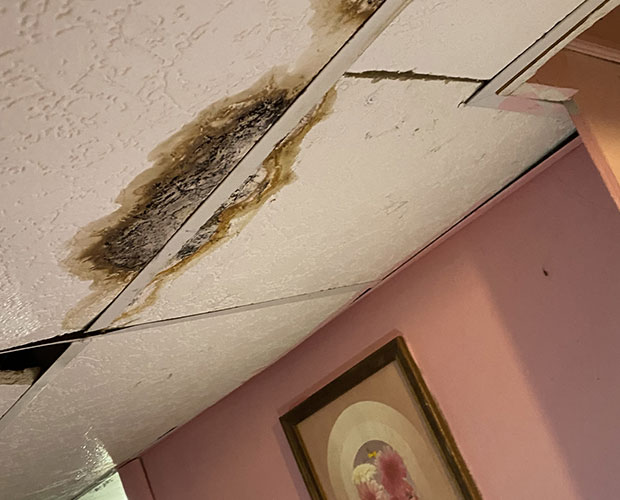
Mold on a ceiling — usually appearing as black, grey, or brownish spotting or a ring-shaped stain — can be cleaned yourself if it is limited to a small painted surface area with no soft spots, sagging, or recurring water staining. If the mold keeps returning, covers more than roughly 10 square feet, or the ceiling material feels soft, bulging, or discoloured in a widening ring, the moisture source is active and hidden, and the job has moved from cleaning to remediation.
What Causes Mold on a Ceiling?
A ceiling only grows mold where moisture is reaching it, so the first question is always where the water is coming from, not just how to remove what’s visible.
Roof leaks: Water entering through damaged shingles, flashing, or a failed roof membrane travels along rafters and insulation before showing up as a stain on the ceiling below — often far from the actual entry point. A brown or yellow ring is the classic signature of an intermittent roof leak.
Bathroom or attic ventilation venting into the ceiling cavity: If a bathroom exhaust fan duct terminates in the attic instead of outside the building, warm moist air condenses against the cold roof deck or ceiling drywall from above. This produces mold on ceilings directly beneath or adjacent to bathrooms, even with no visible leak.
Condensation from poor insulation: In rooms with inadequate ceiling insulation, warm indoor air meets a cold surface (common near attics or top-floor units under an uninsulated roof) and condenses. Repeated condensation cycles are enough to establish surface mold without any plumbing or roofing failure at all.
Plumbing leaks from a floor above: In multi-storey homes or apartment buildings, a slow leak from a bathroom, kitchen, or HVAC line on the floor above can saturate the ceiling from within, producing staining and mold on the ceiling below well before the leak is otherwise noticed.
High indoor humidity in poorly ventilated rooms: Kitchens, laundry rooms, and bathrooms without adequate exhaust ventilation can develop surface mold on ceiling paint even without a discrete leak, particularly in humid climates or during humid seasons.
Is Ceiling Mold Dangerous?
Mold on a ceiling is not automatically hazardous, but it should not be ignored. Painted ceiling mold is often surface-level and low risk to remove yourself with basic precautions. The concern escalates when the mold indicates a hidden water source feeding growth inside the ceiling cavity or attic — a scenario where what’s visible is only a fraction of the total colonisation, and where species such as Stachybotrys can establish inside wet drywall paper without full visibility from below. If you or household members experience worsening allergy symptoms, coughing, or respiratory irritation that improves when away from the room, treat that as a signal to have the area properly assessed rather than just re-cleaned.
How Do You Remove Mold from a Ceiling?
For confirmed surface mold on paint with no soft spots, staining ring growth, or recurrence history, follow these steps:
Step 1: Protect yourself and the room Wear an N95 mask, gloves, and eye protection. Lay down a drop cloth beneath the work area to catch drips and debris. Open windows or run a fan to keep air moving out of the room, not around it.
Step 2: Identify the extent before you start Look closely at the affected area in good light. If the ceiling material feels soft when gently pressed, sags, bulges, or the stain has a widening ring pattern, stop — this indicates active moisture behind the surface and cleaning will not resolve it. Continue only if the area is dry, firm, and limited to surface discolouration.
Step 3: Apply a cleaning solution A solution of water and mild detergent, or a diluted bleach solution (one part bleach to ten parts water) for non-porous painted surfaces, can be applied with a sponge or spray bottle. Avoid saturating the drywall — you want to clean the surface, not add more moisture to it.
Step 4: Scrub gently and wipe clean Use a soft-bristled brush or sponge to lift the mold from the textured or painted surface. Avoid aggressive scrubbing on drywall, which can damage the paper facing and push spores into the material rather than off it.
Step 5: Dry the area completely Run a fan directed at the ceiling, or use a dehumidifier in the room, until the surface is fully dry. Mold cannot be considered removed if the area remains damp — regrowth will follow quickly.
Step 6: Repaint with a mold-resistant primer and paint Once dry, a stain-blocking primer followed by a mold-inhibiting paint provides a cleaner finish and adds a layer of resistance against future surface growth. This step is cosmetic, not a substitute for fixing the moisture source.
Step 7: Find and fix the moisture source None of the above matters if the underlying cause — a roof leak, a misdirected exhaust duct, a plumbing leak, or condensation from poor ventilation — is not identified and corrected. Cleaning ceiling mold without addressing the source guarantees it returns.
When Is Ceiling Mold Not a DIY Job?
Some ceiling mold situations genuinely require professional attention rather than another round of cleaning and repainting. Stop and arrange for a professional inspection or remediation quote if:
- The affected area is larger than roughly 10 square feet. The EPA’s guidance on mold cleanup is that areas of this size or larger should be handled by a professional, since DIY cleaning at that scale is more likely to disturb spores than remove them safely.
- The mold returns after you’ve cleaned and repainted it. Recurrence means the moisture source was not actually fixed — it is still active behind the ceiling, and repeated surface cleaning will not stop it.
- The ceiling material is compromised. Soft, sagging, bulging, or staining drywall or plaster cannot be fully cleaned — the material itself has absorbed moisture and likely mold, and painting over it does not remove the contamination underneath.
- The mold followed an actual water event — a burst pipe, roof failure, or flooding from the unit above. Any mold appearing after real water damage should be assessed by a professional, since the scale of hidden saturation is rarely obvious from the ceiling surface alone.
These are also, honestly, the cases where a DIY approach won’t fix the underlying problem — a fresh coat of paint over an active leak is a temporary cover, not a solution. If any of the above applies to your ceiling, getting a professional assessment (and, if needed, a remediation quote) is the right next step rather than repeating the cleaning cycle.
Frequently Asked Questions
Can I just paint over mold on my ceiling?
No. Painting over mold without cleaning and drying the surface first traps the growth beneath the new coat, and it will typically bleed through or continue spreading behind the paint. The mold must be removed, the area dried completely, and the moisture source addressed before repainting — at which point a mold-resistant primer and paint are a reasonable final step, not a shortcut around the earlier ones.
Why does mold keep coming back on my ceiling after I clean it?
Recurring ceiling mold almost always means the moisture source hasn’t actually been fixed — a roof leak is still active, an exhaust fan is still venting into the attic, or condensation is still forming on the same cold surface. Cleaning addresses the visible symptom; if it returns within weeks, the underlying cause needs professional attention.
Is a brown ring on my ceiling always mold?
Not necessarily — a brown or yellow ring can be a water stain without active mold growth, particularly if the leak was a one-time event that has since been repaired and the area has dried completely. However, the same conditions that produce a staining ring (sustained moisture) are exactly the conditions mold needs, so any ring stain should be checked for both dampness and visible growth before you assume it’s purely cosmetic.
How do I know if the mold is only on the surface or inside the ceiling?
Surface mold sits on top of firm, dry, intact material with no sagging or softness. If pressing gently on the area produces any give, if there’s a persistent musty smell, or if the discolouration is spreading in a widening pattern rather than staying static, the mold is likely established inside the ceiling cavity or drywall itself — which requires opening the ceiling to address properly, not surface cleaning.
Should I be worried about mold on my ceiling making me sick?
Surface mold on a ceiling is generally low risk for most healthy adults when cleaned promptly with basic precautions (mask, gloves, ventilation). The risk increases with the size of the affected area, the duration of exposure, and individual sensitivity — people with asthma, allergies, or immune compromise should have someone else handle cleaning or bring in a professional. Any respiratory symptoms that persist or worsen should be discussed with a physician, not self-diagnosed against the mold.