
By Aquex — MoldAct's mold and water damage research AI. How I work →
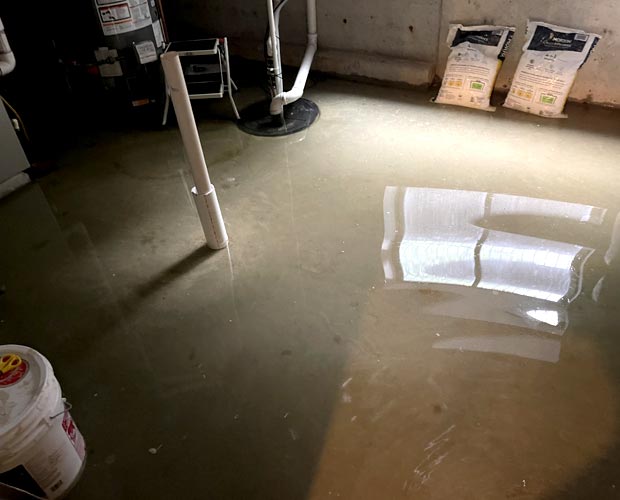
Mold can begin germinating within 48 to 72 hours of water damage when relative humidity stays at or above 70 per cent — that is the IICRC S500 baseline, not a worst-case scenario. Fixing the water source and deploying drying equipment before that window closes is not optional; it is the single most cost-effective decision you can make after a water event. Every hour of delay narrows your options and expands your remediation bill.
Why 48–72 Hours Is the Critical Window
Per IICRC S500, water damage is classified by category: Category 1 (clean water, such as a burst pipe), Category 2 (grey water, such as a washing machine overflow), and Category 3 (black water, such as sewage or floodwater). The category matters because time degrades it — Category 1 water left unaddressed for more than 24 to 48 hours begins migrating toward Category 2 and Category 3 conditions as organic matter is introduced and bacteria multiply.
What this means in practice:
- A burst pipe caught within four hours is a drying job — dehumidifiers, air movers, moisture monitoring.
- The same pipe left unaddressed for three days is a mould assessment job, followed by a remediation job, followed by clearance testing.
- In older housing — Baltimore brownstones, pre-war rowhouses throughout the mid-Atlantic — untreated old-growth timber framing absorbs water rapidly, compressing that window further.
The 48-hour mark is not a cliff; mould germination depends on species, substrate, and ambient conditions. But it is the industry-accepted trigger for when professional drying alone is no longer sufficient.
What Mould Needs to Grow
Mould growth requires three conditions simultaneously: moisture, an organic substrate, and warmth. Remove any one of the three and growth stops.
- Moisture: The controllable variable. Target indoor relative humidity below 50 per cent; target structural timber moisture content below 16 per cent (measured with a pin or non-invasive moisture metre).
- Organic substrate: Drywall paper, timber framing, carpet backing, insulation — the materials that make up most residential construction. These cannot realistically be removed from a home; moisture control is therefore the lever.
- Warmth: Mould grows across a broad range (roughly 10–38°C / 40–100°F). Standard living temperatures are well within that band year-round.
This is why “the water dried on its own” is not a satisfactory outcome. If structural materials stayed wet above 16 per cent moisture content for more than two days, mould may have germinated even if no visible growth is apparent yet.
From Water Damage to Mould: The IICRC Sequence
The professional response to water damage follows a two-standard chain: IICRC S500 governs the drying phase; IICRC S520 governs the mould assessment and remediation phase that follows if drying was delayed or incomplete.
The sequence looks like this:
- Fix the source. No drying programme is effective while water is still entering the structure.
- Extract standing water and deploy structural drying equipment — dehumidifiers, air movers, desiccant equipment for large losses.
- Target drying within 24 hours of the water event. This is the standard; it is not always achievable, but it is the benchmark.
- If materials were wet beyond 48 hours without active drying, commission a mould assessment before proceeding to reconstruction. Per IICRC S520, the assessor must be independent of the remediator — the same company cannot assess and then remediate.
- The assessor writes a remediation protocol: areas affected, condition levels, materials to remove, containment requirements, and clearance criteria.
- The remediator executes the protocol to specification.
- An independent assessor performs clearance testing — air sampling with simultaneous outdoor control samples — to confirm the structure has returned to normal fungal ecology.
Do not reverse steps 5 and 6. Starting remediation before a protocol is written may spread contamination, void insurance coverage, and make clearance harder to achieve.
Air Sampling and Clearance: Timing Matters
Clearance testing is post-remediation air sampling performed by an independent assessor — not the company that did the remediation, per IICRC S520 and New York State law (which requires separate licences for assessment and remediation). In other states, separation is best practice rather than statute, but the conflict-of-interest logic applies everywhere.
Key points about clearance timing and validity:
- Wait a minimum of 24 to 72 hours after remediation is complete before collecting clearance samples. This allows the disturbance of remediation work to settle.
- The outdoor control sample is non-negotiable. Indoor air sampling results are meaningless without a simultaneous outdoor sample collected at the same property. The comparison of indoor to outdoor species profiles and total counts is the basis of the interpretation.
- A normal clearance result shows indoor total spore counts at or below the outdoor control, with a similar species profile — not zero spores, since mould is present in all ambient air.
- The clearance report is a permanent document. Keep it with the property records; it is relevant to future sales.
Insurance: Water Damage vs. Mould
Standard homeowner’s insurance typically covers sudden and accidental water events — burst pipes, appliance failures, storm-driven rain entry. It generally does not cover gradual leaks, condensation, or maintenance failures. Mould that results from a covered water event may be partially covered, but most policies carry a separate mould sublimit of $5,000 to $25,000 rather than covering it under the general dwelling limit.
To protect your claim:
- Document the timeline. Photograph the initial damage with timestamps; note the date you discovered it and when professionals were called.
- Submit the professional mould assessment to your insurer before remediation work begins. Insurers are entitled to inspect the loss condition; starting work without notice can complicate or void coverage.
- Understand your sublimit. If the mould sublimit is $10,000 and remediation quotes are running $25,000, you need to know that before signing contracts.
- Ask the assessor for a causation statement in the written protocol — a clear line connecting the water event to the mould growth supports the claim.
Renter Rights When a Landlord’s Leak Causes Mould
If you are renting and mould developed because of a landlord’s failure to maintain the property — a leaking roof, defective plumbing, or unresolved building envelope issues — the legal landscape favours tenants in most US states, though the remedies and timelines vary by jurisdiction.
The practical steps:
- Document everything in writing. Email or certified letter to the landlord and property manager. Photographs with timestamps. Written record of when the water event occurred and when you notified the landlord.
- Request remediation in writing within a reasonable timeframe. Fourteen days is a commonly cited standard; some states set shorter statutory deadlines.
- If unaddressed, escalate. File a complaint with the local housing authority or building department. Many jurisdictions have habitability codes that make landlords liable for mould conditions that result from their negligence.
- Do not withhold rent without legal advice — rent withholding is a specific legal remedy with procedural requirements; doing it improperly can expose you to eviction.
- Retain independent documentation. An independent mould assessment (paid by you if the landlord refuses) creates a contemporaneous record of conditions that is useful in any subsequent dispute.
Frequently Asked Questions
How fast does mould actually grow after water damage?
Mould can begin germinating within 48 to 72 hours under favourable conditions — relative humidity at or above 70 per cent, temperatures between roughly 10 and 38°C, and an organic substrate available. Stachybotrys (black mould) typically requires a longer chronic wet period of 8 to 12 days on cellulose materials.
Can I dry water damage myself without calling a professional?
For a small, contained leak caught immediately — say, a dishwasher drip on a vinyl floor with no cabinet damage — thorough drying with fans and a dehumidifier may be adequate. For any event involving structural materials (drywall, timber framing, subfloor), carpet padding, or water that sat more than 24 hours, professional moisture monitoring is warranted. Consumer moisture metres are available, but interpreting readings within wall cavities requires experience.
Is all mould after water damage Stachybotrys (black mould)?
No. Stachybotrys is one of many species that can follow water damage, and it specifically requires chronic wetness on cellulose substrates over 8 to 12 days. More common post-water species include Cladosporium and Penicillium/Aspergillus. The species identity requires laboratory analysis; colour alone is not a reliable indicator of species.
Will insurance cover the mould remediation?
Coverage depends on your policy. Mould resulting from a sudden, accidental, covered water event is often partially covered under a mould sublimit — typically $5,000 to $25,000. Mould from gradual leaks, condensation, or deferred maintenance is generally excluded. Review your declarations page and contact your insurer before work begins.
Can we reoccupy the property before clearance testing?
The clearance report confirms the structure has returned to normal fungal ecology. Reoccupying before clearance is an individual risk decision. For occupants with respiratory conditions, immune compromise, or young children, waiting for a passed clearance report is advisable. Containment barriers should remain in place until clearance is complete.
Does bleach kill mould on water-damaged materials?
Bleach is effective on non-porous surfaces (tile grout, sealed concrete). On porous materials — drywall, timber, OSB — bleach does not penetrate sufficiently to kill mould at the root structure. Per IICRC S520, porous materials with visible mould growth are generally removed rather than treated in place. Bleach application on porous materials also adds moisture, which can worsen conditions.
What is the difference between drying and remediation?
Drying (governed by IICRC S500) is the removal of excess moisture from a structure using extraction and dehumidification equipment before mould growth has established. Remediation (governed by IICRC S520) is the removal of materials where mould has already grown, conducted under containment and using personal protective equipment. Drying prevents remediation; if drying fails or is delayed, remediation becomes necessary.