
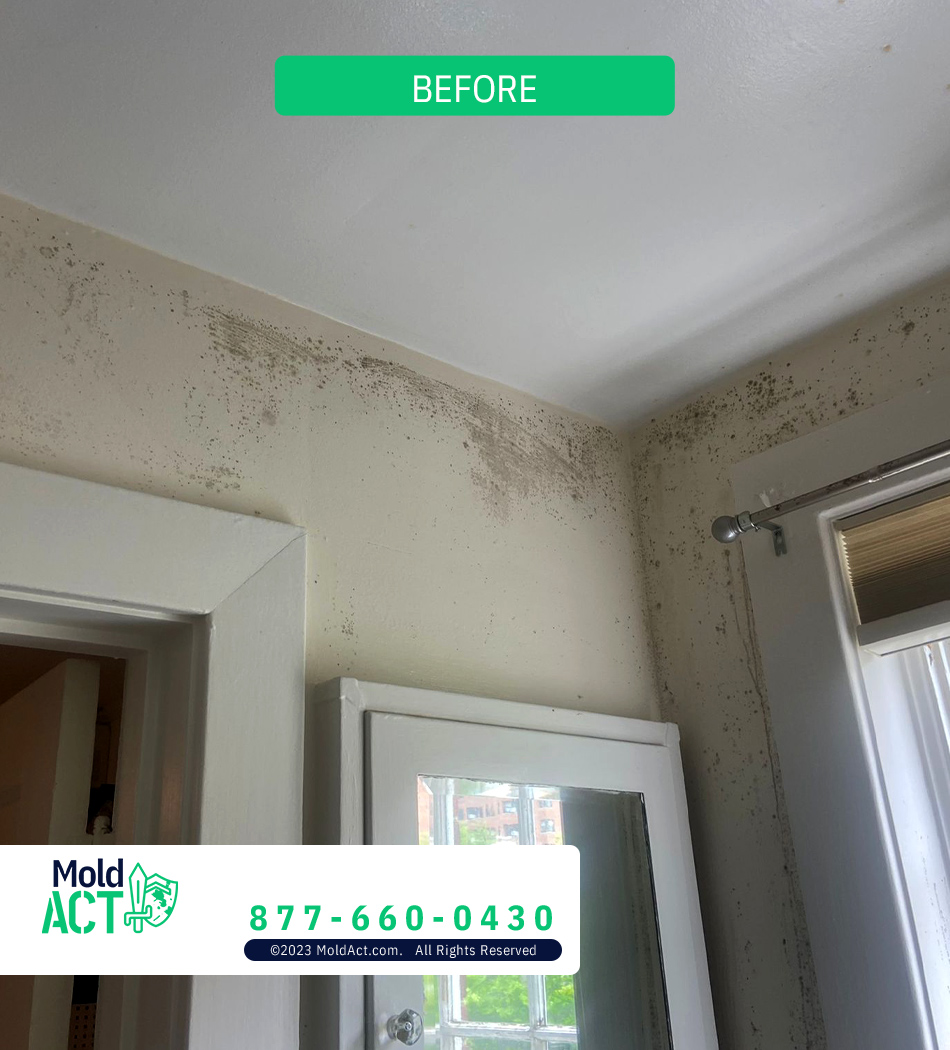
Before — illustrative
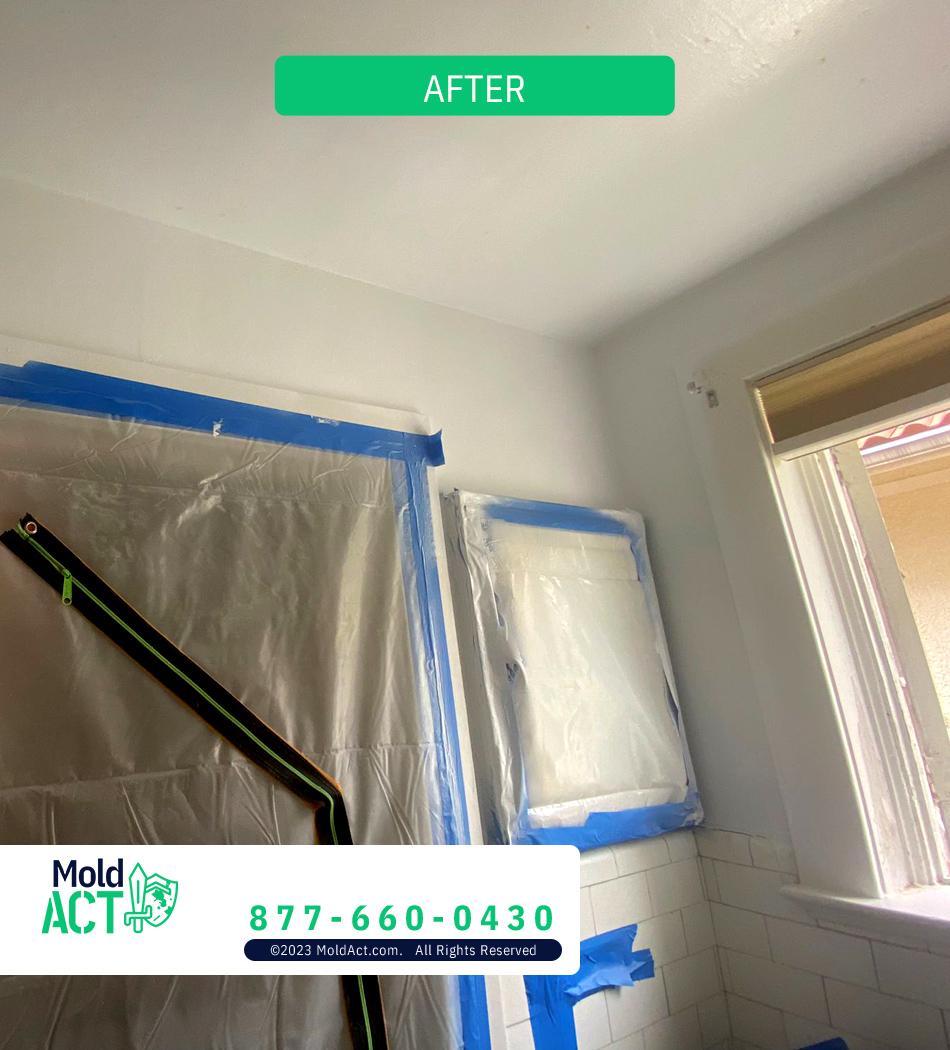
After — illustrative
The kind of DC home in this story is a classic rowhouse — the kind that lines Shaw, LeDroit Park, Logan Circle, Dupont, and a dozen other neighbourhoods across the city — with an English basement: a partially below-grade unit that still gets a window and its own street-level door. It’s a genuinely nice piece of DC housing, whether it’s a guest space, rental income, or where someone actually lives. It’s also, structurally, the part of the house closest to the ground and furthest from fresh air circulation — which makes it the first place moisture shows up.
(This story is illustrative of a typical job in this market — not a specific customer’s home — unless a caption on this page says otherwise. We build stories like this from real patterns in the housing stock we work in, because the situation is genuinely common, but we won’t invent a named customer or an address to make it feel more real than it is.)
The worry
It usually starts with a hard summer storm — the kind DC gets regularly from June through September, with humidity already sitting above 65–70%. A renter or homeowner in the English basement notices water coming up through a floor drain, or seeping in along the base of a wall, during or right after the storm. By the time anyone calls, there’s often standing water, a strong sewage-adjacent smell, and a genuine question nobody wants to ask out loud: is this just rainwater, or is this something worse — and is it safe to even be down here?
That question is exactly the right one to ask, and it’s the first thing an honest inspection needs to answer.
Why this isn’t a normal leak
Because a lot of DC’s older infrastructure carries stormwater and sewage in the same pipes, a big storm can push that combined flow back up through basement drains and fixtures instead of out to the treatment plant. Water intrusion from that backup is classified as Category 3 — contaminated water — which is a materially different problem than a clean-water leak from, say, a supply line. It carries bacteria and other contaminants, and it means porous materials that got wet (carpet, drywall, particleboard furniture) typically can’t just be dried and reused; they need to be removed and the space properly disinfected, not just dried out.
What an honest inspection actually looks for
In a case like this, the inspection has two jobs at once: confirm what kind of water this was, and find how far it travelled. That means checking:
- The point of entry — a floor drain, a low fixture, or seepage along the party wall shared with the neighbouring rowhouse, which doesn’t always respect a property line on a block built before modern waterproofing existed
- How far the water tracked — under flooring, up the base of drywall, into any storage or furniture that was down there
- Whether mold has already started, which in DC’s summer humidity can begin within 24–48 hours of a Category 3 event if it isn’t dried and treated promptly
- Any prior history — a basement that’s taken on water more than once in a storm season usually has an underlying grading or backflow issue worth flagging, not just a one-off event
The fix, when remediation is actually needed
Where contamination and mold are confirmed, the sequence follows the IICRC S500 (water) and S520 (mold) standards together:
- Containment — sealing off the affected area so contaminated air and spores don’t move into the rest of the house, especially important when the English basement has its own tenant or is directly below living space.
- Removal of contaminated porous materials — carpet, affected drywall, and anything that absorbed Category 3 water and can’t be safely disinfected and kept.
- Antimicrobial treatment and HEPA cleaning — addressing both the mold and the broader contamination, not just the visible growth.
- Drying and moisture verification — confirming the structure is genuinely dry before anything goes back.
- A conversation about backflow prevention — for a basement with a recurring combined-sewer risk, a backwater valve is often the actual long-term fix, and we’ll say so plainly even though it’s not something we install ourselves.
The independent clearance test
Once the work is done, an assessor independent of the remediation crew checks the space for spore counts and any remaining visible growth. For a basement that was a Category 3 event, that independent sign-off matters even more than usual — it’s the objective confirmation that the space is genuinely safe to re-occupy, not just visually dry.
What we’d tell a DC homeowner in this exact situation
If your English basement took on water during a storm, don’t wait to see if the smell goes away on its own — Category 3 water and DC’s humidity are not a combination that resolves itself. If it’s the first time this has happened, get it assessed properly rather than guessing. If it’s happened more than once, the real question isn’t “how do we clean this up again” — it’s “what’s letting this back into the house,” and that’s worth asking before the next storm season.