
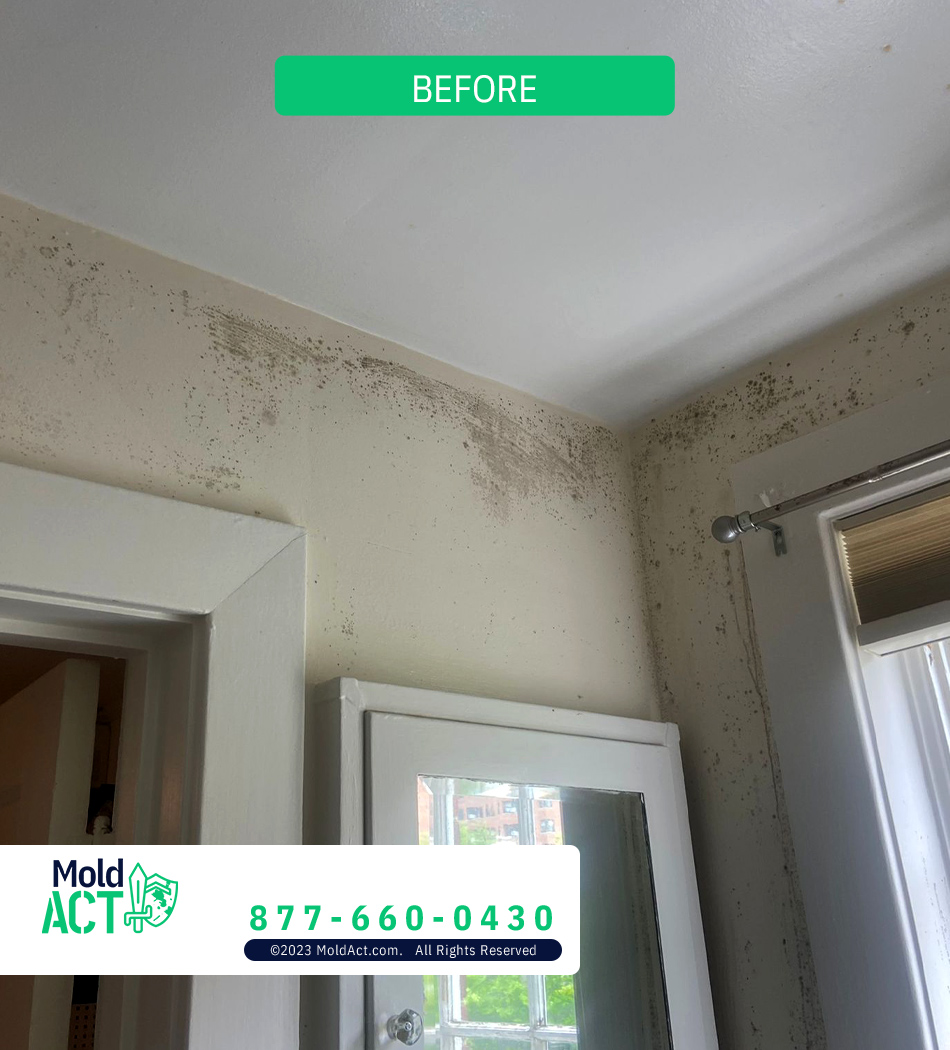
Before — illustrative
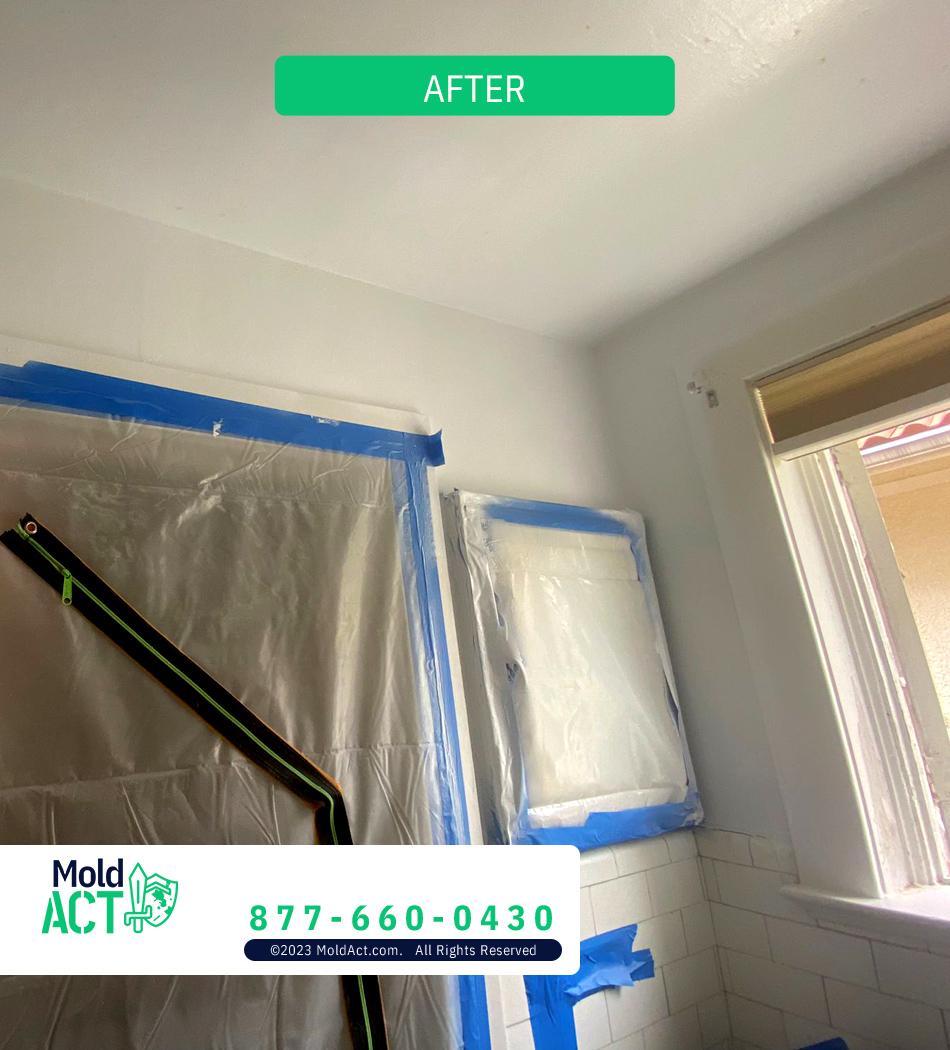
After — illustrative
The kind of Brookland home in this story is a 1920s–1940s bungalow or duplex — the housing stock that gives the neighbourhood, long nicknamed “Little Rome” for its cluster of Catholic institutions around Catholic University, its character. Unlike most of DC’s older rowhouse core, these homes sit on crawl-space foundations, not raised English basements.
(This story is illustrative of a typical job in this market — not a specific customer’s home — unless a caption on this page says otherwise. We build stories like this from real patterns in the housing stock we work in, because the situation is genuinely common, but we won’t invent a named customer or an address to make it feel more real than it is.)
The worry
There’s no flood, no visible water stain, no obviously bad storm to point to. Just a musty smell that comes and goes, sometimes stronger near a particular floor register, and a homeowner who’s checked the parts of the house they know to check — the kitchen under the sink, the bathroom grout, the attic — and found nothing. Because there’s no basement here the way there is three miles away in Shaw or Petworth, it’s easy to assume there’s simply nowhere for a moisture problem to be hiding.
There is somewhere. It’s just underneath the floor, not behind a basement door.
Why a crawl space hides a problem instead of showing it
A crawl space with no vapour barrier lets ground moisture rise directly into the space beneath the house, where it condenses on cool subfloor framing and ductwork. Unlike a basement — where standing water or a visible stain announces itself fairly quickly — a crawl space can run damp for months or years without producing any sign a homeowner would notice from inside the living space, beyond a smell that’s easy to dismiss as “just an old-house thing.” Older stormwater infrastructure in parts of Brookland, especially near the Rhode Island Avenue rail corridor, has a documented history of localised street flooding after heavy rain, which can back up into low crawl spaces without ever reaching the house’s interior at all.
What an honest inspection actually looks for
- Whether a vapour barrier exists at all, and if so, its condition — torn, sagging, or pulled-back plastic sheeting is nearly as bad as none
- Moisture readings on subfloor framing and any ductwork routed through the crawl space, since HVAC condensation and duct-leak moisture are common secondary contributors in this specific foundation type
- Ventilation adequacy — under-vented or fully sealed crawl spaces without mechanical dehumidification trap moisture rather than releasing it
- Whether nearby stormwater backup is a contributing or recurring factor, which changes the long-term fix from “seal it” to “seal it and address drainage”
The fix
- Access and assessment — crawl spaces are tight, and a proper inspection means actually getting into the space, not just looking through the access hatch.
- Removal of contaminated material — insulation and any wood framing with active growth that can’t be safely treated and dried in place.
- Antimicrobial treatment and HEPA cleaning of affected surfaces and any ductwork that ran through contaminated air.
- Vapour barrier installation or repair — the single highest-leverage fix for a crawl space, and one many homes here have never had done properly.
- A ventilation or encapsulation conversation — depending on the space’s specific moisture load, a fully encapsulated and mechanically dehumidified crawl space is sometimes the more durable long-term answer than passive venting.
The independent clearance test
Once remediation is complete, an assessor independent of the remediation crew re-enters the crawl space to verify spore counts and confirm no remaining visible growth on framing or ductwork — the same independent-sign-off standard applied to any other job type, just in a space most homeowners have never personally set foot in.
What we’d tell a Brookland homeowner in this exact situation
If you’ve got an unexplained musty smell and you’ve already ruled out the obvious rooms, don’t assume it’s nothing just because there’s no basement to check — in this neighbourhood, the crawl space is almost always where it’s actually coming from. It’s an easy space to forget about precisely because it’s out of sight, which is exactly why it’s worth having someone actually look rather than waiting for a symptom bad enough to be undeniable.